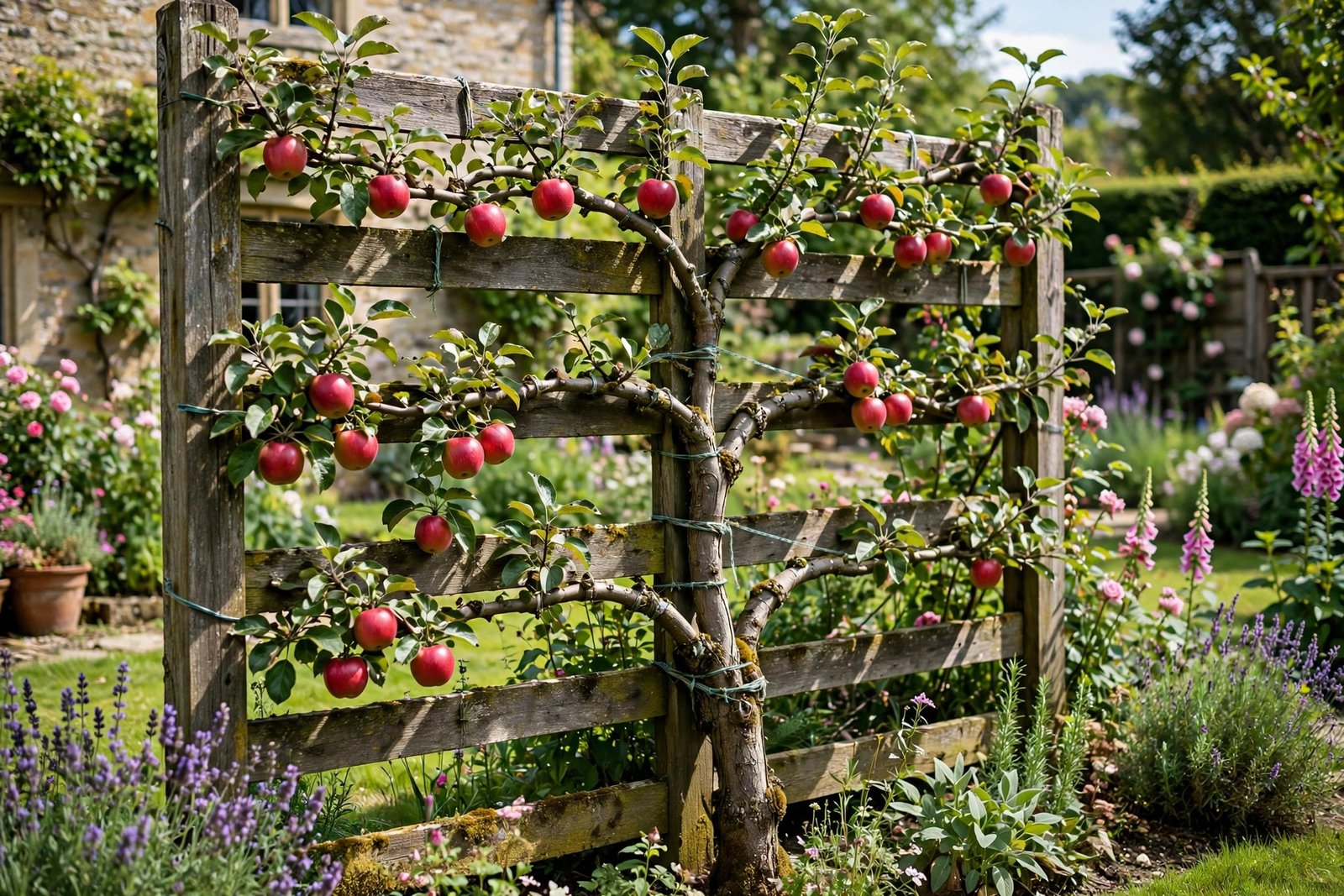
There is a particular kind of optimism in planting an apple tree in a garden the size of a parking space. It looks absurd — a tree, in that? — until you learn that some of the most productive fruit trees in Britain are growing in courtyards, on balconies and in narrow town gardens, quietly producing kilos of fruit a year. Growing fruit trees in small gardens is not about shrinking your ambitions; it is about choosing the right tree, the right rootstock and the right shape, and then letting the tree do what trees do. This guide explains exactly how it works.
The Secret: Rootstock Controls Everything
Here is the fact that changes everything for small-space growers: the size of a fruit tree is determined almost entirely by its rootstock, not by the variety grafted on top. A ‘Bramley’ apple on a vigorous rootstock becomes a 6-metre monster; the same ‘Bramley’ on a dwarfing rootstock stays a manageable 2-metre bush you can pick without a ladder.
For small gardens, the rootstocks to know are:
- M27 (apple, extremely dwarfing): final height 1.2–1.8m. Perfect for pots. Needs permanent staking and regular watering — its tiny roots cannot fend for themselves.
- M9 (apple, dwarfing): 1.8–2.4m. The commercial orchard standard. Needs staking for life but fruits early and heavily.
- M26 (apple, semi-dwarfing): 2.4–3m. The best all-rounder for small gardens — manageable size, no permanent staking needed once established, good crops.
- Pixy (plum): 2.5–3m. Makes plums genuinely feasible in small spaces.
- Gisela 5 (cherry): 2.5–3m. Sweet cherries without the 8-metre tree.
- Quince A (pear): 2.5–3.5m for pears, the standard dwarfing choice.
When buying, the label should state the rootstock. If it does not, ask — a reputable nursery will always tell you. An unnamed “dwarf apple” from a supermarket trolley is a gamble; a named variety on M26 from a specialist is a plan. The RHS fruit growing guides list suitable rootstocks for every common fruit.
Shapes That Cheat Space
Rootstock keeps the tree small; training makes it fit impossible spaces. These are the shapes that make small-garden fruit growing work:
Espalier: fruit as a living fence
An espalier is a tree trained flat against wires, with horizontal tiers of branches like a candelabra. A two-tier espalier apple is barely 30cm deep but can stretch 3 metres wide along a sunny fence — producing 10–15kg of fruit from a footprint narrower than a bookshelf. Apples and pears espalier beautifully; it takes two to three years of simple summer pruning to establish the shape.
Cordon: the one-metre tree
A cordon is a single stem grown at a 45-degree angle, with short fruiting spurs along its length. Planted 60–75cm apart, a row of cordons along a path edge gives you five or six varieties — including pollination partners — in the space of a garden bench. Cordons fruit young, often in their second year.
Step-over: the edible edging
A step-over is a single-tier espalier just 45cm high, used as edging for paths or veg beds. It is the most space-efficient fruit tree in existence: a 3-metre path edging can carry six trees and produce a genuine harvest. Apples on M9 rootstock work best.
Fans and pots
Fan-trained trees suit peaches, nectarines, cherries and plums against warm walls — the wall’s radiated heat ripens fruit that would struggle in the open. And almost any dwarf fruit tree grows in a pot of 45–50cm diameter, which means balconies and paved yards are in the game too.
Pollination: The Detail Beginners Miss
Most fruit trees need a pollination partner — a different variety flowering at the same time — or they will blossom beautifully and set no fruit. Apples are grouped A–E by flowering time; a group C apple needs a partner from group B, C or D. Plums, cherries and pears have similar requirements, though many modern plums (‘Victoria’, ‘Opal’) and some cherries (‘Stella’, ‘Sunburst’) are self-fertile.
In a small garden this is actually easier than it sounds: a cordon row naturally includes several varieties, and crab apples are universal pollinators for eating apples. Urban areas usually have enough neighbouring gardens with fruit trees that pollination happens by itself — but do not rely on luck for your first trees; buy compatible pairs. Reputable nurseries list pollination groups on every variety page. Orange Pippin’s variety database lists pollination groups for hundreds of apple and pear cultivars.
Planting and Aftercare
Plant bare-root trees between November and March while dormant — they are cheaper (£15–£25 vs £30–£45 for pot-grown) and establish faster. Container trees can go in any time the ground is workable. Dig a square hole (square holes prevent root spiralling), plant at the same depth as the nursery mark, stake dwarfing rootstocks firmly, water deeply, and mulch with 5–8cm of compost kept clear of the trunk.
Feeding is modest: a handful of balanced fertiliser in spring and a mulch of compost annually is enough. Overfed trees make leaves instead of fruit. Watering matters most in the first two summers and for all pot-grown trees, which can need daily watering in hot spells. Pruning depends on the shape — espaliers and cordons get a simple summer trim of new shoots to 3–4 leaves in late July/August, which is oddly satisfying once you learn it.
For general small-space growing skills, growing vegetables in a small UK garden covers the intensive techniques — succession sowing, vertical growing — that pair perfectly with compact fruit trees.
Which Fruits Actually Work in Small UK Gardens?
Apples: the easiest and most reliable. ‘Discovery’ and ‘Fiesta’ for eating, ‘Bramley’ for cooking — all superb on M26. Pears: ‘Conference’ is self-fertile and nearly indestructible. Plums: ‘Victoria’ or ‘Opal’ on Pixy, self-fertile and heavy cropping. Cherries: ‘Stella’ or ‘Sunburst’ on Gisela 5 — net against birds or lose the lot. Figs: ‘Brown Turkey’ in a pot (restricting roots improves fruiting) against a warm wall. Apricots and peaches: fan-trained against a south wall in the milder south; varieties like ‘Tomcot’ apricot are bred for UK conditions.
Blueberries deserve an honourable mention: they are not trees, but a 1-metre bush in an ericaceous pot produces kilos of fruit and stunning autumn colour — the highest return per square foot of any fruit you can grow. For the ornamental side of a small plot, low-maintenance garden ideas for busy people pair fruit trees with easy-care planting.
The Honest Timeline
Set expectations correctly: a newly planted tree spends its first year growing roots, fruits lightly in year two or three, and hits full stride around year five. A mature dwarf apple on M26 yields 10–20kg a year — roughly 60–120 apples — from a tree you can prune standing flat-footed. That is the real payoff of small-garden fruit: supermarket-quality fruit, varieties you cannot buy (try finding a ‘Ashmead’s Kernel’ in Tesco), at a fraction of the effort people imagine.
Conclusion
Growing fruit trees in small gardens works because modern rootstocks and traditional training shapes have solved the space problem completely. Choose dwarfing rootstock, pick a shape that fits your space — espalier for fences, cordons for path edges, step-overs for edging, pots for patios — buy compatible pollination partners, and plant in winter. Five years from now you will be giving away bags of apples to neighbours who still think you need an orchard. You do not. You need a fence, a wall, or a pot — and the knowledge of which rootstock to ask for.
Frequently Asked Questions
How much does a small-garden fruit tree cost?
Bare-root trees (November–March) cost £15–£25 from specialists; pot-grown trees £25–£45. Trained forms — espaliers and cordons — cost more, typically £35–£60, because the nursery did two years of training work for you. It is money well spent for a beginner.
Can I grow fruit trees in a rented garden?
Yes — grow in pots. A dwarf apple on M27 in a 50cm pot is fully portable, fruits well, and moves with you. Figs, blueberries and citrus (overwintered indoors) are all excellent portable options for renters.
Do I need to spray fruit trees?
For home growers, usually not. Good variety choice avoids most problems: scab-resistant apples (‘Fiesta’, ‘Red Windsor’), and prompt removal of affected leaves handles the rest. Grease bands on trunks in autumn stop winter moths climbing. Most small-garden growers spray nothing and harvest perfectly good fruit.
Why did my tree flower but produce no fruit?
Almost always pollination: no compatible partner flowering at the same time, or a late frost killed the blossom. Check pollination groups when buying, and in frost-prone areas choose later-flowering varieties. Young trees also drop fruitlets naturally in June (“June drop”) — this is normal thinning, not failure.
What is the easiest fruit tree for a total beginner?
A self-fertile plum (‘Victoria’ on Pixy rootstock) or a ‘Conference’ pear. Both are forgiving of imperfect pruning, crop reliably without a pollination partner, and tolerate a wide range of soils. Apples are a close third but need the pollination homework done.