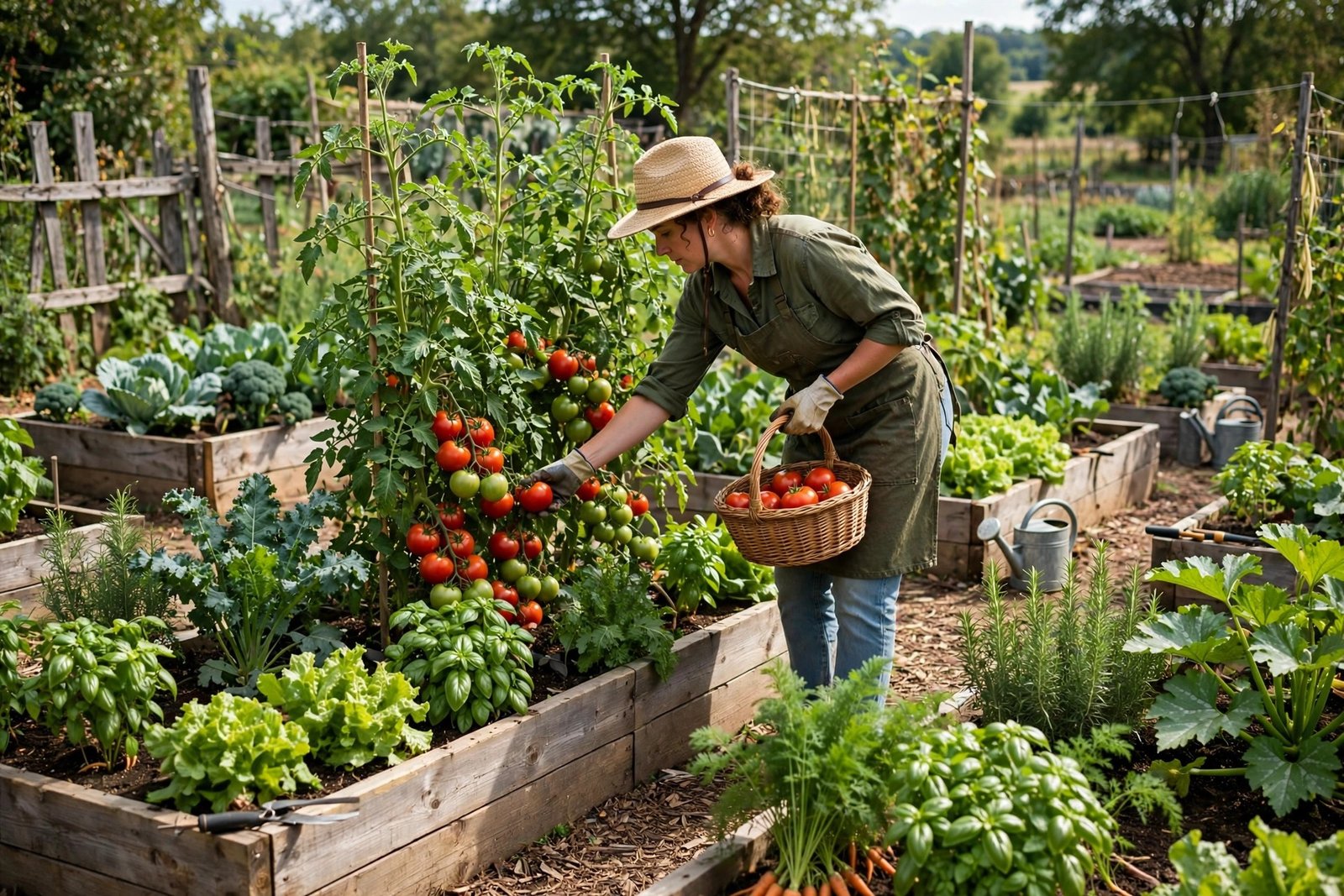
There is a particular magic in eating a tomato you grew yourself — still warm from the sun, tasting like nothing from a supermarket. Vegetable gardening is booming in the UK: allotment waiting lists stretch for years, seed sales climb annually, and more households grow some of their own food than at any point in decades. But for the complete beginner, it looks daunting: soil types, sowing calendars, pests, mysterious failures.
It is simpler than it looks. Starting a vegetable garden comes down to a handful of principles, modest costs, and a willingness to learn by doing. This guide covers the whole journey: what you need, what it costs, what to grow first, and the mistakes that waste beginners’ first seasons.
What You Actually Need (Less Than You Think)
The essentials fit in a paragraph: space with sun (vegetables need 6+ hours of direct sunlight daily — observe your plot through a day before committing), decent soil or containers (more below), seeds or seedlings, water access, and basic tools (a fork, a trowel, a watering can — £30–£50 total second-hand or budget new). That is genuinely it. Raised beds, greenhouses, irrigation systems, and cold frames are upgrades for later — beginners who start simple succeed more often than those who build infrastructure before understanding.
The space question deserves honesty: you do not need an allotment. A sunny patio with containers, a 2m × 1m raised bed, or even a windowsill for herbs all count as vegetable gardens. Growing vegetables in a small UK garden proves how much a tiny space produces — and starting small concentrates your learning where you can manage it. A small garden done well beats a large plot done badly, every time.
The Costs: Year One Honestly Priced
Minimalist start (£30–£80): seeds (£10–£20 — one packet each of 5–6 varieties), compost (£15–£30 for a few bags), basic tools (£20–£30 budget or second-hand). Grow in existing soil or cheap containers. Comfortable start (£80–£200): adds a raised bed kit or timber (£40–£80), better compost in bulk, a few seedling trays, and perhaps starter plants for slow crops. Enthusiast start (£200–£400): multiple beds, quality tools, cold frame, water butt, and a proper seed collection.
The economics that matter: a £60 investment typically yields £150–£300 of produce in year one (at supermarket prices), improving yearly as soil builds and knowledge compounds. But the real return is not financial — it is the quality, the satisfaction, and the skills. Garden on a budget and the maths is kind; making your garden look nice on a budget uses the same resourceful mindset.
Soil: The Foundation Most Beginners Neglect
Beginners obsess over seeds and ignore soil — yet soil quality determines more of your results than variety choice. The good news: you do not need a soil science degree, just three actions. First, know your soil type: squeeze a handful of moist soil — sandy soil falls apart, clay holds a tight ball, loam holds loosely then crumbles. Most UK gardens are clay or loam; both grow vegetables well with organic matter added. Second, add compost generously: a 5cm layer of garden compost or well-rotted manure dug into (or laid onto — no-dig works brilliantly) the top 15cm transforms any soil within a season. This single habit, repeated yearly, is the closest thing to a gardening guarantee. Third, never leave soil bare: mulch empty beds over winter with compost, leaves, or cardboard — bare soil erodes, compacts, and loses life.
The pH question comes up constantly and matters less than feared: most vegetables tolerate the UK’s typical slightly-acidic-to-neutral soils fine. Only blueberries and a few specialists demand acidic conditions. A £10 pH test kit satisfies curiosity, but compost fixes more problems than pH adjustment ever will. Feed the soil biology — the worms, fungi, and microbes — and they feed your plants. The gardener’s real crop is soil; vegetables are the byproduct.
What to Grow First (The Beginner’s All-Star Team)
Choose for reliability, speed, and reward — not ambition. The foolproof first-year lineup: salad leaves (cut-and-come-again varieties give harvests within weeks and forgive everything), radishes (ready in 3–4 weeks — the instant gratification crop), courgettes (absurdly productive; two plants feed a family), runner beans (vigorous, beautiful, generous), tomatoes (cherry varieties outdoors in the south, or any variety in a sheltered spot), herbs (basil, parsley, mint — expensive to buy, trivial to grow), and potatoes (plant and largely ignore until harvest — deeply satisfying).
Avoid in year one: cauliflower and celery (fussy), sweetcorn in small plots (needs blocks for pollination), and anything requiring a greenhouse you do not have. Success with easy crops builds the confidence and soil for harder ones later. The RHS vegetable growing guides give month-by-month specifics for every crop — the authoritative UK reference, free.
How It Actually Works: The Seasonal Rhythm
Vegetable gardening runs on a yearly cycle, and understanding the rhythm is the real “how it works.” Late winter (Jan–Feb): planning — order seeds, prepare beds, start onions and broad beans under cover. Spring (Mar–May): the main sowing season — direct-sow hardy crops, transplant seedlings after frost risk passes (late May in most of the UK). Summer (Jun–Aug): maintenance — watering, weeding, feeding, and the glorious harvest glut. Autumn (Sep–Nov): late harvests, winter crops in (garlic, onions), beds mulched and put to rest. Winter (Dec): planning, tool maintenance, seed catalogues — the gardener’s armchair season.
The two disciplines that determine success: watering (consistent moisture, mornings best, soil not leaves) and feeding (hungry crops like tomatoes and courgettes need regular liquid feed once fruiting). Everything else — pest control, rotation, companion planting — is refinement. Master sun, soil, water, and timing, and the garden largely runs itself.
Beginner Mistakes That Waste the First Season
Sowing too early: the classic — tender seedlings planted before the last frost die overnight. Know your area’s last frost date and respect it. Overcrowding: seed packets’ spacing looks wasteful; it is not — crowded plants compete and underperform. Thin ruthlessly. Ignoring the soil: vegetables are hungry; poor soil amended with compost outperforms rich fertiliser on dead soil. Feed the soil, not just the plants. All-or-nothing watering: drowning then drought stresses plants more than consistent slight dryness. Growing too much of one thing: six courgette plants will bury you — two is plenty. Giving up after one failure: every gardener loses crops; the second year is always dramatically better.
The Bottom Line
Starting a vegetable garden means: find sun, sort soil, buy seeds, sow at the right time, water consistently, and learn from the season. Year-one costs run £30–£200, the beginner all-star crops practically grow themselves, and the seasonal rhythm becomes second nature within a year. The Gardeners’ World guides complement the RHS resources beautifully for ongoing learning. Start small, start simple, and start this season — the tomato you grow yourself is waiting.
Frequently Asked Questions
How much does it cost to start a vegetable garden?
£30–£80 for a minimalist start (seeds, compost, basic tools); £80–£200 comfortable; £200–£400 enthusiast. Year-one produce typically outvalues the investment.
What are the easiest vegetables for beginners?
Salad leaves, radishes, courgettes, runner beans, cherry tomatoes, herbs, and potatoes — all reliable, fast, and forgiving of beginner mistakes.
Can I grow vegetables without a garden?
Yes — containers on a sunny patio or balcony grow salad, tomatoes, herbs, and more. Even a sunny windowsill works for herbs and microgreens.
When should I start sowing?
Main sowing runs March–May in the UK, with hardy crops earlier under cover. Never plant tender crops out before your area’s last frost date (typically late May).