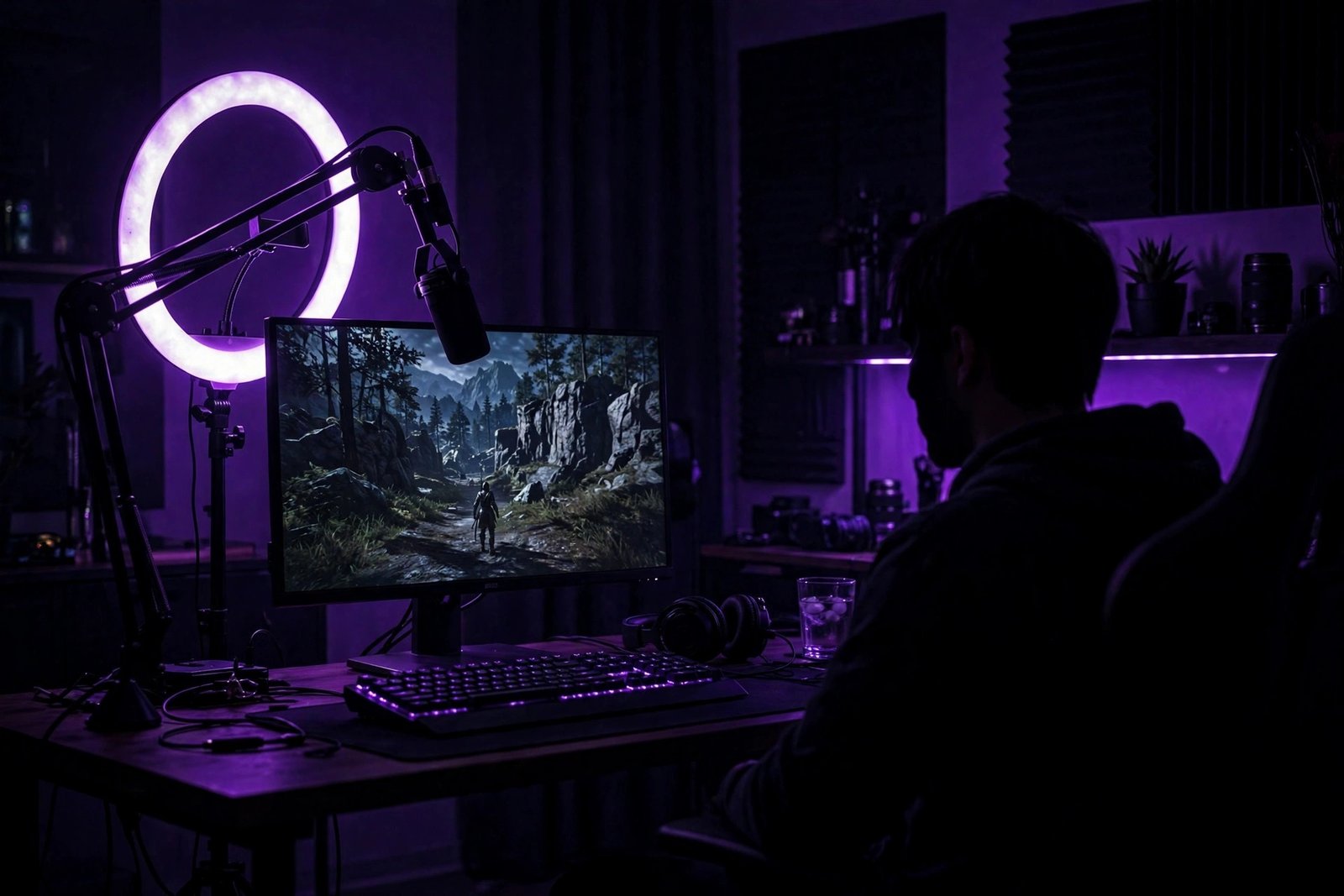
Nobody stumbles into an audience by accident; small channels grow through rhythm, personality and patience.
A streaming channel is live entertainment, not a drawer of finished videos. You play, you talk, and people watch in the moment, reacting in chat while the session is still unfolding. That liveness changes what matters. A brilliant player who barely speaks can be strangely dull to watch, while a modest player who narrates decisions, welcomes newcomers and laughs at mistakes gives viewers reasons to stay. If you already enjoy watching live gigs online for free, you know the feeling from the other side of the screen: the draw is partly the performance and partly the sense that anything, good or embarrassing, could happen next and you were there when it did.
Starting does not require a studio. A console or a computer you already own, a headset, and free broadcasting software will carry a genuine first attempt. What separates channels that grow from channels that stall is rarely the starting kit. It is a recognisable niche, a schedule people can learn, sound that does not tire the ears, and the patience to treat small audiences as real audiences. The launch below is deliberately ordinary, because ordinary and repeatable beats impressive and abandoned within a month.
Your launch checklist at a glance
- Choose one main platform and learn how its discovery and chat actually work
- Pick a specific niche that a stranger could describe in a single sentence
- Test your sound in a short private recording before broadcasting anything live
- Set a modest weekly schedule you can keep during tired and busy weeks
- Prepare a simple overlay, a clear channel description and welcoming opening words
- Plan where short clips will go, because growth usually starts away from the stream
- Decide in advance how you will judge the first stretch, honestly and calmly
Work through that list slowly rather than treating it as a shopping trip. Most items cost nothing but attention. The platform choice shapes everything else, the niche shapes who might care, and the sound test saves you from the classic beginner experience of streaming an entire evening into a muted or distorted microphone. Once those foundations are settled, the remaining work is showing up, reviewing what happened, and adjusting one small thing at a time instead of rebuilding the whole channel after every quiet session.
Picking a platform and a recognisable niche
Platforms differ in how strangers find you. Some favour live discovery through browsing categories, others lean heavily on clips and recommendations elsewhere. A helpful overview of live streaming technology platforms and audiences underlines that the delivery is real time and the chat room is part of the product, not an extra. Spend time as a viewer first. Watch small channels in the games or topics you love, notice how hosts handle quiet chat, and see which platform feels like a community you would happily join as an audience member before asking anyone to join yours.
For many game streamers, the obvious starting point is the service described in accounts of twitch streaming platform for game broadcasters, built around game broadcasts, esports and creative work. Obvious does not automatically mean right for you, though. A smaller or more topic focused service may suit a cosy niche better, and streaming where your existing friends already watch makes those first sessions far less lonely. What matters most is committing for a fair stretch rather than hopping between platforms whenever a session feels quiet, because each move discards the small familiarity you had begun to build.
The niche matters even more than the platform. Saying you play a bit of everything describes almost every beginner channel and gives a stranger no reason to return. A narrower promise works harder: one game explored deeply, one style of challenge run, one cosy corner of simulation or building games, or variety play tied together by a strong theme such as learning difficult games badly and cheerfully. Narrow does not mean trapped forever. It means recognisable now. Audiences gather around a clear expectation, and you can widen gradually once people trust the person behind the promise.
Sound first: the upgrades viewers actually notice
Viewers forgive a soft picture far sooner than they forgive bad sound. Crackle, echo, a fan roaring behind your voice, or game audio swamping every word will empty a room quietly, because listening becomes work. Before considering a better camera, record yourself playing and talking, then listen back on headphones and on a phone speaker. Speak at your natural streaming volume, not a special careful voice. Adjust levels until your words sit clearly above the game without shouting over it, and until sudden laughter or excitement does not distort into harsh noise.
The first sensible upgrade, when you choose to make one, is usually a decent microphone positioned sensibly, close enough to your mouth that you can speak calmly. A microphone across the room faithfully records the room. A modest microphone nearby records you. After sound, lighting helps more than camera price tags suggest. A plain light facing you, rather than a bright window behind you, lets even a basic camera present a clear and friendly face. A second screen for chat, even an old phone or tablet propped nearby, completes the practical trio, because missing chat messages means missing the conversation that makes live streaming different from uploading recordings.
Resist the urge to rebuild everything at once. Change one element, stream, listen back, and keep a short note of what improved. That habit protects you from spending on impressive equipment that solves problems you never had, while the real problem, perhaps chair noise, keyboard clatter or a habit of trailing off at the end of sentences, continues untouched. Good streaming sound is mostly placement, levels and awareness. Equipment supports those habits. It does not replace them, and viewers can hear the difference between the two within minutes of arriving.
Schedules, clips and growing beyond the stream
A schedule is a promise, and a small promise kept beats a grand one broken. Choose sessions that fit around work, study and family life without resentment, at times when your likely audience might plausibly be free. Put those times where visitors can find them, start close to when you said you would, and end sessions while you still have some energy left for the people in chat. Regularity lets casual viewers become habitual ones. They stop needing to discover you repeatedly and start planning around you, which is how a handful of names in chat becomes a recognisable community.
Growth, however, rarely happens inside the stream alone. Live platforms are poor discovery engines for tiny channels, because browsing naturally surfaces those already being watched. Short clips solve that structural problem. A funny failure, a clutch moment, a useful tip or a warm exchange with a viewer can travel on clip and video services where strangers actually encounter new faces. Treat clipping as part of the session, not an afterthought. Note moments as they happen, trim them honestly afterwards, and let each clip represent the real atmosphere of your channel rather than a misleading highlight you could never reproduce live.
Communities beyond your own channel matter too. Being a genuine regular in channels you admire puts your name in friendly contexts, unlike dropping your link uninvited, which people recognise instantly and resent. Over time, shared sessions introduce compatible audiences to one another, carrying trust that self promotion could never buy.
Income streams explained without the fantasy
Channels can earn through several routes once platforms offer them: subscriptions from regulars who want to support you and receive small perks, direct tips from generous viewers, advertising shown around the broadcast, sponsorships from companies hoping to reach your audience, and merchandise for communities that genuinely want it. Naming those routes is easy. Depending on them early is not. For a long beginning stretch, earnings are best treated as pocket money and pleasant surprise, because audience size, viewer generosity and platform rules all sit outside your control and can shift without warning.
That honesty protects your decisions. If you need the channel to pay urgently, every quiet session becomes a financial judgement and the fun that attracted viewers in the first place drains away on camera. Keep expectations plain when friends ask. A channel can grow into meaningful supplementary income for some people, and a fortunate few build full livelihoods, but the visible successes hide a far larger number of steady, small channels whose earnings stay modest. Planning around the modest case is not pessimism. It is what allows you to keep streaming long enough to discover which case yours might become.
Sponsorship deserves particular care. Promoting something you do not use or believe in trades long earned trust for a single payment of goodwill, and audiences detect the mismatch quickly. Read any offer properly, understand what you are being asked to say, and remember that no is a complete answer. The same care applies to your own spending. A channel financed by constant equipment purchases in the hope of future earnings can quietly become an expensive hobby wearing the clothes of a business. Spend from enjoyment or from income the channel has actually produced, not from imagined income ahead.
The part-time path most streamers actually enjoy
The realistic shape of success for most people is a part time channel with a small, loyal audience who know one another, look forward to particular evenings, and would notice if you vanished. That outcome is not a consolation prize. It is a social hobby with structure, creative satisfaction and occasional income attached, and it fits alongside a job or studies instead of competing with them. Many streamers who chase only scale burn out comparing their chat to famous channels. Streamers who build a room they themselves enjoy returning to tend to last, and lasting is the true advantage in a medium that rewards accumulated familiarity.
Review your progress gently and specifically. After an early stretch of consistent sessions, ask whether you still enjoy the preparation, whether any regulars have appeared, whether clips are finding even small numbers of new viewers, and whether the schedule still fits your life. Adjust the game, the timing or the format based on those answers. Changing direction after honest evidence is wisdom, not failure. The only real failure mode is grinding through a version of streaming you dislike, for an audience you are imagining, while the actual pleasures of playing and talking to people quietly disappear.
Start with what you have, on a schedule you can keep. Speak clearly, listen back, and clip the good moments. A channel built that way may stay small, grow steadily or surprise you entirely, but it will be built on habits you can sustain without pretending. In live streaming, sustainability is not the boring alternative to ambition. It is the mechanism by which ambition survives contact with ordinary weeks.