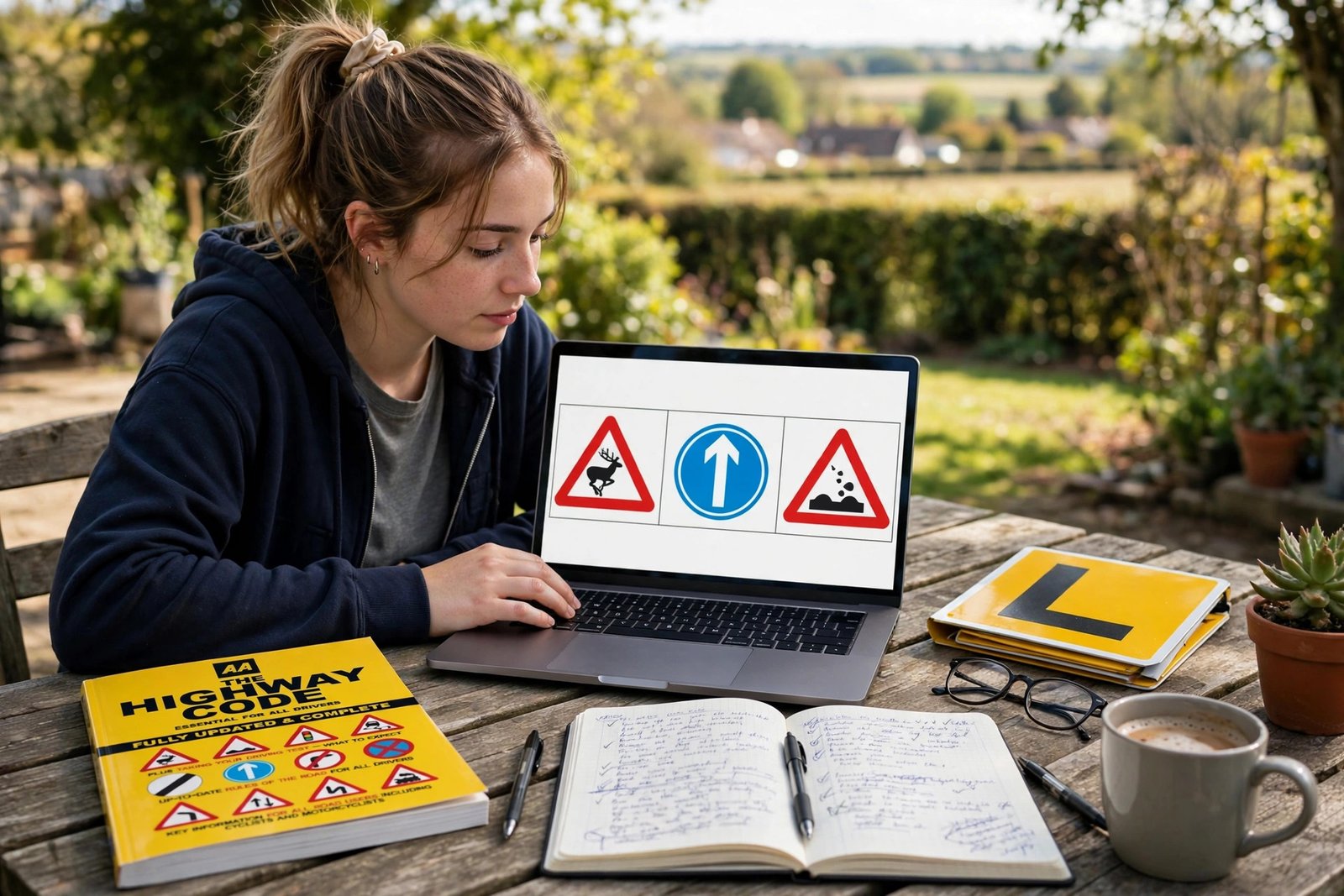
Plenty of learners treat the theory booklet as a chore to rush, then discover its lessons on every journey.
Learn the Format Before Opening Books
Start by learning what the test actually involves, before you learn any of its content. The theory test has two distinct parts taken at the same sitting. The first is a set of multiple choice questions covering road rules, signs, safety and the responsibilities of driving. The second is a hazard perception section in which video clips of real driving scenes play and you respond as hazards develop. Each part is marked separately, and you must reach the required standard in both to pass, so strength in one cannot rescue weakness in the other.
Knowing the format changes how the whole task feels, and learning it first is itself an exercise in making better decisions without endless delay: you establish what the task actually is before spending effort on it. Instead of a vague mountain of motoring knowledge, you face two defined skills: accurate recall and understanding for the questions, and timely observation for the clips. The official description of the driving test format and purpose sets the theory element in its wider context as part of an official examination of a person’s ability to drive. That perspective helps: the theory test is not an administrative toll to pay before the real learning starts. It is the first half of the assessment of you as a driver.
One practical detail deserves attention at this early stage. A theory pass does not last forever; it remains valid for a limited period, inside which you must also pass the practical test, or the theory must be taken again. That window should shape your planning from the beginning. There is little sense in passing the theory long before you are ready to take lessons seriously, just as there is little sense in booking practical lessons with no theory pass in sight. The two halves of learning to drive are meant to interlock.
Study Principles Rather Than Memorised Answers
With the format clear, study the principles underneath the questions rather than memorising answers one by one. Question banks recycle a finite pool of topics dressed in varying wording, and learners who have only memorised surface answers are easily unsettled by an unfamiliar phrasing. Learners who understand why a rule exists can reason their way to the answer even when the question arrives wearing new clothes. Ask yourself, for every topic, what danger the rule is preventing and who it is protecting.
The backbone of that understanding is Highway Code rules and guidance, the official guidance for road users in Great Britain covering rules, signs and advice. Read it as a connected document rather than a list of isolated facts. Stopping distances make sense alongside weather, speed and following gaps. Signs form families whose shapes and colours carry meaning before you read a single symbol. Right of way rules connect to courtesy, visibility and the simple physics of heavy vehicles moving at speed. Connected knowledge survives examination nerves far better than fragments do.
Build the study habit in a way that resembles good judgement generally: small, regular and honest. Progress comes from deciding what today’s session covers, doing it, and checking the result rather than endlessly reorganising your materials. Short daily reading beats weekend cramming for most learners, especially when each session ends with practice questions on the material just covered. Mark every question you answer wrongly, write down the principle you missed, and let those notes set the agenda for your next session.
Practise Hazard Spotting With Calm Timing
Hazard perception unsettles learners more than the questions do, largely because it tests timing rather than knowledge. In each clip you watch a driving scene unfold from the driver’s seat, and you respond when you see a hazard beginning to develop: a pedestrian stepping towards the kerb between parked cars, a cyclist glancing over a shoulder, a vehicle edging out of a side road, brake lights gathering ahead. Scoring rewards early recognition of a developing hazard, not a panicked response once the danger is obvious to everyone.
The technique to practise is calm, continuous scanning. Keep your eyes moving between the road far ahead, the pavements, junctions, parked vehicles and your mirrors, exactly as a good driver does, and respond as soon as a situation starts to change rather than when it finishes changing. Beginners often make the opposite error in both directions: responding to everything that moves, which the system may treat as an attempt to cheat the pattern, or waiting for certainty, by which time the scoring window has closed. Measured anticipation sits between those extremes.
Treat practice clips as rehearsals for real observation rather than as a separate game. After each clip, replay in your mind what the earliest clue was: the ball rolling towards the road, the delivery rider’s change of line, the gap in traffic inviting somebody to cross. Naming the earliest clue trains your attention to hunt for clues rather than dangers, and clues appear seconds earlier. That same habit, carried into your practical lessons, is what instructors mean when they praise a learner’s awareness. The hazard section is not testing whether you can operate a mouse. It is testing whether you notice the world the way drivers must.
Book Through Official Channels Only
When your practice results suggest you are ready, book the test through official channels and nowhere else. Copycat booking services exist purely to charge extra for a simple transaction, dressing themselves in official-looking colours and wording while adding fees for doing what the genuine service does directly. Go to the official government booking service yourself, choose your test centre and time, and pay the standard charge there. Anything arriving by unsolicited message or advertisement promising shortcuts deserves immediate suspicion.
Readiness deserves an honest definition before you book. You are ready when practice tests, taken under timed conditions without pausing or peeking, are passing consistently rather than occasionally, and when your hazard scores hold up across unfamiliar clips rather than only across clips you have seen before. Booking earlier than that, in the hope that a deadline will concentrate your mind, usually purchases an expensive rehearsal and a disappointing result. Booking at genuine readiness turns the appointment into a confirmation of skills you have already demonstrated to yourself in private.
Prepare the logistics with the same care as the knowledge. You will need the correct licence documents, so check what must be brought well before the day rather than the night before. Plan the journey to the test centre with slack for delays, arrive in good time, and expect identity and security checks on entry. Small practical failures, a forgotten document, a frantic late arrival, waste more good preparation than difficult questions ever do. Calm administration is part of passing, and it is entirely within your control.
Time the Pass Around Your Lessons
Fit the theory pass into your wider learning rather than treating it as a separate project. Solid theory knowledge reduces the amount of basic road knowledge an instructor must teach during practical lessons, because explanations about signs, priorities and hazards can build on understanding you already have instead of starting from nothing each time. Lessons then move faster towards judgement and vehicle control, which is where paid tuition earns its keep. In that sense, money and effort spent preparing properly for the theory test can quietly reduce what the practical stage costs you overall.
Sequencing matters in both directions. Passing the theory very early, before lessons begin, risks arriving at the practical test near the end of the pass’s validity with pressure you did not need. Leaving the theory until lessons are well advanced risks the opposite frustration: driving competently in lessons yet being unable to book the practical test because the theory hurdle still stands in the way, while the validity clock has not even started. The balanced route for most learners is to begin theory study alongside early lessons, let each reinforce the other, and sit the test once practice results are stable.
Talk to your instructor about timing if you have one, because they watch learners make both mistakes every season. They can also weave your theory weaknesses into lessons: a learner shaky on roundabout priorities can be routed through roundabouts, and a learner vague about rural hazards can be taken where those hazards live. Theory learned at a desk becomes knowledge when the same situation appears through a windscreen. That connection, desk to road and back again, is when the booklet stops feeling like a chore.
Use Failure Feedback for Targeted Revision
If the result is a fail, treat the disappointment as data. The result tells you which part fell short, and your own memory of the sitting tells you more: which topics felt guessed, whether time pressure distorted your answers, whether hazard clips caught you watching the wrong part of the scene. Write those observations down the same day, while they are still sharp, because a week later the memory softens into a general feeling of unfairness that teaches nothing. Failing once is common and recoverable; failing identically twice is a choice.
Revise against the diagnosis rather than restarting from the first page. If particular topics failed you, return to the principles behind them in the official guidance and rebuild them properly this time, then test yourself with fresh questions on those topics alone. If timing failed you in the hazard section, practise scanning and early recognition with new clips until anticipation feels unhurried. Avoid the trap of simply rebooking immediately and hoping familiarity with the building will carry you. Hope is not a revision strategy, and the retest fee is better spent once the weakness has actually closed.
Hold the value of the whole exercise in view while you revise. Beginners sometimes ask whether the theory test is worth the effort at all, and the honest answer is visible in every later stage of driving: the knowledge surfaces at every junction, every unfamiliar sign and every developing hazard for the rest of your driving life, not merely on test day. An instructor can polish vehicle handling in a matter of weeks. The understanding underneath safe decisions is what the theory stage builds, and it stays with you long after the pass certificate is filed away and forgotten.