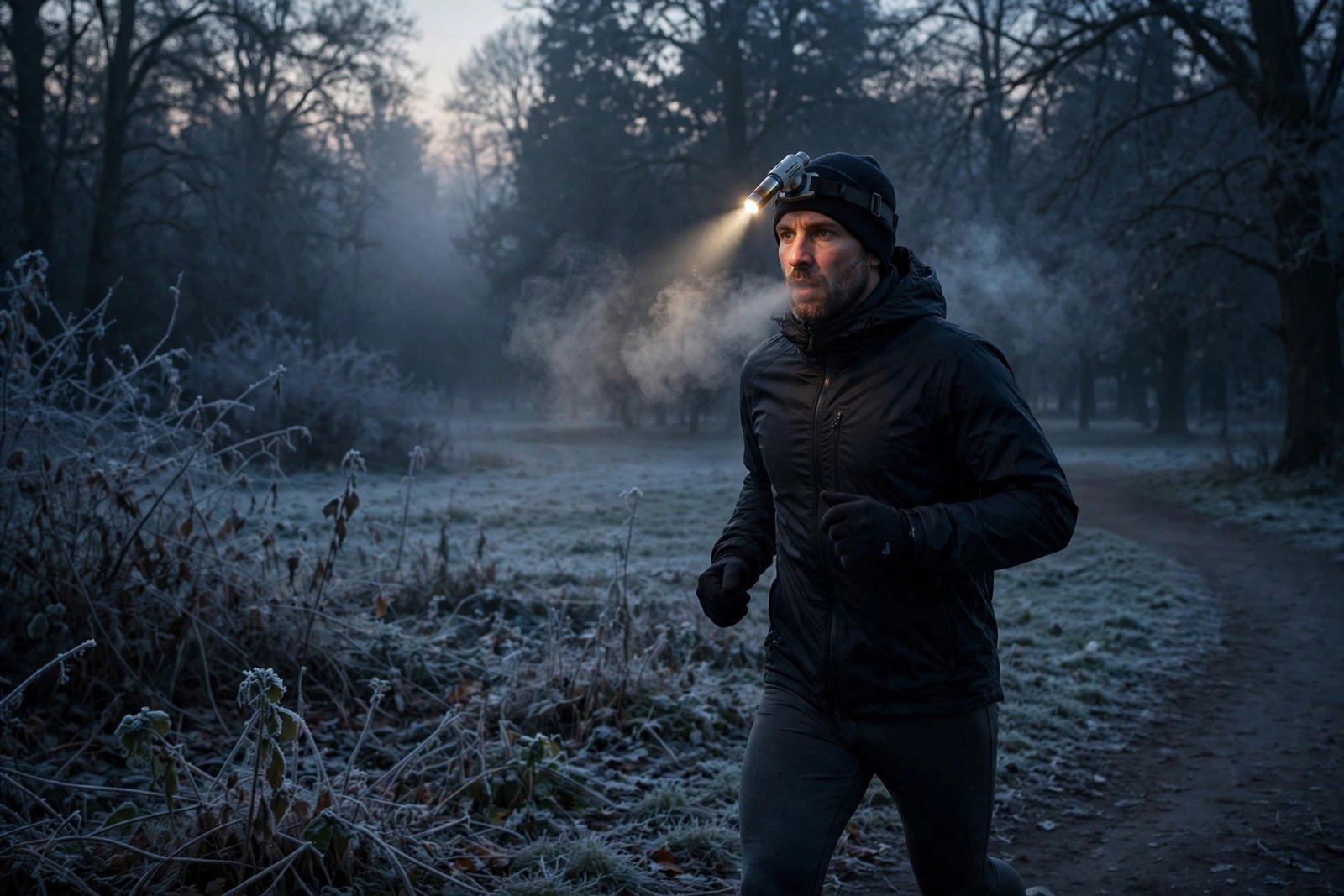
Winter is the graveyard of fitness intentions: the clocks go back, darkness swallows the evenings, the sofa develops gravitational pull, and the exercise routine that thrived in September is a distant memory by December. Staying motivated to exercise through a British winter as a complete beginner is not a willpower problem — it is a systems problem, and the people who succeed are not more disciplined but better designed. This guide gives you the complete winter-proofing system: the psychology of why motivation collapses, the environmental redesign that prevents it, and the practical tactics that keep beginners moving through the darkest months.
You will learn why winter kills motivation (it is not laziness), how to redesign your environment for the dark months, the exercise formats that thrive in winter, how to handle the inevitable bad weeks, and the spring payoff that makes it all worthwhile.
Why motivation collapses in winter (it is physiology, not character)
Your winter exercise slump has biological roots. Shorter days disrupt circadian rhythms and serotonin production — the same mechanism behind seasonal affective disorder, which affects a significant minority and sub-clinically saps many more. Cold weather raises the perceived effort of everything: the warm-up takes longer, muscles feel stiffer, and the simple act of leaving a heated house feels like an expedition. Darkness removes the visual cues and vitamin D synthesis that support mood and energy.
Then the psychology compounds it: missed sessions breed guilt, guilt breeds avoidance, and the all-or-nothing mindset (“I missed a week, might as well wait for January”) does the rest. Beginners are most vulnerable because the habit is not yet automatic — it still costs willpower, and winter taxes willpower heavily. Understanding this is liberating: you are not weak, you are fighting legitimate headwinds. The solution is not more motivation but less reliance on it — systems that carry you when feelings do not. If low mood is more than seasonal slump, guidance on seasonal affective disorder is worth reading alongside this.
Redesign your environment for the dark months
Motivation is unreliable; environment is not. Winter-proofing starts with removing friction. Lay out exercise clothes the night before — the decision made in the warm evening beats the negotiation in the cold morning. Keep a “winter kit station” by the door: headtorch, reflective vest, gloves, hat — no searching, no excuses. If you exercise after work, go directly, never via the sofa — the sofa is a motivation black hole with a 95% capture rate.
Shift the schedule toward light: lunchtime sessions exploit the brightest hour, and morning exercisers report better winter adherence than evening ones (fewer competing demands, no darkness negotiation). Bring exercise indoors strategically: a home workout corner with a mat and bands eliminates weather entirely — even 20 minutes counts. Social architecture helps enormously: a winter training partner, a class booking (financial commitment plus social expectation), or a club with floodlit sessions. Design the path of least resistance to lead through exercise, and winter becomes navigable. The principle generalises — sustainable hobbies survive winter precisely because their systems do not depend on fair weather.
Exercise formats that thrive in winter
Choose winter-compatible activities rather than fighting the season. Strength training is the winter champion: indoors, progressive, time-efficient, and it builds the resilience that makes spring running easier. Home workouts (bodyweight circuits, dumbbell routines, yoga) remove every weather excuse. Swimming: pools are warm, bright, and blissfully consistent year-round. Indoor climbing, martial arts, and racket sports in leisure centres all offer community plus shelter.
For outdoor loyalists: winter running is entirely doable with the right kit — thermal base layer, windproof jacket, gloves, headtorch, reflective gear — and many runners come to love the stark beauty of dark, cold miles. Parkrun continues all winter (free, marshalled, social). Weekend daylight adventures — long walks, hikes — exploit the short light maximally. The key insight: winter is not for personal bests but for base-building and consistency. Shift goals from performance to attendance: the win is showing up, and spring fitness is built in December’s unglamorous sessions.
Handling the bad weeks (they will come)
Perfection is not the goal; the goal is never missing twice. The research-backed rule: one missed session is life, two is the start of a new habit — so the only rule that matters is “never miss twice.” Illness, work crises, and genuine exhaustion happen; respond with the minimum viable session (a 10-minute walk counts — it preserves the identity of “someone who exercises”) rather than the all-or-nothing collapse.
Reframe winter training as seasonal periodisation, not failure: athletes deliberately train easier in winter — you are following professional practice, not falling behind. Track streaks of weeks (not days) to smooth over bad patches. And plan the spring reward now: enter a spring 10k, book a cycling trip, set a March strength goal — the future event pulls you through February’s darkness. If motivation fully evaporates for more than two weeks, interrogate the programme, not yourself: boredom, excessive difficulty, or schedule friction are usually the culprits, and all are fixable. The NHS physical activity guidelines remind us that some activity always beats none, and Sport England’s winter campaigns tackle exactly this seasonal drop-off — lower the bar before abandoning it.
The spring payoff
Here is what the winter exerciser gets: while everyone else restarts from zero in March, you begin spring with an aerobic base, established habits, and momentum. The first warm evening run feels like flying. The spring race you entered becomes a celebration rather than a panic. And psychologically, surviving winter training builds the deepest fitness confidence there is — if you can train through January darkness, you can train through anything.
There is also a quieter reward: winter exercisers consistently report better mood, sleep, and resilience through the season — the training does not just survive winter, it improves it. The discipline compounds like interest: each winter survived makes the next easier, until “winter exerciser” is simply who you are. Start the systems now, in autumn’s mild weeks, before the real dark arrives — preparation beats willpower, every time.
Conclusion
Staying motivated to exercise in winter as a beginner is a systems challenge, not a character test: redesign your environment to remove friction, choose winter-compatible formats, shift goals from performance to attendance, never miss twice, and plan a spring reward to pull you through. The physiology is against you and the psychology compounds it — which is exactly why the people who design for winter win. Build the system in autumn, and spring will thank you.
Frequently Asked Questions
Is it safe to exercise outdoors in winter?
Yes, with sensible kit — layers, visibility gear, and attention to ice. The cold itself is fine for healthy people; the risks are slips, poor visibility, and underdressing. Warm up longer than in summer.
How do I stay motivated when it is dark by 4pm?
Shift to lunchtime or morning sessions, move key workouts indoors, and use social commitments (classes, partners) that do not depend on your mood at 6pm.
Should I change my goals for winter?
Yes — deliberately. Winter goals: consistency, base fitness, strength. Save performance goals for spring. This is professional periodisation, not lowering standards.
What if I have already fallen off for weeks?
Restart small: one easy session, then another. Do not attempt to “make up” missed training — that causes injury. The best time to restart was weeks ago; the second-best time is today.