Silky dip at home comes down to order and patience rather than special equipment, because whipping the tahini first and removing chickpea skins changes everything. The short answer is technique, not extra ingredients.
Why does shop-bought texture seem so hard to match?
Shop bought hummus feels smoother than most homemade attempts for reasons that have little to do with secret ingredients. Commercial producers blend for longer, use powerful equipment and, crucially, build the dip in an order that favours emulsion, so the sesame paste, lemon and water combine into a stable cream before the chickpeas ever arrive. Home cooks usually tip everything into the processor at once and hope, and hope produces a coarse, heavy paste almost every time.
Texture also depends on what the chickpeas bring with them. Their papery skins survive ordinary blending as tiny flecks that interrupt the smoothness, and tinned chickpeas packed firmly carry a starchy liquid that can turn a dip gluey if it all goes in unthinkingly. None of this means the homemade version is doomed, since the same dip made with a different sequence, a little patience and attention to skins can surpass the tub from the supermarket shelf comfortably.
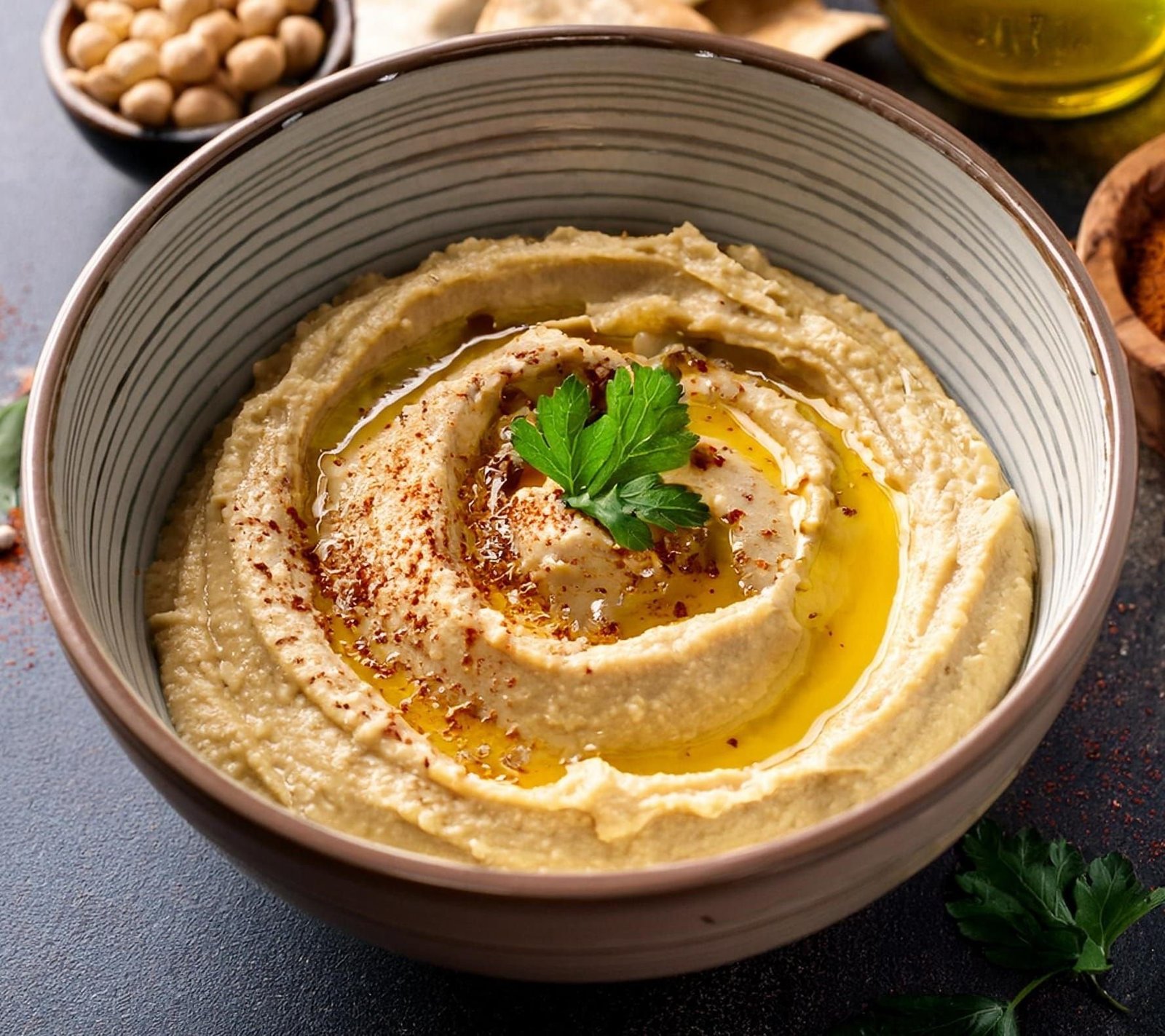
Expectations play a part too. The silkiest restaurant style hummus is lighter and looser than many home cooks aim for, almost a whipped sauce rather than a stiff spread, and it is served in a shallow swirl with oil pooled in the middle rather than in a dense mound. Judging a home batch against that picture, rather than against a sandwich filling, points the blending in the right direction from the start, and anyone mindful of balanced eating, perhaps watching for warning signs of high blood sugar to watch for as part of wider health care, will find the chickpea base a genuinely useful food to master.
What changes when tahini is whipped before chickpeas arrive?
Whipping the tahini with lemon juice first is the single change that transforms the whole dip. Given a full minute or two alone in the processor with the lemon, a clove of garlic and salt, the sesame paste turns paler, fluffier and noticeably lighter, trapping air and forming the creamy foundation into which chickpeas can later disappear without trace. Skipping this stage leaves the tahini as a heavy slick at the bottom of the mixture, and no amount of later blending quite recovers the lost lightness.
Proportion matters as much as order here. Recipes that treat tahini as a minor seasoning produce a dip that tastes mostly of chickpea and feels dense on the tongue, however smooth the blending. A generous share, closer to the amount used in the regions where the dish originates, gives richness, body and that distinctive sesame depth, underlining how central the paste is to dips across Middle Eastern cooking rather than a background note to be added timidly.
The garlic also behaves better in this sequence. Blended into the lemon and tahini, its sharpness softens and distributes evenly, so no mouthful carries a raw, burning lump, while its flavour still registers clearly in the finished dip. Lemon juice added early brightens the sesame rather than sitting on top as a sour afterthought, and the salt dissolved at this stage seasons the base itself, which later makes final adjustments far easier to judge accurately.
Do skins really make that much difference?
Yes, and the difference is easy to prove with a single batch divided in two, one half blended with skins and the other without. The skinned portion stays faintly grainy however long the motor runs, while the peeled portion turns glossy and smooth, because those thin husks simply refuse to break down into the cream around them. They are the main obstacle between an ordinary home hummus and the texture people describe as silky.
Removing them asks for ten unhurried minutes rather than any skill. Tinned chickpeas tipped into a large bowl of water and rubbed gently between the palms loosen their skins, which float to the surface for skimming away with a spoon or small sieve. Working in handfuls keeps the job calm, and a few stubborn skins left behind do no real harm, since perfection is unnecessary when the great majority have gone.
Cooking dried chickpeas until very soft, softer than would suit a stew, offers another route to smoothness, and a pinch of bicarbonate in the soaking or cooking water helps the skins slip and the centres soften further. Background reading on chickpea varieties, preparation and culinary history shows how long the legume has been cultivated and cooked across the Mediterranean and Middle East, and that history includes plenty of patient preparation of exactly this kind, long before processors existed to do the heavy work.
Why does icy water lighten the finished dip?
Icy water sounds like a flourish, yet it performs two useful jobs at once. Added gradually with the motor running, cold water loosens the blended chickpeas into a lighter, almost whipped consistency instead of the dense paste that results when the mixture is left thick. The cold also helps the sesame and lemon emulsion hold together smoothly, so the dip looks glossy rather than split or grainy when it reaches the bowl.
Gradual addition is the discipline that makes the trick work. A spoonful at a time, pausing to watch the texture change, lets the cook stop at the point where the hummus falls softly from a spoon in ribbons. Flooding the processor in one pour risks a runny dip that no extra chickpeas can quite rescue, while stopping too early leaves the familiar heavy spread. The right consistency also firms slightly in the fridge, so aiming a shade looser than the final target is wise.
Some cooks keep a little of the chickpea liquid in reserve for the same job, and it works, though its starch can push the texture towards gluey if used heavily. Plain icy water keeps the flavour cleaner and the colour paler, which suits a dip meant to taste brightly of lemon and sesame. Either way, the liquid is a seasoning for texture in its own right, judged by eye and spoon rather than measured and forgotten.
How bold does the seasoning need to be?
Bolder than most home cooks first dare, because cold food mutes flavour and chickpeas are bland by nature. A dip that tastes perfectly balanced warm from the processor will taste under seasoned after an hour in the fridge, so salt and lemon should both be pushed until the mixture tastes almost too assertive, at which point it is probably exactly right for serving. Garlic, too, needs confidence, grated or crushed finely so its heat spreads rather than ambushes.
Balancing is a matter of small corrections in a sensible order. Salt first, since it wakes everything else up, then lemon for brightness, then a taste for garlic heat, adjusting one element at a time and blending briefly between additions. A pinch of ground cumin belongs in many regional versions and adds a warm, earthy note, though it changes the character noticeably, so it suits cooks who know they enjoy it rather than those chasing the plainest classic style.
Good tahini carries seasoning a long way, because a fresh, runny paste tastes nutty and almost sweet, while an old, stiff jar can taste bitter and demand more lemon to correct. Reading about tahini production, flavour and uses in dips shows how much the grinding of the sesame shapes that flavour long before a jar ever reaches the kitchen. Stirring the jar thoroughly before measuring matters, since the oil rises and the solids settle, and a spoon taken only from the oily top gives a thinner, weaker result. Tasting the tahini alone, strange as it feels, tells the cook more about the coming dip than any other single check.
How should it be served and stored afterwards?
Serving properly is a pleasure rather than a chore. Spoon the hummus onto a shallow plate or wide bowl, then use the back of your spoon in a circular motion to leave a swirl with a shallow well at the centre. Good olive oil pooled into that well, a dusting of paprika or sumac and a scattering of whole chickpeas kept back from the batch give the dip the look it deserves, and warm flatbread or pitta alongside makes the whole thing feel complete.
Temperature at serving makes a quiet difference. Hummus taken straight from the fridge tastes firm and muted, while the same dip left on the worktop for a short while softens, loosens and lets the lemon and garlic speak properly. Planning that pause into a meal, taking the bowl out as guests arrive or as the main cooking begins, costs nothing and noticeably improves the first mouthful for everyone at the table.
Storage follows simple rules. Kept in a clean container in the fridge under a thin film of olive oil across the surface to slow drying, homemade hummus holds well for several days, and its flavour often settles pleasantly by the second day. It does not freeze gracefully, turning grainy as it thaws, so smaller batches made fresh suit the texture far better. Any dip that smells sour beyond the lemon, or has sat out through a long warm evening, should be discarded without debate.
Quick answers to common hummus questions
Bitterness troubles many first attempts, and the usual culprits are an old jar of tahini, garlic blended too harshly for too long, or olive oil with a strong peppery bite worked into the mixture rather than poured over at the end. Switching the oil to a mild one for blending, keeping the best oil for serving and checking the tahini freshness resolves most cases without changing anything else in the method.
Questions about thickness come next in frequency. A dip that feels too stiff almost always needs more icy water and more blending time rather than more oil, while a dip that feels too loose benefits from a short rest in the fridge, where it firms as it chills. Graininess, meanwhile, points back to skins left on or chickpeas not cooked softly enough, and both causes are preventable next time rather than fixable in the bowl.
Keeping time rounds off the usual concerns, and the honest answer is several days in the fridge, eaten sooner for the best texture and never kept once sourness appears. Taken together, the answers return to the same short lesson the whole method teaches, that order, skins, cold water and confident seasoning do the work. No special equipment, no obscure ingredient and no luck are required, only a few patient minutes spent in the right sequence.