A deep brown crust with a blushing centre is built on dry surfaces, fierce heat and patience after the pan.
Which cuts reward fierce heat on a domestic hob?
The short answer is that a generously thick cut rewards fierce heat, because thickness buys time. The outside can sit against a fiercely hot pan long enough to turn deep brown while the middle stays tender and blushing, and that contrast is the whole point of cooking steak this way. A thin piece gives the cook almost no room at all, since the centre races past the point you wanted before the surface has properly coloured. Anyone who enjoys grilling a burger to a juicy medium rare will recognise the same principle at work, because generous thickness and strong heat need to be handled together rather than treated as separate choices.
Within that thick cut, marbling matters. Those fine streaks of fat running through the meat act rather like basting that is already built in, keeping each slice moist while the pan does its fierce work. A reference work setting out what a steak is and how steaks are cooked describes a steak as meat sliced across the muscle fibres, typically from beef, and notes that grilling and pan-frying are both common ways of cooking it. Ribeye carries generous marbling and a rich flavour, sirloin tends to be leaner with a deeper beefy character and a firmer bite, and fillet is the tenderest and mildest of the three, with far less fat to protect it if the heat runs away.
Leaner value cuts can also reward this treatment, provided they are chosen thick and treated with respect. Their flavour is often excellent, sometimes bolder than the premium cuts, but there is less internal fat to forgive a distracted moment at the hob. The practical rule is simple to state and easy to follow. Choose thickness first, look for marbling second, and only then think about seasoning and sauces. A well chosen cut cooked plainly will beat a poor cut dressed up with elaborate flavourings almost every time, because the pan can only develop what the meat already brings to it.
Why does a dry surface matter more than elaborate seasoning?
A wet surface steams, and steaming is the enemy of a crust. When a damp steak meets hot metal, the heat is spent driving off surface moisture before any real browning can begin, and in that wasted interval the meat below is already cooking through. Drying the surface thoroughly with kitchen paper feels like a small, fussy step, yet it changes everything that follows. The pan can get straight to work on the meat itself, the colour deepens faster and more evenly, and the finished steak tastes roasted rather than boiled in its own juices.
That deep flavour is not magic, and it helps to understand the browning reaction behind a flavourful crust in plain terms, as the process that gives browned food its distinctive taste. Once the surface is dry and the heat is fierce, the outside of the steak transforms, turning savoury, complex and almost nutty in a way that no marinade poured from a bottle can properly imitate. Seasoning still has its place, of course. Salt and cracked pepper, applied boldly, are quite enough for good meat. Salt them either just before cooking or far enough ahead for the moisture it draws out to be taken back in, but never leave the surface damp at the moment the steak goes into the pan.
It also helps to bring the steak out of the fridge well ahead of cooking, so the chill has left it before it meets the heat. A fridge-cold centre encourages uneven cooking, with an overdone band around the outside and a raw middle that nobody ordered. Standing at room temperature for a while, uncovered, also helps the surface stay dry rather than collecting condensation. None of this calls for special equipment or obscure ingredients. It asks only for paper, patience and a willingness to let a simple piece of meat be properly prepared before the dramatic part begins.
How often should the steak be turned while it sears?
Turn it often. The old advice to leave a steak untouched on one side and then turn it once sounds disciplined, but frequent turning cooks the meat more evenly and builds colour on both faces at the same time. Each side gets repeated short bursts of fierce heat, so neither face sits long enough to dry out or scorch in patches, and the band of grey, overdone meat just beneath the crust stays pleasingly narrow. The result is a steak that is browned all over yet still blushing through most of its depth.
The pan itself should be heavy, and it should be heated until it is only just beginning to smoke before the steak goes in. A heavy pan holds its heat when the cooler meat arrives, so the sear continues instead of fading into a simmer. Lay the steak down away from you so any spitting fat moves in the safer direction, and press it gently down at first so the whole surface makes honest contact with the metal. Corners and edges that curl away from the pan will stay pale unless they are encouraged down early on.
When does butter basting help rather than overwhelm the crust?
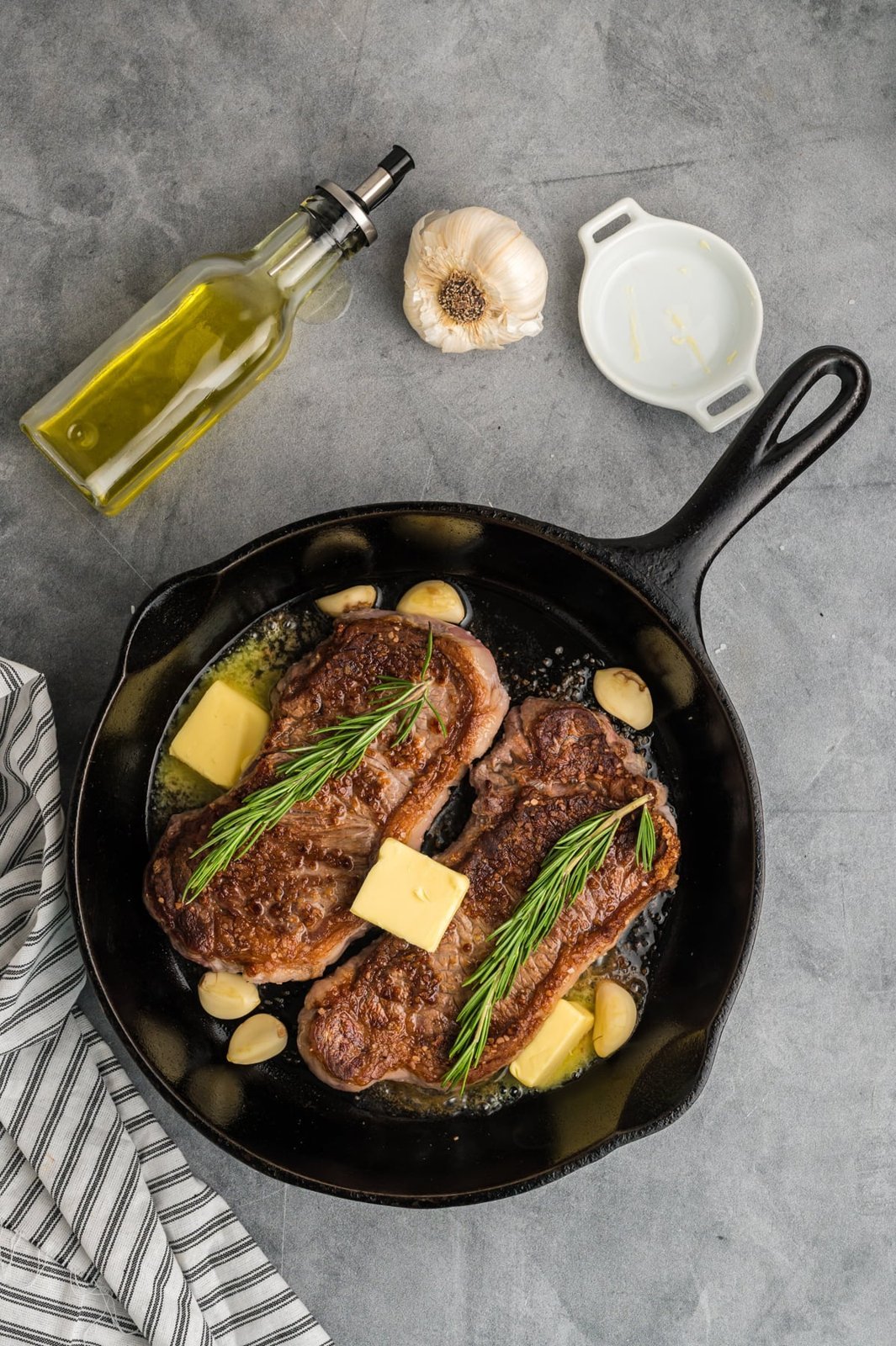
Butter helps late, and only late. Added at the start, it would burn long before the crust had formed, turning bitter and spoiling the very flavour it was meant to enrich. The crust needs the first part of the cooking entirely to itself, in a fierce, dry pan, with nothing softening its progress. Once that deep brown surface is established, however, the picture changes. A knob of butter melting in the pan can then be spooned repeatedly over the steak, washing it in nutty, savoury richness that settles into every crevice of the crust without undoing it.
Garlic and sturdy herbs can join the butter for this final stage, lending their aroma while the basting continues. Tilt the pan so the foaming butter gathers at one edge, then spoon it over the meat again and again in a steady rhythm. The steak should glisten, and the kitchen should smell wonderful, but the crust underneath must still feel firm when the spoon passes over it. If the butter starts to darken too far or smoke heavily, the heat is too high for this stage, and the pan should come off the hob briefly while the basting finishes.
Judged well, basting is a finishing touch rather than a cooking method. It suits rich cuts especially, where the extra butter echoes the marbling already inside the meat, and it should be used more sparingly with fillet, whose delicate flavour can be swamped by too much surrounding richness. The question to ask is whether the butter is serving the beef or replacing it. When the first flavour on the tongue is still beef, deepened and rounded by the butter, the balance is right and the crust has been helped rather than overwhelmed.
How can doneness be judged without guesswork or prodding?
The honest answer is to use a thermometer. Poking a steak with a fingertip and comparing it to parts of your own hand is a parlour trick with too many variables, since hands differ, steaks differ and confidence is easily misplaced. A thermometer slipped into the thickest part of the meat gives a plain reading that can be trusted, and it settles the question without cutting the steak open and losing the juices you have worked to keep inside. For a cook learning the method, that certainty is worth far more than any performance of instinct.
Two habits make the reading useful rather than merely interesting. The first is to check before you expect the steak to be ready, because meat in a fierce pan moves quickly at the end, and a reading taken too late is only a record of a mistake. The second is to allow for the temperature continuing to rise while the steak rests. The heat gathered at the surface keeps travelling inwards after the pan, so the steak should leave the heat a little short of its final point and arrive exactly where you wanted it by the time it is sliced.
Colour and feel still have a supporting role. As you cook more steaks, the reading from the thermometer teaches you what a blushing centre looks like when the steak is cut, and how the surface spring changes as the middle firms. Over time the two forms of knowledge check each other. Until then, trust the instrument. There is no shame in measuring, and a great deal of pleasure in serving a steak that is precisely as intended, from the first slice to the last, rather than discovering the truth only when it is too late to change it.
Why does resting change the texture of every slice?
Resting is where the juices are decided. During cooking, the heat drives moisture towards the centre of the meat, and a steak sliced the moment it leaves the pan will spill those gathered juices across the board, leaving the slices themselves strangely dry. Given a proper rest, rested until the juices settle, the moisture spreads back through the meat and is held there when the knife finally goes in. The difference shows in every slice, which eats tender and succulent instead of leaking its best part onto the plate before anyone can taste it.
Rest the steak somewhere warm and leave it undisturbed, because fussing defeats the purpose. While it rests, the pan still has work to offer. The browned residue left behind is concentrated flavour, and a sauce built from the juices that flow from the meat during cooking, loosened in the pan and thickened gently, belongs to an old and honourable tradition of serving steak well. One reference describes that kind of sauce as being made from meat juices thickened so it pours rather than floods, and a pan sauce follows the same generous logic in miniature.
Finally, slice across the grain. Find the lines running through the meat and cut across them rather than along them, so each mouthful is tender instead of stringy. This matters most for the leaner and value cuts, where the grain is more pronounced, but it improves every steak on the board. Serve the slices promptly, with the pan sauce spooned over, and keep accompaniments simple enough to let the meat speak. The whole method, from dry surface to patient rest, exists to protect one thing, and that is the pleasure of a slice that is browned outside, blushing inside and juicy all the way through.