
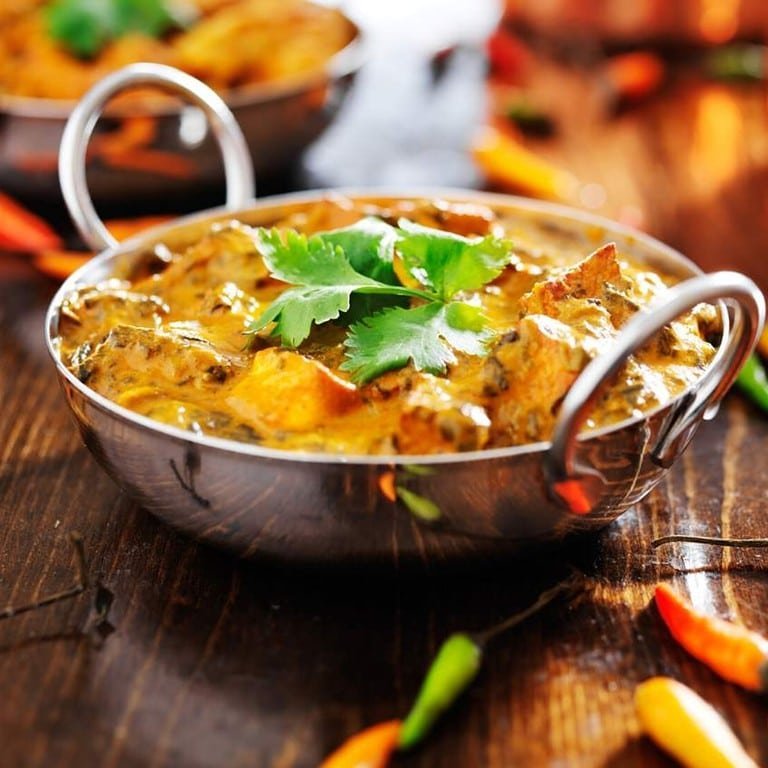
Homemade curry is often delicious — and almost never tastes like the takeaway. When people ask how can I make curry taste like a takeaway at home, they’re chasing that specific restaurant flavour: the glossy sauce, the depth, the slightly smoky richness that home versions lack.
I spent years wondering, then learned the truth from a chef friend: restaurants don’t cook curries the way home cooks do. They use different foundations, ferocious heat, and finishing tricks. Here’s the complete translation of restaurant technique to home kitchens.
How can I make curry taste like a takeaway at home? The base gravy
The biggest secret: British Indian restaurants don’t build each curry from scratch. They make a vast batch of ‘base gravy’ — onions, carrots, cabbage, peppers and spices simmered for hours then blended silky-smooth — and every curry starts with ladles of this foundation. It’s why restaurant curries have that consistent, glossy, deeply savoury body that home versions (built on fried onions alone) lack. The home version: simmer 4 onions, 2 carrots, ½ cabbage, a green pepper and a thumb of ginger with turmeric and water for 90 minutes, blend smooth, and freeze in portions. Every curry you make for the next month starts here.
The second secret is onion quantity and treatment: restaurants use far more onion than home cooks, cooked down to complete sweetness — 20+ minutes of patient frying until deeply golden, not the 5-minute soften most recipes suggest. Undercooked onion is the number one reason home curries taste raw and thin. And the spice treatment: whole spices bloomed in hot oil first (cumin seeds, mustard seeds, cardamom), ground spices added to the oil — never to watery sauce — and fried for 60 seconds until fragrant. Spices need fat and heat to release their flavour; dumped into liquid, they taste dusty.
- Make base gravy in bulk — the restaurant foundation
- Cook onions 20+ minutes to deep gold, not 5 minutes
- Bloom whole spices in hot oil; fry ground spices in fat, not water
- Finish with the tadka: spiced hot oil poured over at serving
- Restaurant heat: cook hotter and faster than feels comfortable
Heat, fat and the finishing tricks
Restaurant burners are ferociously hot — far hotter than domestic hobs — and that heat creates the slight charring and caramelisation that defines takeaway flavour. At home, compensate: use your largest burner on full blast, cook in smaller batches (crowded pans steam), and let things catch slightly — the fond (browned bits) on the pan bottom, deglazed with a splash of base gravy, is pure flavour. A screaming-hot pan is also why restaurant meat has that edge: sear it hard first, then simmer it in sauce, rather than stewing pale meat from raw.
Fat is flavour, and restaurants are generous: ghee for finishing, oil for cooking, cream or coconut milk to enrich. A knob of butter swirled in at the end (the classic restaurant finish) rounds and glosses the sauce beautifully. Then the tadka — the final tempering of spices crackled in smoking-hot oil or ghee, poured sizzling over the finished dish. For dals and many vegetable curries, the tadka isn’t garnish; it’s half the flavour. Mustard seeds, cumin, dried chillies, curry leaves, garlic — 60 seconds in hot ghee, poured over, lid on for a minute to trap the aroma.
The details: salt, acid, and what to serve
Restaurant curries are seasoned aggressively — more salt than home cooks dare, balanced at the end with acid (lemon juice, amchur/dried mango powder, or a splash of vinegar) and sometimes a pinch of sugar to round the tomato sharpness. Taste and adjust at the end, not the beginning: salt in layers during cooking, then the final balance of salt-acid-sweet just before serving. Fresh coriander stems (not just leaves — the stems have more flavour) stirred through at the end, and the curry should glisten: if it looks matte, it needs more oil or butter.
Serve it like the restaurant: fluffy basmati (rinsed, rested — the rice guide applies), or better, the takeaway trinity of pilau rice, garlic naan (shop-bought naan brushed with garlic butter and blasted under a hot grill works brilliantly), and a simple onion-and-cucumber raita to cool. And manage expectations on one thing: the tandoor. You can’t replicate clay-oven char at home — but a ripping-hot grill or cast-iron pan gets you 80% there for kebabs and tikka. The curry itself, though? With base gravy, proper heat and the tadka, yours will beat the takeaway — and you’ll know exactly what’s in it.
Breads, rice and the full takeaway spread
The curry is the star, but the supporting cast makes the takeaway experience. Garlic naan at home: shop-bought naan brushed generously with garlic butter, blasted under the hottest grill for 90 seconds per side — blistered, buttery, 80% of the tandoor result. Peshwari naan: spread with a mix of ground almonds, coconut and honey before grilling. Or make your own flatbreads — the 2-ingredient kind (self-raising flour + yogurt, rolled thin, dry-fried in a screaming-hot pan) that puff and char beautifully in minutes.
Rice beyond plain: the pilau — basmati toasted in ghee with cumin seeds, cardamom, cloves and bay, cooked in stock, finished with fried onions and peas — is the takeaway rice, and the method from the rice guide applies. Sides: onion bhajis (chickpea flour batter, deep-fried — the real takeaway starter), samosas (shop-bought frozen are genuinely good), and the raita-onion-salad-chutney trinity that cuts the richness. And poppadoms: microwave them. Seriously — 60–90 seconds in the microwave, no oil, perfect puff. The full spread — curry, rice, naan, bhaji, raita, poppadom, mango chutney — is a Friday-night event that beats the delivery driver on every measure except washing up.
- Garlic naan: shop-bought + garlic butter + hottest grill
- 2-ingredient flatbreads: flour + yogurt, dry-fried
- Pilau rice: toasted spices, stock, fried onions
- Poppadoms: microwave 60–90 seconds — no oil needed
- The trinity: raita, onion salad, mango chutney
Takeaway curry, at home
Base gravy in the freezer, onions cooked to sweetness, spices bloomed in hot fat, ferocious heat, butter to finish, tadka over the top. It’s not one secret — it’s the restaurant system, translated. Your Friday night will never need Deliveroo again.
For the rice to serve with it, best way to cook rice so it is not sticky is the fluffy-rice method, and best vegetarian dinners that meat eaters enjoy has vegetarian curries that use the same tricks. For recipe ideas, BBC Good Food’s recipe collection has excellent curry collections.
The home-takeaway verdict: base gravy in the freezer, naan in the cupboard, the tadka technique in your hands — and Friday night is yours. The food is better (you control the salt, the oil, the quality), the cost is a third, and the satisfaction of the spread you built beats the doorbell every time. Cancel the delivery app. You’ve got this.


