The worst vegetarian cooking apologises for the absence of meat. The best never mentions it. When people ask what are the best vegetarian dinners that meat eaters enjoy, they’re usually cooking for a mixed table — a vegetarian partner, veggie-curious kids, or just the rising cost of meat — and they need dinners that satisfy everyone without anyone feeling deprived.
I cook vegetarian three or four nights a week for a household of enthusiastic carnivores, and the rule I’ve learned is: don’t imitate meat, celebrate vegetables. Here’s twelve dinners that meat eaters genuinely love — plus why they work.
What are the best vegetarian dinners that meat eaters enjoy? The hearty twelve
The winners all deliver what meat usually provides: umami, richness, texture and heft. Mushroom and ale pie with a proper suet or puff pastry crust — dark, savoury, deeply satisfying. Lentil and walnut bolognese: the lentils give body, the walnuts give chew, the long simmer gives depth; served over pasta with parmesan, carnivores go back for seconds. Black bean chilli with all the toppings — the beans are meaty enough that nobody misses beef, especially with rice, sour cream and cheese.
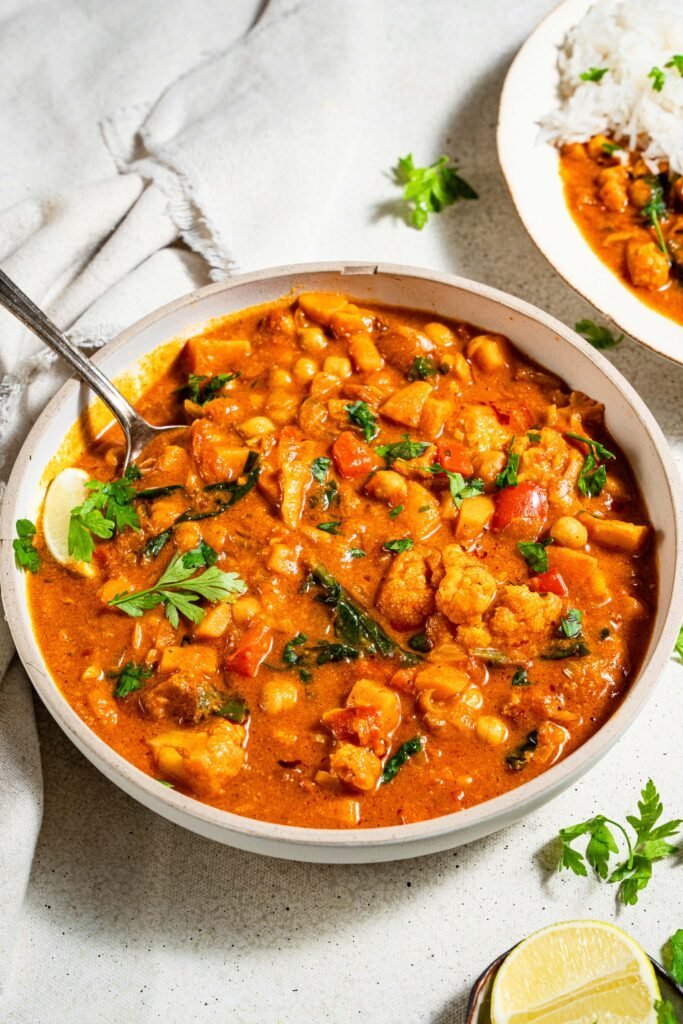
Vegetable curry – cauliflower, chickpea and spinach in a proper coconut or tomato masala — succeeds because great curry was never about the meat anyway. Halloumi and roasted vegetable traybake: salty, squeaky halloumi with caramelised veg and couscous. Butternut squash risotto with sage butter and parmesan: creamy, rich, luxurious. Aubergine parmigiana: layers of silky aubergine, tomato and mozzarella that eat like lasagne. Plus: mushroom stroganoff, spinach and ricotta cannelloni, chickpea and chorizo-style stew (smoked paprika does the work), and a proper vegetable biryani with crispy onions.
- Mushroom and ale pie — dark, savoury, pastry-topped
- Lentil and walnut bolognese — body, chew, depth
- Black bean chilli — meaty beans, full toppings
- Cauliflower and chickpea curry — curry never needed meat
- Halloumi traybake — salty, caramelised, satisfying
- Aubergine parmigiana — eats like lasagne
- Butternut risotto with sage butter — creamy luxury
- Spinach and ricotta cannelloni — comfort food classic
Why they work: the satisfaction toolkit
Meat satisfies through umami, fat, chew and protein — vegetarian cooking just sources them differently. Umami: mushrooms (especially dried porcini), tomato paste fried until dark, soy sauce, miso, parmesan rinds simmered in soups, Marmite in gravies. Fat: don’t skimp — butter, olive oil, cheese and nuts carry flavour and satiety; low-fat vegetarian food is why people think vegetarian food is unsatisfying. Chew and texture: walnuts, toasted seeds, crispy chickpeas, paneer and halloumi give the mouth something to do. Protein: lentils, beans, chickpeas and eggs keep people full — the ‘hungry an hour later’ complaint is a protein problem, not a vegetarian problem.
Seasoning is the other half: vegetarian dishes need bolder seasoning than meat dishes because there’s no meat fat carrying flavour. Salt assertively, acid brightly (lemon, vinegar at the end), and finish with fresh herbs. And serve proper portions — a timid scoop of lentils next to a salad confirms every prejudice; a generous bowl of rich, cheesy, hearty food converts people. The goal isn’t to prove vegetarian food is ‘just as good’ — it’s to serve dinner so good nobody’s thinking about categories.
Converting the sceptics: strategy
Don’t announce ‘we’re having vegetarian tonight’ — just serve the mushroom pie. Framing matters: ‘vegetarian dinner’ triggers deprivation thinking; ‘dinner’ doesn’t. Start with the gateway dishes — curries, chillis, pasta bakes, pies — where meat was never the point, rather than meat substitutes that invite comparison. A great bean chilli needs no apology; a mediocre veggie burger invites the ‘real burger’ comparison.
Cook one new vegetarian dinner a week rather than converting overnight — habit beats revolution. Involve the sceptics in choosing: ‘which of these three shall we try?’ gives ownership. And keep the standards high: the fastest way to confirm someone’s anti-vegetarian bias is serving them a sad, under-seasoned lentil thing. Serve the aubergine parmigiana done properly, with the crispy top and the basil, and watch the conversion happen over seconds, not sermons.
Protein, nutrition and the balanced vegetarian week
The nutrition question deserves a straight answer: a well-planned vegetarian diet easily meets protein needs — the average adult needs about 0.75g per kg of body weight daily (56g for a 75kg adult), and the dinners in this guide deliver it. The protein champions: lentils (18g per cooked cup), chickpeas and beans (15g), tofu and tempeh (20g/19g per cup), eggs (6g each), Greek yogurt (10g per 100g), quinoa (8g per cup, and a complete protein), nuts and seeds. Combine sources across the day — the old ‘complete protein combining’ anxiety is outdated; variety across meals covers it.
The nutrients to watch: B12 (supplement it — it’s the one thing plants don’t reliably provide; a £5 bottle lasts months), iron (lentils, spinach and beans have plenty, but pair with vitamin C — lemon juice, peppers, tomatoes — which triples absorption; tea with meals halves it), and omega-3s (flaxseed, chia, walnuts, or an algae oil supplement). The balanced vegetarian week isn’t complicated: beans or lentils daily, nuts and seeds regularly, plenty of colour, B12 covered. Eat the twelve dinners in rotation with these habits and the nutrition takes care of itself — deliciously.
- Protein target: ~0.75g/kg/day — easily met with pulses, eggs, dairy, tofu
- B12: supplement it — the one essential plants lack
- Iron + vitamin C together (triples absorption); tea apart from meals
- Omega-3s: flaxseed, chia, walnuts or algae oil
- Variety across the week covers everything else
Vegetarian dinners that win
Lead with umami, don’t skimp on fat, include real protein, season boldly, serve generously, and never apologise. The best vegetarian dinners don’t imitate meat — they make meat irrelevant for the evening.
For budget-friendly veggie cooking, best cheap meals to cook for a family of four has the cheap family meals and best traybake dinners for lazy evenings covers traybake dinners. For recipe inspiration, BBC Good Food’s recipe collection has superb vegetarian collections, with the NHS Eatwell Guide on balanced eating.
The vegetarian-week truth: eat the hearty twelve in rotation, mind the B12 and the iron-vitamin-C pairing, and the diet looks after itself. Nobody’s asking you to count grams — just eat real food, generously, with pulses at the centre. The meat-eaters at your table won’t be thinking about nutrition. They’ll be thinking about seconds.