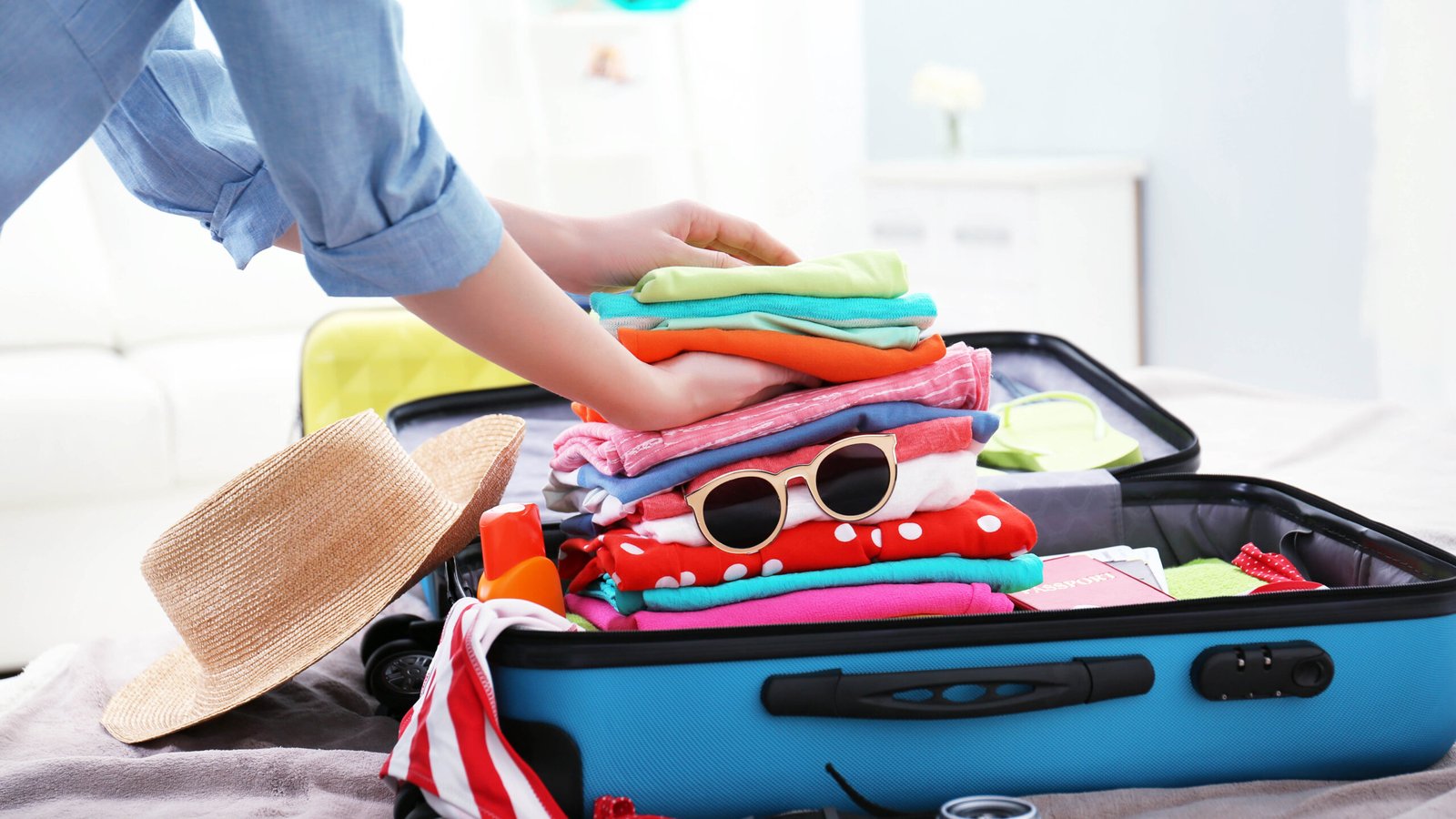
Two days, one bag, zero checked-luggage queues — the weekend city break is the perfect format, but only if you pack right. Overpack and you’re dragging a suitcase up metro stairs; underpack and you’re buying emergency toiletries at airport prices. Here’s what to pack for a weekend city break in Europe: the exact system for fitting everything into a cabin bag and still having options.
The constraint is liberating: most budget airlines allow a small cabin bag free (40x20x25cm roughly) with larger cabin bags at £20–£50 extra. Pack for the free allowance and the trip gets cheaper and faster — no baggage carousel, no lost luggage, straight out of arrivals.
What to pack for a weekend city break in Europe: the list
Clothing (the 5-4-3-2-1 method)
For 2–3 days: 5 tops, 4 bottoms-worth of options (realistically 2–3), 3 pairs of shoes max (wear the bulkiest), 2 layers, 1 jacket. More practically:
- Bottoms: the jeans/trousers you travel in + one more (dark, versatile). That’s enough — nobody notices repeats on a weekend.
- Tops: 3–4, in a tight colour palette so everything mixes. One slightly smarter for dinners.
- Layers: a jumper or cardigan + your jacket. The jacket should handle the destination’s worst-case weather — check the forecast, but Europe in shoulder season demands a proper layer (see our unpredictable weather outfit system).
- Shoes: wear the bulkiest (trainers or boots), pack one smarter pair. City breaks mean 20,000+ steps a day — comfort is non-negotiable.
- Sleep + underwear: enough for the days plus one spare. Merino or synthetic underwear can be sink-washed and dries overnight.
Toiletries (decanted, not full-size)
- Travel bottles (100ml max for hand luggage) of shampoo, conditioner, body wash — or go solid: shampoo bars and solid deodorant skip the liquids rule entirely.
- Toothbrush, toothpaste, deodorant, moisturiser, sunscreen (yes, even for cities — you’ll be outside all day).
- Any medication in original packaging, plus a basic mini first-aid (plasters, painkillers, antihistamines).
- Keep it to one small wash bag. Full-size bottles are the number one space thief.
Tech and documents
- Passport (check expiry — post-Brexit, EU travel needs 3+ months validity beyond your return and issuance within 10 years), EHIC/GHIC card, travel insurance details.
- Phone, charger, EU plug adapter (the forgotten essential), portable battery.
- Download offline maps, tickets and translation before you go — airport WiFi is a gamble.
The day bag
A packable daypack or crossbody for daily exploring: water bottle, snacks, portable charger, light layer, and room for souvenirs. Choosing the right one matters — our guide to picking a versatile handbag applies to travel days too.
Packing technique: the actual method
- Roll, don’t fold. Rolling saves space and reduces creases for casual clothes; bundle-wrapping (clothes wrapped around a core) is best for smart shirts.
- Wear the bulk. Heaviest shoes, jeans, jacket on your body — the bag carries the light stuff.
- Use packing cubes (£10–£20). They compress and organise — one for tops, one for underwear, one for tech.
- Leave 20% empty. You will buy things. Plan for it.
- Put a full change in your personal item. If your cabin bag gets gate-checked, you’re covered.
For longer trips, our guide to packing light for two weeks scales these principles up, and if budget is the priority, see the cheapest European city breaks from London.
Before you fly: the Brexit-era checklist
Quick reminders for UK travellers to Europe: passport validity rules (above), GHIC for healthcare, travel insurance (GHIC isn’t a substitute), roaming charges (check your provider — EU roaming isn’t guaranteed free anymore), and the ETIAS travel authorisation when it launches. The government’s foreign travel advice pages have country-by-country essentials worth a five-minute check.
The 5-4-3-2-1 packing formula
Packing formulas sound gimmicky until you try one. The 5-4-3-2-1 is the best-known for a reason — it forces the discipline that “just in case” packing destroys.
5 tops. For a 2–3 day trip: 2 t-shirts or casual tops, 1 shirt or blouse, 1 knit or jumper, 1 going-out top. All must work with all bottoms — lay them out and check every combination before they go in the bag.
4 bottoms. Realistically for a weekend: the jeans or trousers you travel in, one more bottom (skirt, second jeans, or tailored trousers), plus sleepwear and the spare layer. Four sounds generous for two days, but one is sleepwear and the formula has slack built in.
3 pairs of shoes. Wear the bulkiest (trainers or boots) for travel. Pack: one smart pair, one casual spare. That’s it. Shoes are the volume-killers — every pair beyond three needs a serious justification.
2 layers. A jacket or blazer plus a knit or hoodie. For Europe, check the evening temperature, not just the daytime high — Mediterranean days and Baltic evenings catch people out in opposite directions.
1 of each extra: one hat or scarf for weather or churches, one swimsuit if there’s any chance of a pool or spa, one “nice” outfit for the good dinner, one laundry bag, one universal adapter, one power bank.
What the formula deliberately excludes: “just in case” outfits (if you haven’t worn it at home in a month, you won’t wear it in Barcelona), more than one book, full-size toiletries (decant or buy there), and anything “for the photos” that you’d never otherwise wear. The formula works because it’s a ceiling, not a target — coming home with unworn items means you packed right, not wrong.
Total: fits in a cabin bag with room for souvenirs, weighs under 8kg, and you still had a choice every morning. The people wrestling 23kg cases through the Metro are not having more fun than you.
Weekend packing: quick answers
Cabin bag or checked for a weekend? Cabin, always — for 2–3 days there’s no reason to check a bag. You skip baggage reclaim, eliminate lost-luggage risk, and the size constraint enforces the discipline. If it doesn’t fit in a cabin bag, you’re overpacking.
How do I pack shoes without wasting space? Wear the bulkiest pair. Stuff socks and small items inside packed shoes. Place shoes heel-to-toe along the bag’s edges. And the three-pair limit is firm — shoes are where packing goes wrong.
What about toiletries with liquid limits? Decant into 100ml bottles (£3 for a set), or buy at destination — every European city has a pharmacy or supermarket. Solid shampoo bars skip the liquid limit entirely and last months.
Should I pack for the weather forecast or the worst case? The forecast plus one layer of insurance — the packable waterproof and a mid-layer cover 95% of forecast errors. Packing for the apocalypse is how 8kg becomes 15kg.
Your takeaway: less bag, more trip
What to pack for a weekend city break in Europe: a tight colour palette of mix-and-match clothes, decanted toiletries, documents and adapters sorted in advance, and everything in a cabin bag with room to spare. Pack light, move fast, enjoy more.