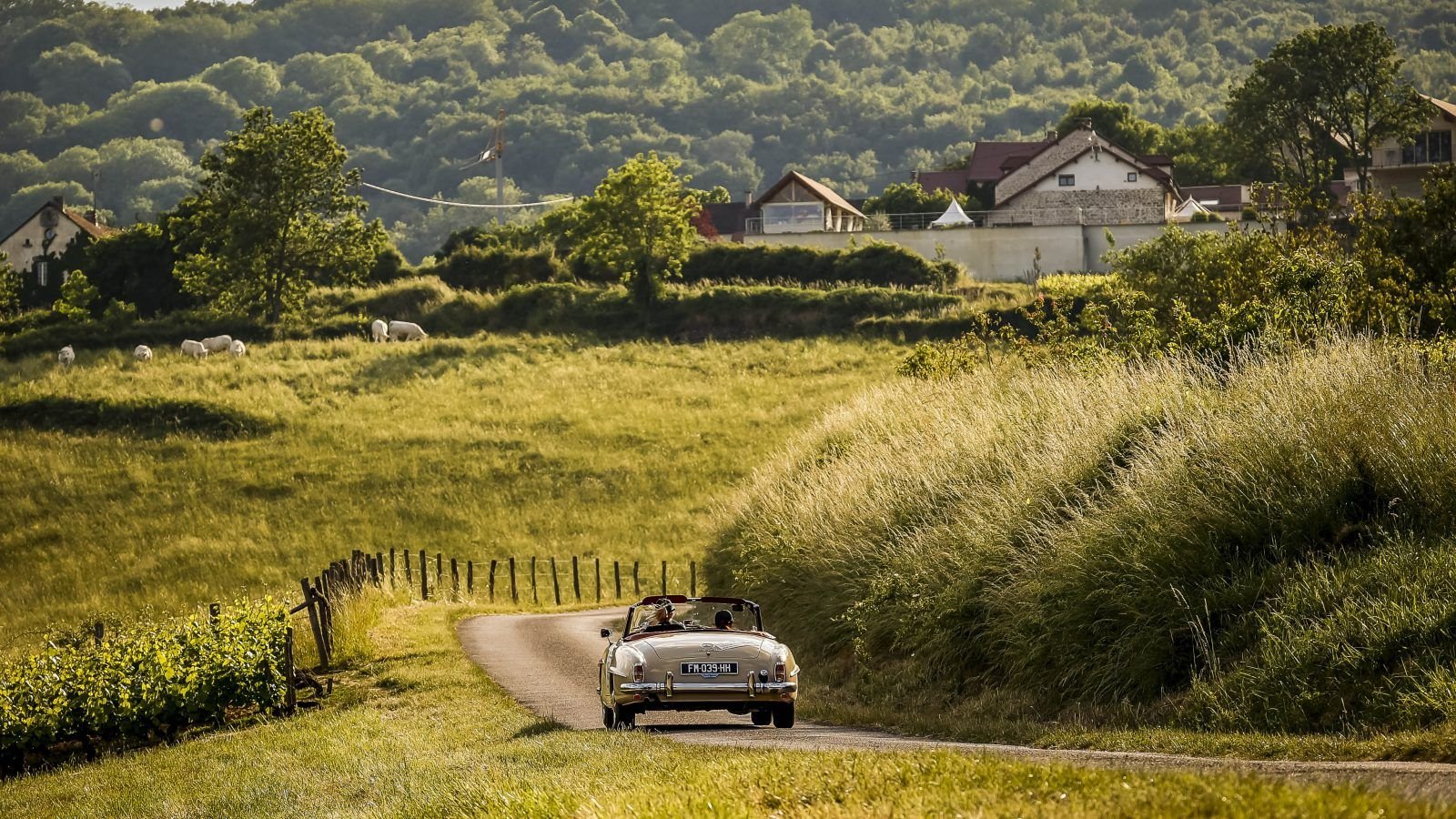
The first time you drive on the right, your brain stages a small revolt. You reach for the gear stick with the wrong hand, you drift left on roundabouts, and every junction feels like a puzzle. But millions of Brits drive in France every year without incident — and once the first hour is behind you, it becomes second nature. Here’s what to know before driving in France for the first time, from the legal kit to the unwritten rules.
What to know before driving in France for the first time: the legal essentials
French law requires specific equipment — and the fines for missing it are on-the-spot and non-negotiable:
- Driving licence: your UK photocard licence is fine for visits. No International Driving Permit needed for France (it’s required in some non-EU countries, not France).
- Hi-vis vest and warning triangle: compulsory — the vest must be within reach inside the car (not in the boot), one per… actually, one is the legal minimum, but carry one per passenger.
- Breathalysers: technically required by law, though the fine for not having one was scrapped — carry a cheap NF-approved one anyway (£2–£3 for two).
- Headlight deflectors: compulsory — UK headlights dazzle oncoming drivers on the right. Stick-on deflectors (£5–£8) or adjust at a garage.
- UK sticker: the old GB sticker is dead — you now need a UK sticker (not GB) on the number plate unless your plate already has the UK identifier with the Union Jack.
- Crit’Air vignette: required for driving in Paris, Lyon, Grenoble, and other low-emission zones — order from the official French site (certificat-air.gouv.fr, €4.61) BEFORE you go. It takes 10+ days to arrive. Driving in a ZFE without one: €68 fine.
- Insurance and breakdown cover: your UK car insurance covers EU driving (usually third-party minimum — check if you want comprehensive), but European breakdown cover is essential, not optional. Gov.uk’s driving abroad guidance has the full checklist.
The rules that catch Brits out
- Priorité à droite. The big one: at unsigned junctions, traffic from the RIGHT has priority — including on some roundabouts and slip roads. It’s counterintuitive and it’s the cause of most British accidents in France. When in doubt, yield.
- Speed limits: 130km/h on motorways (110 in rain), 80km/h on single carriageways (reduced from 90 in 2018 — this catches everyone), 50km/h in towns. Speed cameras are everywhere and fines follow you home via EU/UK agreements.
- Drink driving: the limit is 50mg (vs 80mg in England/Wales) — effectively one small drink. Don’t risk it.
- Motorway tolls (péages): budget roughly €1 per 10km — Calais to the south coast can cost €60–€90 in tolls alone. Pay by card (contactless works) or cash; the Liber-t tag (ordered in advance) lets you sail through the 30km/h lanes.
- Fuel: motorway service stations are expensive — fill up at supermarket stations (Carrefour, Leclerc, Intermarché) in towns, often 15–20 cents/litre cheaper.
- Phones: handheld phone use is illegal — and so are earpieces/headsets while driving. Use a proper hands-free mount or nothing.
- Children: under-10s must use appropriate child seats and can’t sit in front (with airbag exceptions). Stricter than the UK — check the specifics for your kids’ ages.
Driving on the right: the practical adjustment
- The first hour is the hardest. Plan your first drive to be short and simple — not straight onto the Paris périphérique. The Channel ports to your first stop should be motorway-simple.
- Roundabouts: go the “wrong” way round (anticlockwise from your new perspective) — give way to the left. Take them slowly until it clicks.
- Overtaking: your passenger has the better view — use them as a spotter. Or just don’t overtake much; French motorways are relaxed and there’s no rush.
- Junctions and turning: the danger moment is turning left across traffic (equivalent of our right turn) — it feels wrong because your road position is mirrored. Slow down, look twice.
- Passenger as co-pilot: brief them — “tell me if I’m drifting left, remind me at every junction.” Two pairs of eyes beat one confused brain.
Tolls, fuel, and money
- Budget the tolls in advance: use ViaMichelin’s route planner — it calculates tolls precisely. A Calais–Dordogne trip can be €50+ each way; factor it against the ferry/flight alternative.
- The free alternative: France’s N-roads (routes nationales) are free, scenic, and often nearly as fast for shorter hops. The journey becomes part of the holiday.
- Paying: contactless cards work at most péages; keep some euros as backup. Non-French cards occasionally get rejected at automated pumps — have a second card.
- Emissions zones beyond Crit’Air: check every city on your route — the ZFE network is expanding, and the rules tighten yearly.
Making it enjoyable, not just survivable
Once the mechanics click (usually by day two), driving in France is a pleasure — the roads are excellent, the scenery changes constantly, and the aire picnic stops (France’s motorway rest areas, often with picnic tables and playgrounds) are civilised in a way British services aren’t. Plan a route with one interesting stop per day — a village, a viewpoint, a market — and the driving becomes the holiday. Our Paris tourist-trap guide covers the capital if it’s on your route, and multi-city Europe by train is the alternative for the driving-averse.
Breakdown cover: the non-negotiable
European breakdown cover (£30–£60 for a single trip, £80–£120 annual) is the most important purchase after the Crit’Air vignette. A breakdown on a French motorway without cover means the police-arranged tow (£200+), a garage you didn’t choose, and a hotel bill while you wait. With cover: one phone call, English-speaking assistance, a hire car or hotel arranged, and repatriation of your car if it can’t be fixed. Check the small print — some policies exclude cars over 10 years old or have mileage limits. The AA, RAC, and Green Flag all do European cover; compare, but don’t skip it. It’s the cheapest peace of mind in this entire article.
The takeaway
Before driving in France for the first time: get the legal kit sorted (hi-vis, triangle, deflectors, UK sticker, Crit’Air ordered weeks ahead), internalise priorité à droite and the 80km/h single-carriageway limit, budget the tolls, and give yourself an easy first hour. It’s daunting for about sixty minutes and delightful thereafter — and the freedom of a French road trip is worth every bit of preparation.