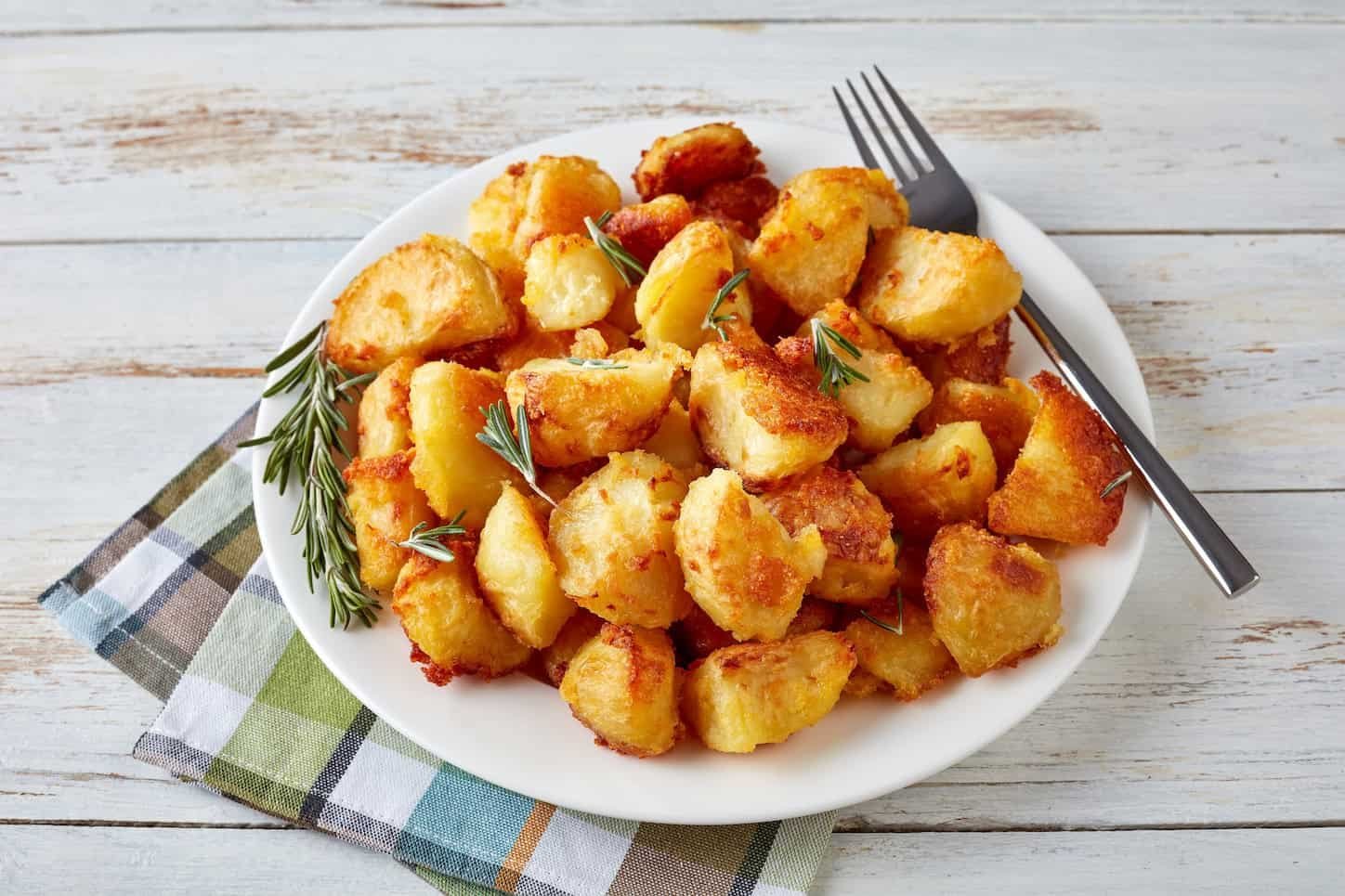
Crispy outside, fluffy inside — the perfect roast potato is a textural miracle, and most people’s are a textural compromise: a bit crisp, a bit leathery, occasionally raw in the middle. When people ask what is the secret to crispy roast potatoes, I have to disappoint them slightly: there’s no single secret. There are five rules, and you need all five.
I’ve spent years in pursuit — testing fats, temperatures, potato varieties, and one memorable goose-fat incident — and the method below is the distillation. Follow all five rules and the crunch is guaranteed.
What is the secret to crispy roast potatoes? The five rules
Rule one: the right potato. You need a floury variety — Maris Piper (the king), King Edward, or Rooster. Waxy potatoes (Charlotte, Jersey Royals) make creamy mash and terrible roasties; their low starch can’t form the fluffy exterior that crisps. Rule two: parboil properly. Simmer the peeled, evenly-cut chunks for 8–10 minutes until the edges just start to soften — then drain and shake the colander vigorously to rough up every surface. Those roughed-up, fluffy edges are where the crunch lives; skip this and you get smooth, leathery potatoes.
Rule three: the fat must be smoking hot. Whether it’s goose fat (the traditional champion), beef dripping, or vegetable oil — heat it in the roasting tray in a 200°C fan oven for a full 10 minutes before the potatoes go anywhere near it. The potatoes should sizzle violently on contact; that instant sear is what starts the crust. Rule four: don’t crowd the tray. Potatoes need space for hot air to circulate — overlapping potatoes steam instead of roast. Two trays of spaced potatoes beat one tray of crowded ones every time. Rule five: leave them alone. Turn once at 30 minutes, then don’t touch until they’re done at 60–75 minutes. Fiddling breaks the crust.
- Floury potatoes only: Maris Piper, King Edward, Rooster
- Parboil 8–10 min, then rough up the edges aggressively
- Fat smoking hot before potatoes touch the tray
- Space them out — crowded potatoes steam, not roast
- Turn once; total 60–75 minutes at 200°C fan
Fats, flavours and the details
On fats: goose fat gives the richest flavour and the deepest golden colour — it’s the Christmas choice. Beef dripping is the traditional chip-shop-adjacent option with unbeatable savouriness. For everyday, a neutral vegetable oil or sunflower oil works perfectly well; olive oil burns at high heat and isn’t ideal (save it for drizzling after). Whatever you use, be generous — a shallow pool in the tray, not a miserly film. Season after roasting, not before: salt draws moisture and softens the crust if added too early. Flaky sea salt and maybe rosemary or garlic in the last 15 minutes.
A few advanced moves: a teaspoon of semolina or flour tossed with the roughed-up potatoes before roasting adds an extra-crisp shell; bashing a few garlic cloves and rosemary sprigs into the tray in the final stretch perfumes everything; and for the ultimate crunch, some cooks parboil in water with a pinch of bicarbonate of soda — the alkaline water breaks down the surface starch faster, creating a thicker fluffy layer to crisp. It works, though the potatoes need gentle handling or they fall apart. Try it once you’ve mastered the basics.
Troubleshooting the failures
Soggy roasties? The fat wasn’t hot enough, the tray was crowded, or the oven temperature was too low — possibly all three. Leathery rather than crispy? Under-roughed parboiling, or potatoes turned too often (every turn resets the crust). Burnt outside, raw inside? Chunks cut too large or unevenly — keep them to golf-ball-ish pieces, all the same size. Sticking to the tray? Fat not hot enough on contact, or a tray that needs replacing — and never use a non-stick tray that’s lost its coating; potatoes weld to damaged non-stick.
Make-ahead strategy for big roasts: parboil and rough up the potatoes in the morning, spread them on a tray and refrigerate uncovered (the dry fridge air actually helps the surface dry for extra crunch), then roast in hot fat when needed. They can also be par-roasted for 30 minutes, cooled, and finished for 30 minutes later — the two-stage method restaurants use. But honestly, the single biggest upgrade for most people is simply: hotter fat, more space, leave them alone. The crunch was there all along.
Fat taste test: goose fat vs dripping vs oil
The fat question deserves its own verdict, because it genuinely changes the result. Goose fat: the richest flavour, deepest golden colour, the Christmas standard — £4–5 for a tub that does several roasts. It has a high smoke point and a savoury depth that oil can’t match; the potatoes taste luxurious. Beef dripping: the traditionalist’s choice — intensely savoury, almost meaty, the chip-shop heritage fat. Slightly less refined than goose fat but arguably more flavourful; the potatoes taste like the best chippy chips at their finest.
Vegetable/sunflower oil: the everyday workhorse — neutral, high smoke point, cheap, and honestly excellent. Blind-tasted against goose fat, most people prefer the goose fat potatoes but can’t articulate why; the oil potatoes are still superb if the five rules are followed. Duck fat: goose fat’s close cousin, slightly milder. Olive oil: don’t — it smokes and tastes bitter at roast temperatures (extra virgin especially). The verdict: goose fat or dripping for occasions, good vegetable oil for Tuesdays, and the five rules matter more than the fat choice. Technique beats ingredients — but great ingredients plus technique is unbeatable.
- Goose fat: richest, golden, the Christmas standard
- Beef dripping: intensely savoury, chip-shop heritage
- Vegetable oil: excellent everyday — technique matters more
- Duck fat: goose fat’s milder cousin
- Olive oil: skip it — smokes and turns bitter
Crunch, guaranteed
Floury potatoes, rough parboil, smoking-hot fat, space in the tray, one turn, full hour. Five rules, zero shortcuts, and roast potatoes with a crust you can hear. Sunday roasts will never be the same.
For the full roast they belong to, make a proper sunday roast at home is the complete guide, and make shepherds pie with a crispy top applies the crispy-top principle to shepherd’s pie. For more potato wisdom, BBC Good Food’s recipe collection has it covered.
The roast-potato creed: floury spuds, violent parboil, smoking fat, space, patience. It’s not a recipe, it’s a discipline — and the reward is the dish people talk about after the roast is forgotten. Master the five rules and you’ll never serve a mediocre roast potato again. The crunch is a promise, and now you can keep it.