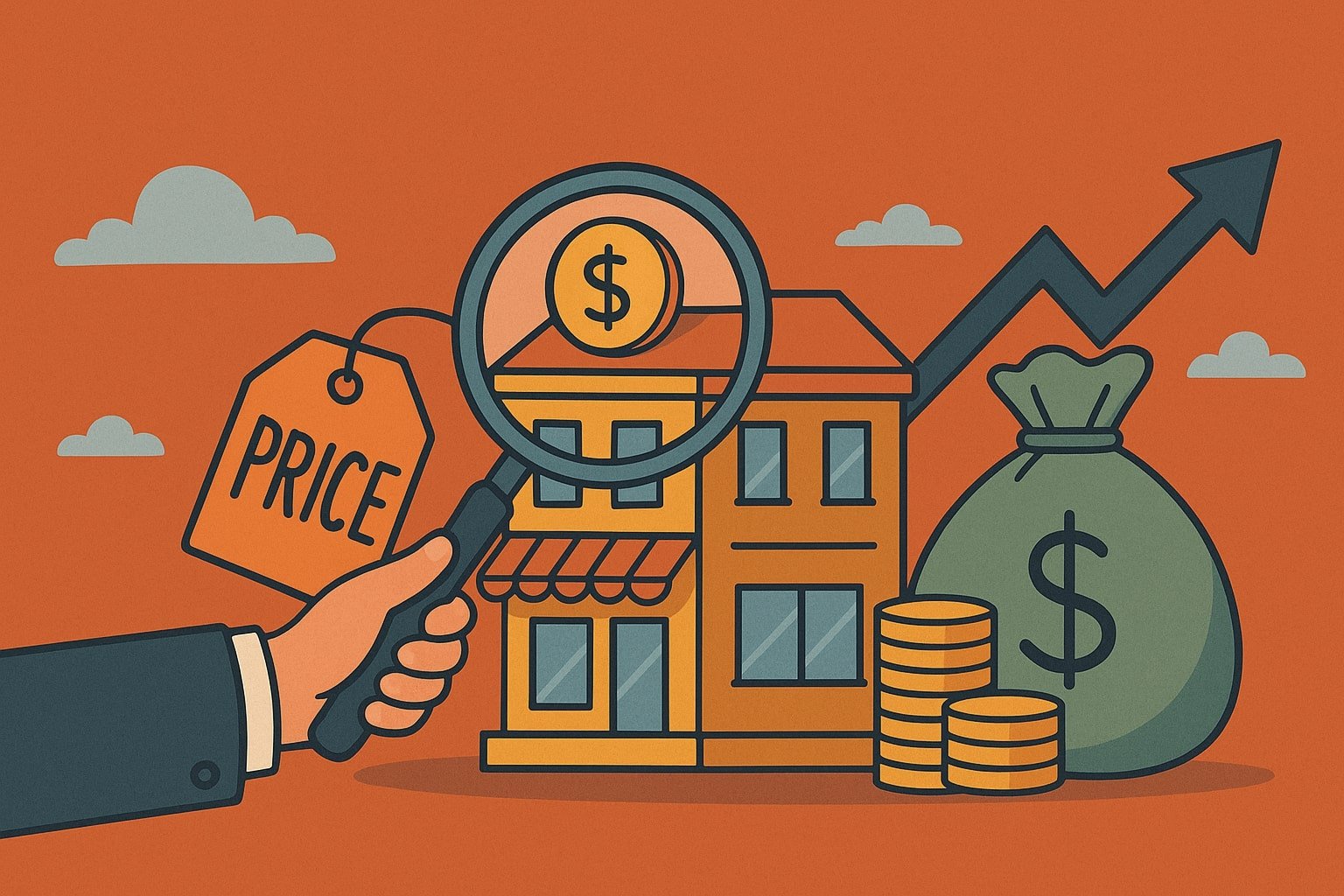
Getting clear on what is the best way to value my small business before selling is the single highest-leverage thing a departing owner can do. Get the valuation right and you retire comfortably; get it wrong and you either scare off every buyer or hand over years of your life at a discount. I’ve seen a Birmingham print shop sell for £180,000 when a proper valuation would have justified £260,000 — the owner just wanted it done quickly, and that impatience cost him a house deposit.
Here’s the honest starting point: your business is worth what a willing buyer will pay, not what you feel it’s worth. Sentimental value — the twenty years you poured into it, the customers who feel like family — adds exactly £0 to the price. Buyers pay for future profit, and everything in a valuation is a way of estimating that.
What is the best way to value my small business before selling?
For most UK small businesses, the best approach is to use two or three valuation methods, compare the results, and sanity-check them against what similar businesses actually sold for. No single method tells the whole story, and buyers will absolutely run their own numbers — you want to know your figures before they do.
1. Multiple of profit (the most common method)
The workhorse of small-business valuation: take your adjusted annual profit and multiply it by a factor typical for your industry. UK small businesses commonly sell for 2–5x adjusted profit, with the multiple depending on sector, growth, and how dependent the business is on you personally.
The critical word is adjusted. You need to normalise the profit first: add back your salary above market rate, remove one-off costs (that legal dispute, the van you replaced), and strip out personal expenses run through the business. A buyer wants to see what the business earns under normal, arm’s-length management. Your accountant should do this with you — it’s the foundation everything else rests on.
2. Asset-based valuation (the floor price)
Add up what the business owns — stock, equipment, vehicles, property, cash — minus what it owes. This gives you the liquidation floor: the business is almost certainly worth more than this as a going concern, but no buyer should pay less than the value of the assets unless the business is losing money. Essential for asset-heavy businesses like manufacturing, haulage, or hospitality.
3. Discounted cash flow (for growing businesses)
Project future profits for 3–5 years and discount them back to today’s money. More sophisticated, more arguable, but powerful if your business is growing fast — it captures value that a backward-looking profit multiple misses. Buyers of tech and service businesses use this routinely.
- Typical UK multiples as a rough guide: retail and hospitality 1.5–3x profit; professional services 3–5x; manufacturing 3–4x; e-commerce 2.5–4x; businesses with recurring contracted revenue command premiums of 20–50% above these ranges.
- The “owner dependence” discount: if the business collapses without you, buyers discount heavily — sometimes 30–50%. A year spent training a manager and documenting processes can add more to your sale price than a year of extra profit.
What actually moves the price
Beyond the maths, buyers pay more for: clean, verifiable financials (three years minimum, ideally audited or at least accountant-prepared); diverse customers (no single client over 20% of revenue); contracted or recurring income; transferable supplier relationships; and a team that stays. They pay less for: declining revenue, pending legal issues, a lease expiring next year, and — the big one — key-person risk.
Get your house in order 12–24 months before you want to sell. Tidy the books with a proper bookkeeping routine, resolve disputes, renew the lease, and lock key staff into contracts. Every loose end a buyer finds becomes a discount they demand.
Timing the sale: when to sell for maximum value
Valuation tells you what the business is worth; timing determines whether you actually get it. Businesses sell for more when they’re growing (buyers pay for momentum), when interest rates are low (cheaper buyer finance means higher bids), and when you’ve just had a strong year — not when you’re exhausted and the numbers are sliding. The best time to sell is when you don’t need to. Desperation is visible in negotiations and it costs money.
Seasonality matters too. Retail and hospitality businesses fetch better prices when sold in autumn, ahead of the Christmas trading period, with strong recent figures to show. B2B service businesses often do well in the new year when buyers are planning. And consider the broader market: if competitors are consolidating or private equity is active in your sector, you may be selling into a seller’s market — a good business transfer agent will tell you honestly what the market looks like.
Give yourself a proper runway. The ideal sale process takes 6–12 months from decision to completion: 3–6 months preparing the business (tidying books, resolving issues, reducing owner-dependence), then 3–6 months finding a buyer and completing due diligence. Rushing this process is the most expensive mistake sellers make — every shortcut becomes a discount. Start preparing before you’re ready to sell, and you’ll sell from strength rather than fatigue.
Finally, think about what comes after. The emotional side of selling catches many owners off guard — your identity has been wrapped up in the business for years, and the first Monday without it can feel like bereavement. Have a plan: the next venture, the travel, the volunteering, whatever gives structure. Sellers who plan their post-sale life negotiate better too, because they’re not clinging to the business out of fear of the void.
Your practical takeaway
Ask your accountant for an adjusted-profit valuation using an industry multiple, cross-check it with an asset valuation as your floor, and research comparable sales through a business transfer agent. Then spend a year reducing owner-dependence before you go to market — it’s the cheapest way to add tens of thousands to your price. And get professional advice on the tax side: Business Asset Disposal Relief (formerly Entrepreneurs’ Relief) can cut your capital gains tax dramatically, but the qualifying conditions are strict — details are on gov.uk.