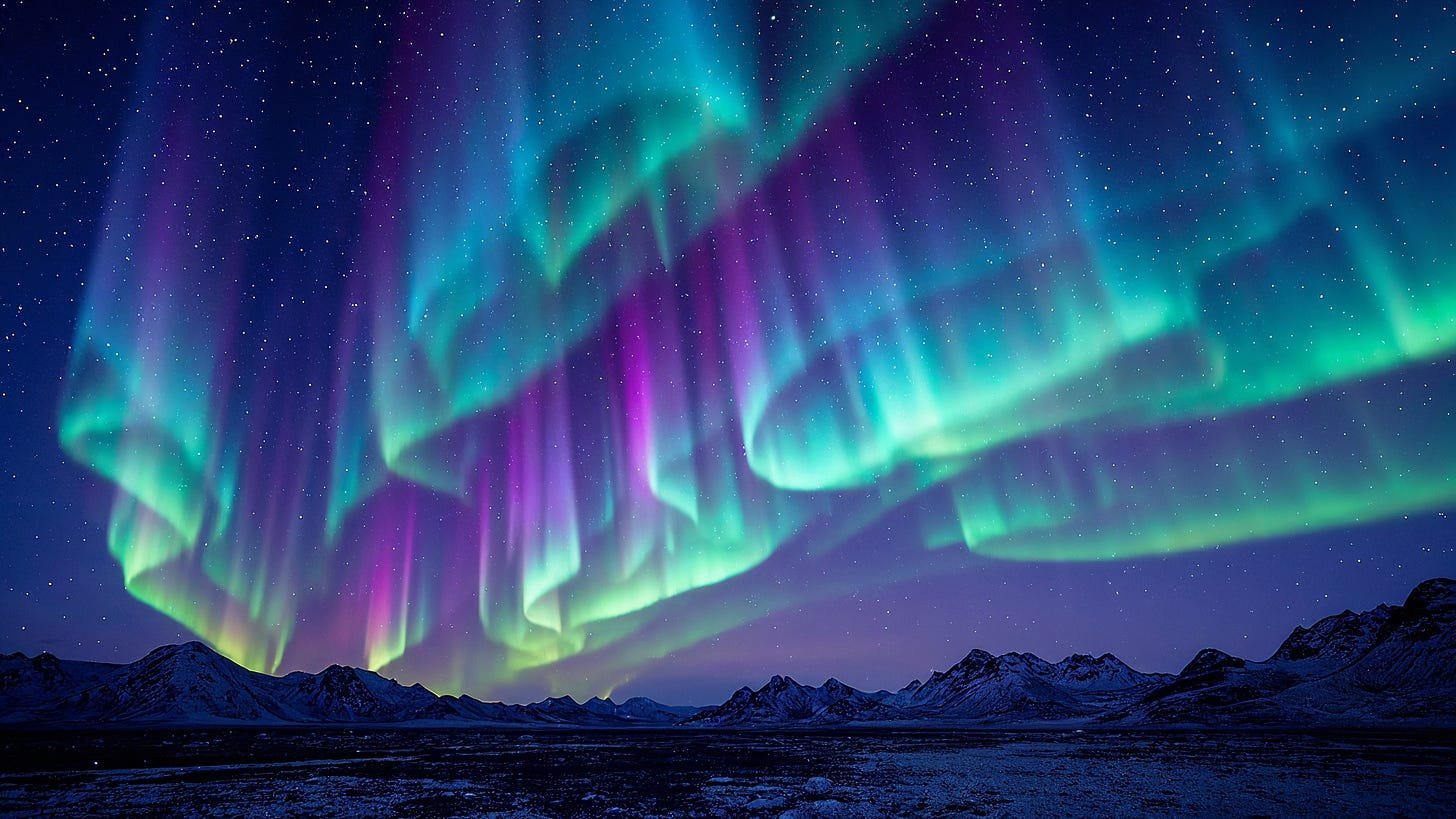
Here’s a secret the travel industry doesn’t advertise loudly: you can see the northern lights from Britain, no flights required. When people ask what is the best way to see the northern lights from the uk, they usually assume the answer is ‘fly to Iceland’ — but with solar activity near its peak, aurora displays have been visible from Norfolk, Northumberland and even Kent in recent winters.
I’ve chased the lights from Shetland to Tromsø, seen them dance over a frozen fjord and once — gloriously — from a layby in Northumberland. Here’s the honest guide: when the UK works, when it doesn’t, and how to maximise your chances either way.
What is the best way to see the northern lights from the UK? Go north and go dark
Your two enemies are light pollution and latitude — the further north and the darker the sky, the better your odds. Shetland is Britain’s aurora capital: far enough north that displays are common from October to March, with gloriously dark skies once you leave Lerwick. Orkney, Caithness and the far northwest Highlands run close behind. On the mainland, Northumberland’s dark-sky parks around Kielder, the Galloway Forest, and the beaches of the Moray Firth are the most reliable spots south of the Pentland Firth.
The aurora is fickle, so treat a UK lights trip as a brilliant dark-sky holiday that might include the aurora, not a guaranteed sighting. Check the KP index — a measure of geomagnetic activity from 0 to 9 — and know that Scotland generally needs KP4+, while southern England needs a serious storm around KP6–7. The Glendale aurora app and AuroraWatch UK’s alerts are the tools every British chaser uses; set up notifications and be ready to drop everything and drive somewhere dark when your phone pings at 11pm.
- Shetland — Britain’s most reliable aurora spot, October to March
- Orkney and Caithness — far north mainland, dark skies, fewer tourists
- Kielder, Northumberland — England’s best dark-sky park
- Galloway Forest — superb dark skies in southwest Scotland
- Moray Firth beaches — northern horizon over the sea, magical setting
How to actually see them (and photograph them)
The biggest rookie error is expecting Hollywood skies. A moderate aurora to the naked eye often looks like a pale grey-green glow or shifting mist — your phone camera, especially in night mode, will reveal far more colour than your eyes can. That’s normal, not disappointing; the camera is simply more sensitive. Give your eyes 20 minutes to adapt to the dark, look north, and be patient. Displays come in waves, often peaking around midnight, and the sky can go from quiet to spectacular in minutes.
For photos, you don’t need fancy gear: a modern phone on night mode propped on a wall works surprisingly well. With a camera, use a tripod, manual focus set to infinity, ISO 1600–3200, and exposures of 5–15 seconds. Turn off your headtorch’s white light (red light preserves night vision), wrap up far warmer than you think necessary — standing still in a Shetland field at 1am in January is brutally cold — and bring a thermos. The waiting is half the experience.
When to give up on the UK and fly north
Let’s be honest: if seeing the aurora is the entire point of the trip — a honeymoon, a 50th birthday, a bucket-list item — fly to northern Norway, Swedish Lapland or Iceland. Tromsø sits directly under the auroral oval, which means displays on most clear nights from September to March, and the infrastructure (aurora camps, guides, heated buses that chase clear skies) is superb. Abisko in Sweden has a famous ‘blue hole’ microclimate that keeps skies clear when everywhere else is cloudy.
The sweet spot for a dedicated trip is late January to early March: long dark nights, more stable weather than the stormy autumn, and — crucially — the days are getting lighter, so you’re not sightseeing in 24-hour darkness. Budget £800–£1,200 per person for a long weekend from the UK including flights, and book the aurora-chasing excursions rather than hoping to see them from your hotel — the guides’ knowledge of local weather is worth every penny.
Aurora apps, alerts and photography basics
Successful aurora chasing is 90% information. The essential toolkit: the Glendale aurora app (the UK chaser’s bible — real-time data, substorm alerts, and a famously accurate community), AuroraWatch UK (run by Lancaster University, with colour-coded alerts you can get by notification), and a good weather app with cloud-cover radar — because the strongest aurora in the world is invisible behind cloud. Learn to read the KP index alongside the local cloud forecast; KP5 with clear skies beats KP7 under cloud every time.
For photography, modern phones genuinely deliver: use night mode on a tripod or propped solidly (a 3-second exposure minimum — handheld won’t cut it), turn off the flash, and tap-focus on the brightest star. With a mirrorless or DSLR: manual mode, widest aperture, ISO 1600–3200, 8–15 second exposures, manual focus on infinity (use live view zoomed on a star). Shoot RAW for editing latitude. And the composition tip that separates snapshots from stunners: include foreground — a loch, a cottage, a bothy — because aurora-over-black-sky gets boring fast, while aurora over landscape is wall-worthy.
- Glendale app + AuroraWatch UK alerts — the chaser’s toolkit
- Cloud-cover radar matters as much as the KP index
- Phone: night mode, tripod/propped, 3+ second exposure, no flash
- Camera: f/2.8 or wider, ISO 1600–3200, 8–15s, manual focus on stars
- Include foreground — landscape makes the shot
- Spare batteries in an inside pocket — cold kills them fast
Chasing the lights: the verdict
For a magical bonus on a winter trip to Scotland or the far north, the UK delivers — download the alerts, get somewhere properly dark, and look north around midnight. For a guaranteed bucket-list sighting, book Tromsø or Abisko between January and March and let the guides do the worrying.
If Scandinavia’s calling, best month to visit iceland from the uk covers the best month to visit Iceland and find cheap flights from the uk to europe has tips for cheap flights from the UK. Check official UK government foreign travel advice for current travel advice before booking anything abroad.
One final reality check that saves disappointment: the aurora is a natural phenomenon, not a theme park ride. Even in Tromsø in February, cloudy nights happen. Book at least 4–5 nights for a dedicated trip, plan brilliant daytime activities (dog sledding, Sami culture, Arctic food), and treat the lights as the magical bonus — which, paradoxically, is when they seem most likely to appear.