Finding what is the best ai tool for creating a logo on a budget is a rite of passage for new businesses — everyone needs a logo, nobody wants to spend £500 on one before they’ve made their first sale. I’ve been on both sides: I made my first logo in MS Paint (don’t), paid a designer £300 for my second (worth it), and now use AI tools for quick starter logos that look genuinely professional. Here’s the honest truth: AI logo makers are excellent for getting started and terrible as a forever solution. Let’s find your sweet spot.
The budget reality: professional logo design costs £200–£1,000+. AI logo tools cost £0–£60. For a new business testing an idea, that gap matters enormously — spend the savings on things that generate revenue, and upgrade the logo when the business justifies it.
What is the best AI tool for creating a logo on a budget?
The top options, compared
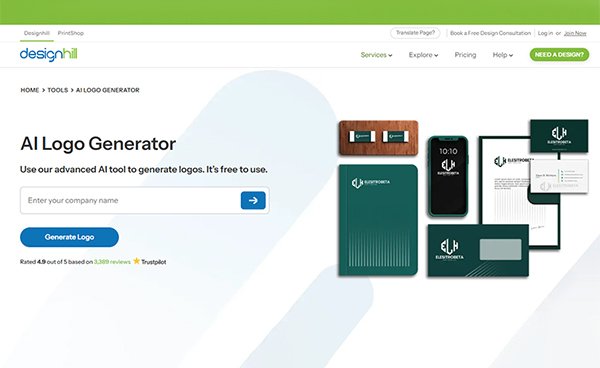
- Looka (free to design, ~£20–£60 for files): the most polished AI logo maker. Generates dozens of concepts from your preferences, with genuinely good typography and icon combinations. You design free and pay only to download high-res files. Best overall for beginners.
- Canva Logo Maker (free): less “AI” than template-based, but the templates are excellent and it’s completely free. Best if you want full control and zero cost — combine icons, fonts, and colours yourself.
- Brandmark / Tailor Brands: similar AI-generation approach to Looka, with brand-kit upsells (business cards, social templates). Fine, but watch the subscription upsells — you want a one-off purchase, not £10/month forever.
- Midjourney / DALL-E / Firefly (for concepts): generative AI image tools can produce stunning logo concepts, but the outputs usually need vectorising and refining in a proper design tool. Better for inspiration than final files — and check commercial-use terms on free tiers.
- Hatchful by Shopify (free): simple, genuinely free, decent results for very basic needs. Discontinued and revived more than once — check it’s still running.
What to look for (and avoid)
- Vector files matter: make sure you can download SVG or EPS, not just PNG. You’ll need vectors for signage, print, and anything large. This is the most common regret with cheap logo tools.
- Full ownership: read the licence. Some free tools retain rights or watermark until you pay. Pay the one-off fee for clean ownership.
- Simplicity wins: the best logos are simple enough to work at 16 pixels (favicon) and on a van. If your AI generates something intricate, simplify it.
- Check for accidental copies: AI tools occasionally produce marks similar to existing brands. A quick image search of your final design is cheap insurance against trademark trouble.
When to upgrade to a human designer
AI logos are starter logos. Upgrade when: the business is established and the logo appears everywhere (packaging, signage, vehicles); you need something truly distinctive in a crowded market; or the AI options all feel generic — because they are, to some degree, recombinations of common patterns. A good freelance designer on PeoplePerHour or a local studio will charge £200–£500 for a proper logo with brand guidelines, and at that stage it’s money well spent. Our guide to building a business website under £500 covers where the logo fits in the broader startup budget.
If you’re branding a creative side project, our AI photo editing guide helps with the visuals to match, and the AI art debate is worth reading for perspective on the creative questions involved.
Testing your logo: the 5-second, 5-metre, 5-pixel test
Before committing to any logo — AI-generated or human-designed — run it through three brutally honest tests. The 5-second test: show it to someone for five seconds, then hide it. Can they describe it? If not, it’s too complex. The best logos are memorable at a glance — think Nike’s swoosh, Apple’s apple. The 5-metre test: print it large and view from across the room (or shrink it on screen and squint). Does it still read clearly? Logos that dissolve into mush at distance fail on signage, vehicles, and shopfronts — exactly where they need to work hardest.
The 5-pixel test (figuratively): shrink it to favicon size — 16×16 pixels. Is it still recognisable, or just a blob? In the digital age, your logo lives at tiny sizes as often as large ones: browser tabs, social avatars, app icons. Many beautiful detailed logos fail this test completely. If yours does, you need a simplified variant — most professional brand guidelines include a full logo, a simplified icon, and a monochrome version for different contexts.
Also, check it in the real world before you print 500 business cards: mock it up on your van, your shop sign, your social profiles (free mockup tools abound). Colours shift between screen and print — what looks like rich navy on your monitor can print as murky purple. And do the trademark check: search the UK Intellectual Property Office trademark database for similar marks in your sector. A logo that infringes someone else’s trademark isn’t a bargain at any price — it’s a rebrand waiting to happen, with legal bills attached.
One more practical consideration: trademark and company-name conflicts beyond the logo itself. Your logo doesn’t exist in isolation — it sits alongside your business name, and both need clearance. Before you fall in love with a brand identity, check Companies House for conflicting company names and the IPO trademark database for conflicting marks in your sector. The nightmare scenario isn’t just a similar logo — it’s building two years of brand equity around a name you can’t legally own. Do the searches early (they’re free), and consider trademarking your own brand once it’s established — £170 for a UK trademark application is cheap insurance for a brand you’re building a business on.
Your practical takeaway
Today: spend an hour in Looka or Canva generating concepts — aim for simple, memorable, and readable at small sizes. Pay the one-off fee (£20–£60) for vector files with full ownership. Use it proudly while you build the business, and budget for a professional redesign when revenue justifies it. A good-enough logo today beats a perfect logo next year — because next year’s perfect logo needs this year’s trading to exist.