I’ll be honest: most of us are walking around mildly dehydrated without realising it. Between the morning coffees, the office air-con and the general chaos of a British weekday, water just slips down the priority list. The trouble is that the signs of dehydration are sneakier than you’d expect. By the time you feel genuinely thirsty, your body has already been sending out distress signals for a while — and some of them don’t feel like thirst at all.
Dehydration simply means your body is losing more fluid than it’s taking in. It can happen on a mild day at your desk just as easily as during a summer heatwave, and it affects your concentration, mood, energy and even how well you sleep. The good news is that once you know what to look for, it’s one of the easiest health problems to fix. Here’s how to spot the warning signs early and what to do about them.
The early warning signs most people miss
Forget what you think you know — thirst is a late signal, not an early one. The NHS notes that feeling thirsty usually means you’re already dehydrated, so the earlier clues matter far more. Watch for these:
- Dark yellow or strong-smelling urine. This is the simplest home test you have. Pale straw-coloured urine means you’re doing fine; anything darker than apple juice means drink up.
- A headache that creeps in by mid-afternoon. If you regularly reach for paracetamol around 3pm, dehydration is a prime suspect — especially in centrally heated offices.
- Feeling tired for no obvious reason. Even mild fluid loss can leave you foggy and sluggish. If you’re blaming your sleep when the real culprit is your water bottle sitting untouched, try drinking first.
- Dry mouth, lips and skin. Obvious in hindsight, easy to ignore in the moment.
- Difficulty concentrating. Studies have linked even mild dehydration to poorer attention and short-term memory — worth knowing before an important meeting or exam.
- Feeling dizzy or lightheaded when you stand up. Lower fluid volume means lower blood pressure, which is exactly why the room can start spinning when you get up too fast. If that happens often, our guide on what to do if you feel dizzy when standing up walks through the common causes and when to worry.
One thing people get wrong is assuming sugary drinks or endless coffees count as hydration. Caffeine in normal amounts is fine, but cutting back on sugary drinks genuinely helps — sugar-heavy drinks can actually pull water into your gut and make things worse.
Signs of dehydration in children and older adults
Some groups need extra attention because their signals look different. Babies and young children may go quiet and sleepy, produce fewer wet nappies, have a sunken soft spot on the head, or cry without tears. They can become dehydrated frighteningly fast during a stomach bug or a hot day, so don’t wait for thirst — offer fluids little and often.
Older adults are the other high-risk group. As we age, the sense of thirst dulls, kidneys conserve water less efficiently, and some medications (like diuretics for blood pressure) increase fluid loss. Age UK highlights dehydration as a common and under-recognised cause of confusion, falls and hospital admissions in older people. If you have an elderly parent or grandparent, watch for new confusion, dark urine, dry tongue, or sudden unsteadiness — and encourage a glass of water with every cup of tea rather than nagging about litres.
When dehydration turns serious: red flags
Mild dehydration is a DIY fix. Severe dehydration is a medical emergency. Get urgent help — call 111 or go to A&E — if you notice:
- Feeling extremely thirsty with a rapid heartbeat and rapid breathing
- Confusion, drowsiness or fainting
- Not passing urine for 8 hours or more
- Cold, blotchy hands and feet
- A child who is unusually sleepy, floppy, or has a sunken fontanelle
Heat-related dehydration deserves special respect. During hot spells, the risk climbs fast — our guide on staying hydrated during a heatwave covers the extra steps worth taking when temperatures soar. The NHS advice on dehydration symptoms and treatment is the authoritative reference if anything here worries you.
Rehydrating properly (not just chugging water)
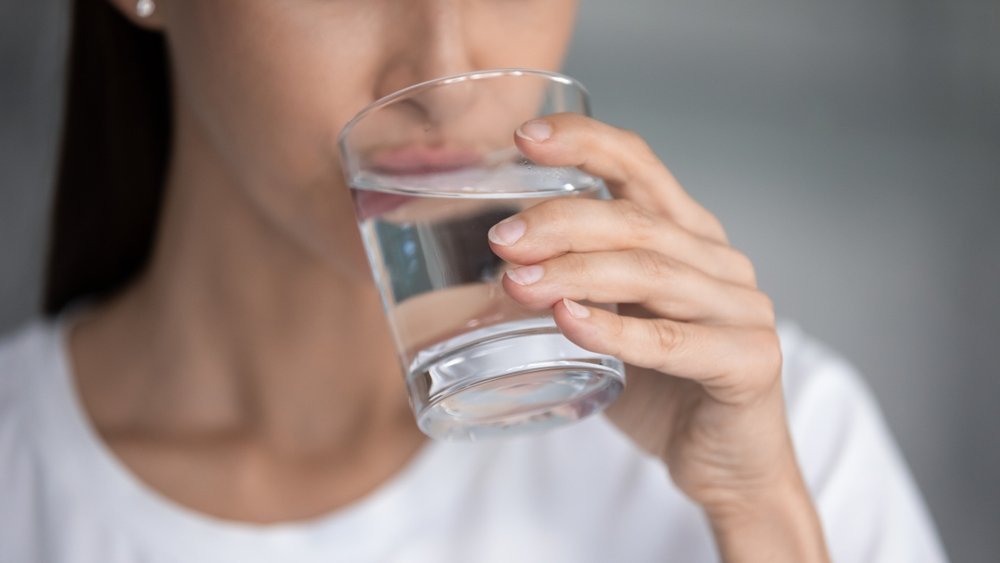
If you’re mildly dehydrated, small sips regularly beat one giant gulp — your body absorbs fluid better that way. Water is ideal, but diluted squash, herbal tea and milk all count. After heavy sweating, vomiting or diarrhoea, oral rehydration sachets from any pharmacy (about £3–£4 for a box) replace lost salts as well as water, which plain water alone can’t do. Avoid alcohol until you’re back to normal — it actively dehydrates you.
How much should you actually drink in the UK?
The often-quoted “8 glasses a day” isn’t a rule, it’s a rough guide. The NHS and the European Food Safety Authority suggest around 1.6 litres a day for women and 2 litres for men from drinks — and roughly a fifth of your fluid actually comes from food (fruit, veg, soups and yoghurt all count). You need more if you’re exercising, breastfeeding, ill, or it’s hot.
Rather than obsessing over millilitres, use the urine colour test and how you feel as your guides. And build drinking into routines you already have: a glass with every meal, one at your desk you refill at lunch, one before bed. I keep a 750ml bottle on my desk and just aim to finish it twice — no apps, no spreadsheets, no stress.
Dehydration myths worth dropping
A lot of what people “know” about hydration is either outdated or was never true. Clearing these up makes the whole thing simpler.
Myth 1: You need eight glasses a day. The 8×8 rule has no serious scientific backing — it likely came from a misread 1940s US nutrition guideline that also said most of this fluid comes from food. Your needs depend on size, activity, diet and weather. Thirst plus pale-yellow urine is a better gauge than any fixed number.
Myth 2: Coffee dehydrates you. Caffeine is a mild diuretic, but the water in the cup more than compensates. Regular coffee drinkers build tolerance to the diuretic effect anyway. Your morning flat white counts toward hydration — it just shouldn’t be the only thing you drink.
Myth 3: If you’re thirsty, it’s already too late. This gets repeated everywhere, usually to sell something. Thirst is an early, sensitive signal in healthy adults — it kicks in at around 1–2% fluid loss, well before performance or health suffers. The exception is older adults, whose thirst response genuinely dulls with age, which is why scheduled drinking matters more after 65.
Myth 4: Sports drinks are better than water. For exercise under an hour, water wins outright. Sports drinks earn their place in prolonged sweaty activity (90+ minutes), illness with vomiting or diarrhoea, or genuine heatwave exertion — situations where you’re losing significant salts, not just water. For desk work, they’re just sugary water.
Myth 5: Clear urine means you’re perfectly hydrated. Completely clear urine usually means you’re overdoing it. Pale straw is the target. And if you’re taking B-vitamin supplements, neon-yellow urine tells you nothing about hydration at all.
The boring truth: drink mostly water, eat your fruit and veg, pay attention to thirst and urine colour, and drink a bit more when it’s hot or you’re active. That’s the entire system — no apps, gadgets or special waters required.
Your takeaway: make water the path of least resistance
Dehydration is common, sneaky and almost embarrassingly easy to fix. Learn the early signs — dark urine, afternoon headaches, unexplained tiredness, dizziness — pay extra attention to kids and older relatives, and treat severe symptoms as urgent. The simplest habit that works: keep water visible and within arm’s reach all day. Your brain, your energy and your 3pm self will thank you.