You’ve never camped. The idea appeals — the stars, the campfire, the kids loving it — but the reality feels daunting: what if it rains, what if the tent collapses, what if everyone’s miserable by 9pm? Every experienced camper was once a nervous first-timer. The best UK campsites for first time campers aren’t the wildest or most remote — they’re the ones with proper facilities, friendly wardens, and enough comfort that the first experience is a good one. Because the first trip determines whether there’s a second.
The best UK campsites for first time campers: what to look for
Not all campsites suit beginners. Your first-timer checklist:
- Proper toilets and showers. Non-negotiable for trip one. Hot showers, clean blocks, ideally with family bathrooms.
- Electric hook-up optional, but a shop/café nearby. You won’t need hook-up with basic gear, but a site shop for forgotten essentials (and morning pastries) is gold.
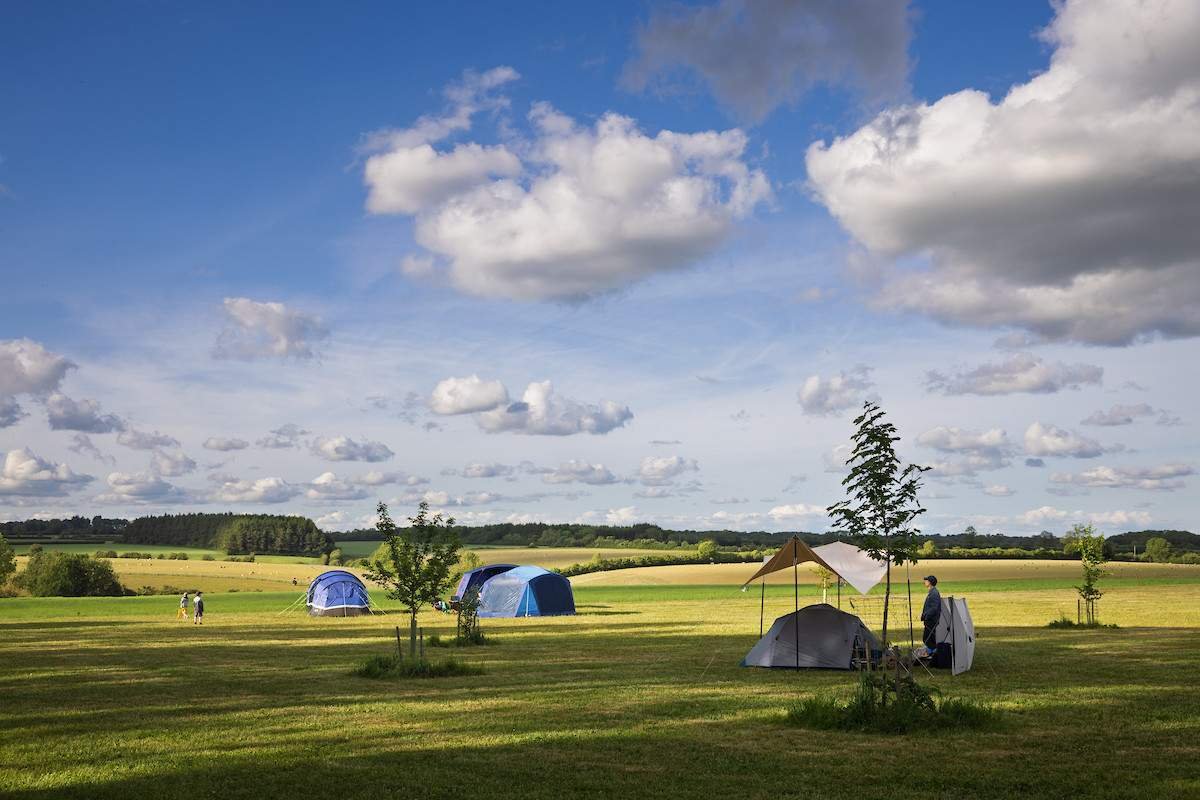
- Allocated or spacious pitches. Some sites cram tents inches apart; look for generous pitches or pre-allocated spots — space reduces beginner stress enormously.
- Good drainage and firm ground. Check reviews for “boggy” mentions. A sloping, waterlogged pitch ruins a weekend.
- A warden or owner on site. Someone to ask when the tent instructions make no sense at 9pm. Invaluable.
- Phone signal. Not for scrolling — for weather checks, maps, and the reassurance of connection on night one.
Pitchup’s campsite listings let you filter by facilities, with honest reviews — filter for “good for beginners” signals like playgrounds, shops, and hard standings.
Recommended first-timer regions and sites
- The New Forest. Purpose-built for beginners — flat, dry, beautiful, with direct trains from London (Brockenhurst). The Camping and Caravanning Club sites here are the gold standard for first-timers: immaculate facilities, spacious pitches, forest on the doorstep, ponies wandering past.
- The Lake District (low-level). Sites near Coniston and Windermere with full facilities — stunning scenery without the mountain weather. Our Lake District budget guide covers the area.
- Cornwall (north coast). Family-oriented sites with play areas, near beaches. Go in June or September — August books out and costs double.
- The Peak District. Central, accessible, with excellent beginner sites around Bakewell and Castleton. Our Peak District walks guide gives you the days out.
- Norfolk/Suffolk coast. Flat, dry (by UK standards), huge skies, and some of the friendliest family campsites in England.
- Near home for trip one. Seriously — your first camp should be within an hour’s drive. If it’s a disaster, you can go home. If it’s brilliant (it will be), you’ve lost nothing.
The beginner’s kit: what you actually need
Camping shops want to sell you everything. For a first summer weekend, you need:
- Tent: bigger than you think — a “4-person” tent sleeps 2 adults comfortably. For beginners: a simple dome or tunnel tent (£60–£120, e.g., Quechua, Coleman). Practise pitching it in the garden first — non-negotiable.
- Sleeping: sleeping bags rated for the season (£25–£40 each) PLUS sleeping mats — not airbeds (cold, puncture-prone), but self-inflating mats (£20–£35). The mat matters more than the bag for comfort.
- Cooking: a single-burner stove (£15–£25) + gas, one pan, kettle, basic utensils, cool box. Keep meals simple: pasta, bacon sandwiches, beans on toast. Gourmet camp cooking is for trip five.
- Light: a head torch each (£8–£12) + a lantern for the tent. Head torches beat handheld torches completely.
- Chairs: one camping chair each (£10–£15). Sitting on the ground gets old fast.
- The extras that matter: mallet for pegs, duct tape (repairs everything), bin bags, a washing line + pegs, earplugs (dawn chorus is loud), and a dustpan for the tent.
Total for a family of four starting from scratch: £250–£400. Buy sensibly and it lasts years — cost per trip plummets fast.
First-trip survival guide
- Arrive before 4pm. Pitching in daylight, with time to spare, is the difference between fun and divorce. Never arrive in the dark on trip one.
- Eat before you arrive or keep night one simple. Pitch first, eat second. Beans on toast by head torch is a rite of passage.
- Expect bad sleep night one. It’s normal — new noises, hard ground, excitement. Night two is always better. Earplugs help.
- Have a wet-weather plan. A pack of cards, a book, the car for a drive, a nearby pub. Rain happens; misery is optional.
- Keep food secured. Cool box zipped, bins used — not because of bears (this is Britain), but because of foxes, badgers, and seagulls with no respect.
- Leave no trace. Take everything, leave the pitch cleaner than you found it. It’s the camper’s code.
When to go (and when not to)
Late May–June and September are the beginner sweet spots: decent weather odds, fewer crowds, lower prices, available pitches. July–August is peak everything — book months ahead, expect queues and noise. Bank holidays are the busiest weekends of the year — avoid for trip one. And check the forecast 48 hours out; a dry weekend forecast is worth more than any gear upgrade. For coastal camping inspiration, our seaside towns for a weekend break pairs perfectly — camp near the coast, beach by day.
Camping with kids: the reality check
Kids and camping are a natural match — but the first trip needs managing. Involve them in pitching (holding guy ropes makes them stakeholders, not passengers). Bring familiar comforts (the favourite teddy, the bedtime story — routine survives the tent). Plan active days (tired kids sleep; bored kids don’t). Embrace the dirt (they will be filthy; that’s the point — bring the washing-up bowl for a strip-wash). And lower your standards: the kids won’t remember the perfect pitch, they’ll remember the campfire, the stars, and the adventure. Some of the best family memories are made in £80 tents.
The takeaway
The best UK campsites for first-time campers: the New Forest, the Lakes, Cornwall, or somewhere within an hour of home — with proper facilities, spacious pitches, and a warden on site. Buy a bigger tent than you think, practise pitching at home, arrive before 4pm, and keep night one simple. The first trip is about proving it’s fun, not testing your limits. Get it right and you’ll wonder why you waited so long.