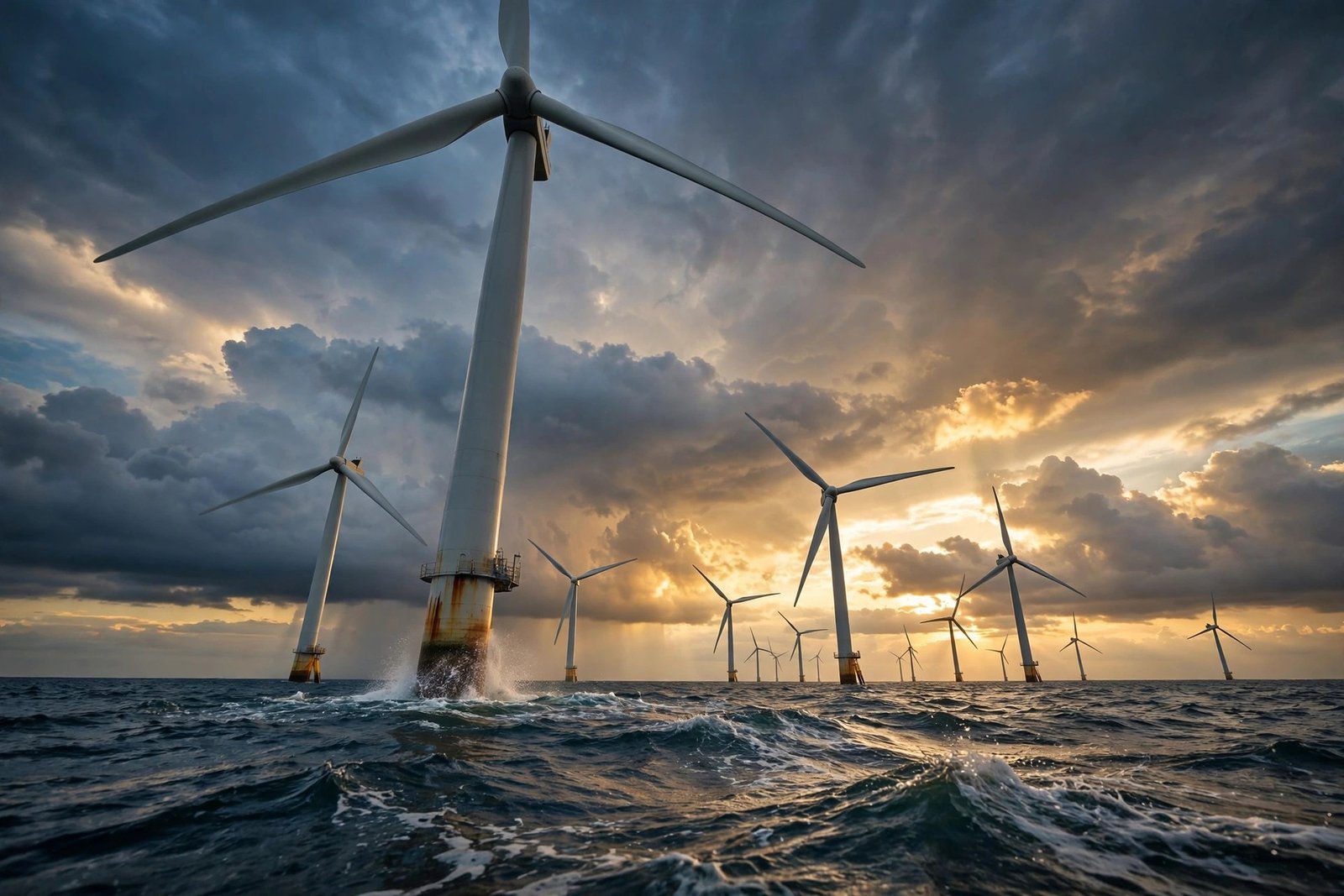
Britain is, quietly, a wind superpower. The UK has the largest offshore wind capacity in Europe, turbines in the North Sea now stand taller than the Shard, and wind regularly provides a third or more of the country’s electricity. If you have ever driven past a wind farm and wondered how those enormous blades actually turn breeze into light bulbs, you are asking one of the best beginner questions in energy.
But is now the right moment to learn how wind turbines work — or should you wait until the technology settles? Here is the case for starting today: the technology is mature enough that what you learn will stay true for decades, the UK context makes it immediately relevant, and understanding turbines unlocks the whole renewable energy conversation. Waiting gains you nothing.
Why Now Is Actually the Perfect Time
Some technologies are moving targets — learn them today and half your knowledge is obsolete by next year. Wind turbines are the opposite. The fundamental design, the three-bladed horizontal-axis turbine, has been dominant for thirty years and will remain dominant for decades. The physics you learn now — how blades harvest energy from moving air, why taller towers capture stronger winds — will not change.
What is changing is the scale and the context, which makes learning now exciting rather than risky. Turbines keep getting bigger: the latest offshore models sweep an area larger than several football pitches, and single turbines can now power thousands of homes. Meanwhile the policy context is live — the UK government’s energy security strategy leans heavily on offshore wind, and every news cycle brings a new milestone. Learning now means understanding the headlines as they happen.
How a Wind Turbine Actually Works
The core idea is disarmingly simple, and it is the reverse of a fan. A fan uses electricity to push air; a turbine uses moving air to make electricity. Wind flows over the specially shaped blades — they are wings, shaped much like aircraft wings — and the difference in air pressure creates lift, spinning the rotor.
The rotor turns a shaft connected to a gearbox (in most designs), which steps up the slow rotation of the blades — typically 10 to 20 revolutions per minute — to the roughly 1,500 rpm a generator needs. The generator converts that rotation into electricity, which travels down the tower, through undersea or underground cables, to the grid. A control system constantly yaws the turbine to face the wind and pitches the blades to capture the optimal amount of energy — or to shed wind in storms.
The Energy Saving Trust’s guide to wind turbines explains the domestic-scale versions of this same technology, if you are curious about smaller installations closer to home.
The Numbers That Make It Click
A few figures turn vague understanding into real insight. A modern onshore turbine stands around 130 metres tall and generates 2–4 megawatts — enough for roughly 2,000 homes. Offshore giants now reach 250+ metres and 14–15 megawatts each, powering 15,000+ homes apiece. The physics behind the growth is the cube law: doubling the wind speed gives eight times the power, which is why developers chase windier sites and taller towers so aggressively.
Capacity factor is the other number worth knowing: a typical UK offshore wind farm generates about 40–50% of its theoretical maximum over a year (wind does not blow constantly). That sounds low until you compare it with the alternative — and until you realise that at 50% capacity factor, offshore wind is now among the cheapest sources of new electricity in Britain, according to repeated government auction results.
What “Waiting” Would Actually Cost You
The “should I wait” instinct usually comes from a sensible place: nobody wants to learn something twice. But consider what waiting means here. The turbine designs of 2036 will be bigger versions of today’s, not different machines. The grid integration challenges — storage, interconnectors, demand flexibility — are evolving, but they build on concepts you can learn now.
Meanwhile, understanding turbines now pays immediate dividends. It makes you a sharper reader of energy news, a better judge of political claims about net zero, and — practically — it connects to household decisions. Grasping how electricity is generated and priced helps you understand your own bills and evaluate options like energy-saving upgrades for an old house or cutting energy bills for a small business with far more confidence.
How to Learn It Well in a Weekend
Start with the physics (one hour): lift, the cube law, capacity factor. Then the British story (one hour): how the UK went from a handful of onshore turbines in the 1990s to the world’s leading offshore wind fleet, including the Hornsea projects off the Yorkshire coast — each phase bigger than the last. RenewableUK’s resources give the industry perspective on where it goes next. Finish with a visit if you can: several UK wind farms offer visitor centres and open days, and seeing a blade up close — each one longer than a football pitch — recalibrates your sense of scale permanently.
The Objections, Answered Honestly
No honest guide to wind turbines can skip the criticisms. The most common — that turbines are noisy, ugly, and kill birds — deserves a straight answer. Modern turbines are dramatically quieter than early models; at typical setback distances, their sound is comparable to a quiet conversation and is regulated by strict UK planning noise limits. On appearance, taste genuinely varies, but surveys consistently show majority support for wind farms, including among people who live near them. Bird impacts are real but context matters: domestic cats and building collisions kill orders of magnitude more birds than turbines, and the industry now uses radar shutdown systems and careful siting to protect sensitive species.
The more serious objection is intermittency — the wind does not always blow. This is a genuine engineering challenge, not a fatal flaw. It is being met with a combination of geographic diversity (it is always windy somewhere), interconnectors to neighbouring countries, demand-side flexibility, and rapidly growing battery storage. Understanding these solutions is part of understanding turbines, and it is why energy literacy matters far beyond the turbines themselves.
The Bottom Line
Is now a good time to start understanding how wind turbines work? Yes — unequivocally. The technology is mature, the learning will not expire, the UK is at the centre of the story, and the knowledge connects directly to the energy bills landing on your doormat. There is no better moment, and no reason to wait for one.
Frequently Asked Questions
How much electricity does one wind turbine produce?
A modern onshore turbine (2–4 MW) powers roughly 1,500–2,000 homes over a year; the largest offshore turbines (14–15 MW) can power 15,000 or more. Actual output depends on wind speeds at the site.
Do wind turbines work when there is no wind?
No — but the grid is designed for this. Wind is one part of a mix including nuclear, gas, interconnectors with Europe, and growing battery storage. No single source runs constantly, and the system balances them all.
Why do wind turbines have three blades?
Three blades are the engineering sweet spot: the best balance of efficiency, structural load, and cost. Two blades would be cheaper but less stable and noisier; more blades add cost without meaningful gains.
Are wind turbines actually good for the environment overall?
Yes. A turbine repays the carbon emitted in its manufacture within months and then generates clean electricity for 25+ years. Wildlife impacts exist — particularly for birds and bats — and are actively managed through siting and monitoring.