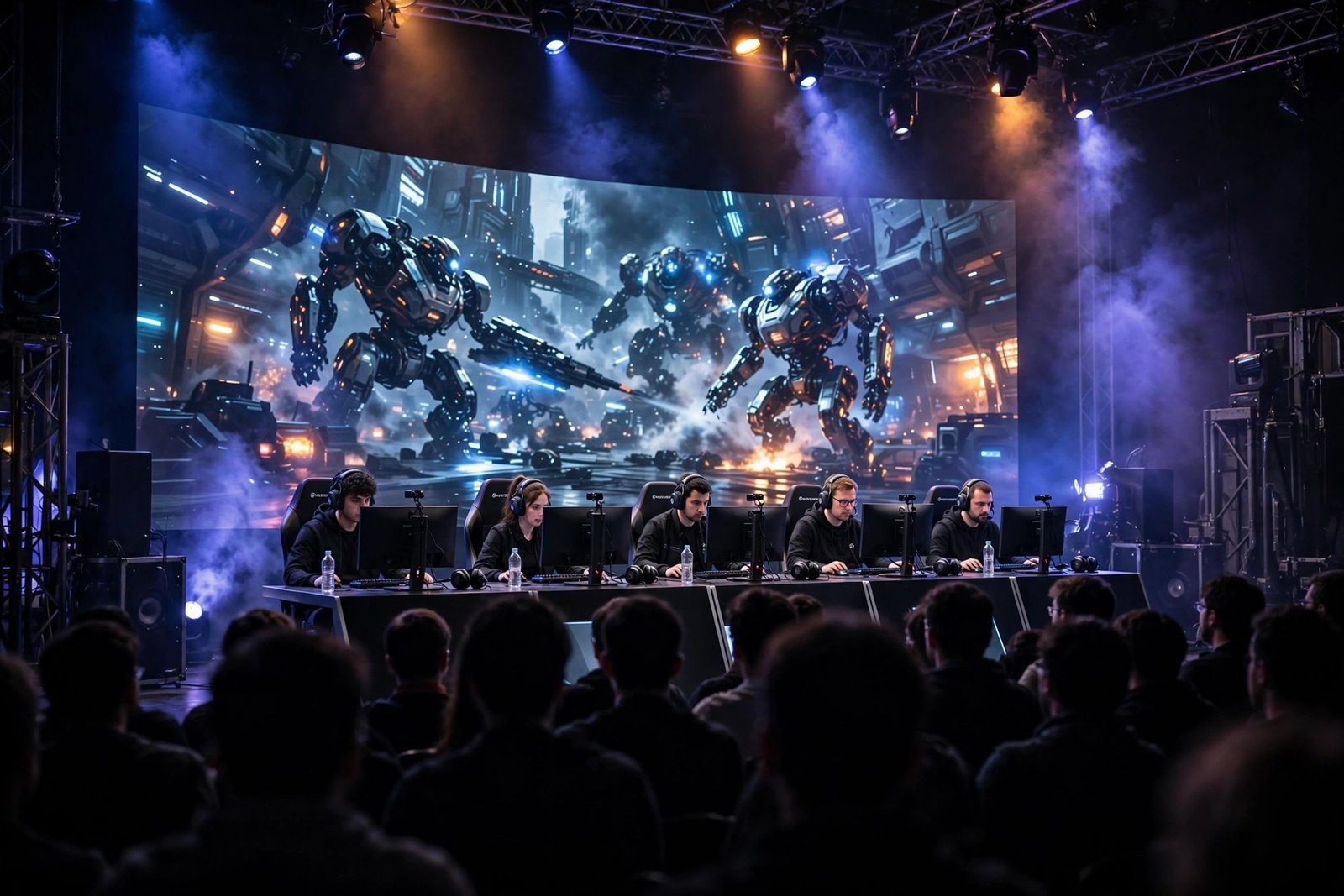
Professional gamers fill arenas, earn six-figure salaries, and have fan bases rivalling footballers. Behind them stands an industry — coaches, analysts, broadcasters, event managers, content creators — worth billions globally. It is no wonder thousands of young Britons wonder whether esports could be their career. But how long does it actually take to understand esports careers — the real paths, the real odds, the real timelines — well enough to make smart decisions?
Longer than the hype suggests, shorter than the cynics claim. Grasping the landscape takes weeks; understanding it deeply enough to plan a career takes months. Here is the honest map: the actual career paths, what each demands, how long each takes to break into, and the realities nobody posts about.
The Career Paths Nobody Explains Properly
“Esports career” usually conjures one image: the pro player. It is the rarest path and the worst one to plan around. The real industry has far more doors:
Pro player: the visible 1%. Requires exceptional talent, thousands of hours, and youth — most pros peak between 17 and 24. Career length averages 4–6 years. Honest odds: comparable to becoming a professional footballer.
Coaching and analysis: the fastest-growing professional path. Teams employ head coaches, assistant coaches, and data analysts. Entry typically comes through high-level amateur play plus demonstrable strategic thinking — VOD reviews, amateur team coaching, statistical analysis portfolios. Timeline: 1–3 years of serious amateur involvement.
Broadcasting and production: casters, observers (the camera operators of esports), producers, and technical crew. Skills transfer from traditional media and streaming; many casters start as community volunteers at amateur tournaments. Timeline: 6–18 months of volunteering and portfolio-building to paid work.
Content creation: YouTubers, streamers, and social media creators around esports. Overlaps with general content careers; esports knowledge is the niche. Timeline: 1–2 years to meaningful income, with the same brutal attrition as all creator careers.
Business and operations: team managers, event organisers, marketing, sponsorship sales, journalism. These are normal jobs that happen to be in esports — the most accessible path by far, requiring standard professional skills plus genuine industry knowledge. Timeline: same as any graduate or career-changer path, 3–12 months of targeted effort.
Stage 1: Mapping the Landscape (2–4 Weeks)
The first stage is learning what exists — and it is where most aspiring pros waste years by skipping it. In two to four weeks of structured learning, you can grasp: the major titles and their ecosystems (League of Legends, Counter-Strike, Valorant, and their very different structures), how leagues and tournaments actually work, where the money flows (sponsorships dwarf prize money for most organisations), and the UK scene specifically — the British Esports Federation is the authoritative starting point for understanding the domestic landscape, from grassroots to education programmes.
This stage also delivers the most important insight: esports is not one career but dozens, with wildly different requirements. The teenager grinding ranked with pro dreams and the 28-year-old career-changer eyeing event management are pursuing different industries that happen to share a name. Knowing which you are saves years.
Stage 2: Testing Fit (2–6 Months)
Understanding deepens through doing. This stage means volunteering at amateur tournaments, joining community teams, creating trial content, or attending events — the low-stakes experiments that reveal whether the reality matches the fantasy. Can you actually enjoy analysing VODs for six hours? Does event-day chaos energise or exhaust you? Is your ranked grind improving or plateauing?
This is also when transferable skills get built deliberately. Aspiring coaches study sports psychology and communication; future broadcasters practise casting amateur matches; business-path candidates build the standard professional toolkit — and modern job-search skills apply fully, since most esports business roles are won through conventional applications. Many find that the adjacent path fits better than the dream: the would-be pro who discovers they love coaching, the fan who finds event ops electrifying. Pivoting here is success, not failure — and turning a hobby into income follows the same gradual, experimental pattern.
Stage 3: Committing With Eyes Open (6–18 Months)
Real results — paid work, a genuine foothold — typically take six to eighteen months from serious start, depending on path. Coaching and business roles trend faster; pro play and content creation trend slower and less predictably. The people who make it share traits: they treat it as a profession from day one (schedules, portfolios, networking), they build in public (visible work attracts opportunity), and they maintain a parallel plan — education, employment, or both — because the base rates of success demand it.
The parallel plan is not pessimism; it is arithmetic. Even in optimistic scenarios, most esports aspirants will not earn a living from it. The National Careers Service lists esports-related roles alongside conventional alternatives for good reason: the skills overlap heavily with sports management, media production, and digital marketing — all viable whether or not the esports dream lands.
Many beginners also underestimate how much watching teaches. Study professional broadcasts actively: listen to how casters explain plays, notice what observers choose to show, observe how analysts break down decisions. Every broadcast is a free masterclass in the production and analysis roles — and it builds the vocabulary you will need in any esports-adjacent job interview. The viewers who become professionals are usually the ones who watched with a notebook, not just popcorn.
What “Real Results” Actually Look Like
Redefine results honestly and the timeline clarifies. Understanding the landscape: 2–4 weeks. Knowing your viable paths: 2–6 months of active exploration. First paid foothold: 6–18 months of serious effort. Sustainable career: 2–4 years — the same as any competitive industry. Anyone promising faster is selling something. The question was never really “how long until I understand esports careers” — it is “how long until I know whether one fits me,” and that answer is: a few months of honest experimentation, if you do the work.
The Bottom Line
Understanding esports careers takes weeks; understanding them well enough to bet your future takes months of active exploration. The industry is real, growing, and full of genuine opportunity — but the opportunities cluster in coaching, production, content, and business roles far more than in pro play. Start by mapping the landscape, test fit through volunteering and creating, keep a parallel plan, and let evidence — not fantasy — choose your path. That is how long it takes, and it is time well spent whatever you decide.
Frequently Asked Questions
How long does it take to become a professional esports player?
Typically 3–6 years of intensive play from starting seriously, with most pros breaking through between 17 and 24. The odds are comparable to traditional professional sports — exceptional talent plus enormous time investment plus luck.
What esports careers exist besides playing?
Coaching, analysis, broadcasting, event production, team management, marketing, sponsorship sales, journalism, and content creation. Business and operations roles are the most accessible; pro play is the rarest.
Can you study esports at university in the UK?
Yes — several UK universities and colleges now offer esports degrees and BTECs covering production, coaching, business, and event management. They suit the non-playing career paths best.
Is esports a realistic career choice?
As an industry, yes — it is large and growing. As a pro player, the odds are extremely long. The realistic approach is targeting the professionalised support roles while keeping education and conventional career options open.