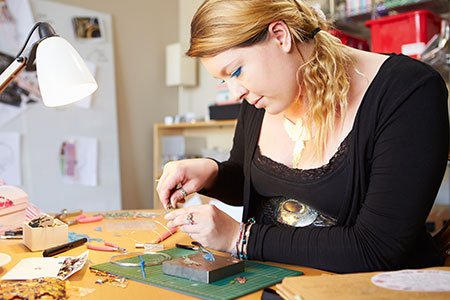
Learning how can I turn a hobby into a profitable side business is the question behind half the stalls at every craft fair in Britain. I know, because I was one of them — my weekend pottery habit turned into a small business that now covers my car payments, and the journey taught me that the difference between an expensive hobby and a profitable side business isn’t talent. It’s treating the money seriously from day one.
Here’s the uncomfortable truth most hobbyists avoid: plenty of people love what you make, but love doesn’t pay for clay, kiln time, and the stall fee at the Christmas market. Profitability means your prices cover every cost — materials, your time, fees, packaging, the petrol to get there — with margin left over. If you can’t say that sentence about your hobby right now, this guide is for you.
How can I turn a hobby into a profitable side business in the UK?
Start by doing the maths before you do anything else. List every cost involved in making one unit of whatever you sell, and be brutally honest: include the “free” stuff like the two hours you spent on it and the electricity your equipment used. Then research what similar items actually sell for — not what people list them for on Etsy, but what sells. The gap between your true cost and the selling price is your business. If there isn’t a gap, you have a pricing problem or a cost problem, and you need to fix one of them before going further.
A realistic pricing formula that works for most handmade and creative side businesses:
- Materials + overheads: everything physical plus a share of stall fees, tools, and consumables.
- Your time: hours × a real hourly rate (at least the National Minimum Wage for your age — your time isn’t free just because you enjoy it).
- Margin: add 20–30% on top for profit and to absorb the costs you forgot.
Most hobbyists underprice by 30–50%. Raising your prices feels terrifying, but in my experience the customers who haggle over £5 were never your customers anyway. The ones who value handmade work expect to pay for it.
The legal and tax bits (less scary than they sound)
In the UK, you need to register as self-employed with HMRC once your self-employment income passes £1,000 in a tax year — that’s the trading allowance. Below that, you’re fine; above it, register and file a Self Assessment return. Keep every receipt from the start, even before you register, because those early costs count.
You’ll also want to think about:
- Insurance: public liability insurance for markets and fairs (often required by organisers), and product liability if you sell anything people eat, wear, or put on their skin. Policies for crafters start around £50–£80 a year.
- Food hygiene: selling bakes or preserves? You’ll need to register with your local council’s environmental health team — it’s free — and follow labelling rules.
- A separate bank account: not legally required for sole traders, but mixing business and personal money is how bookkeeping becomes a nightmare. Many digital banks offer free business accounts — see our guide on free business banking for startups.
Selling: start where your customers already are
Don’t build a website on day one. Sell where buyers already gather: local markets, craft fairs, Etsy, Not On The High Street, Instagram, and Facebook Marketplace. Each teaches you something — markets teach you pricing face-to-face, Etsy teaches you photography and SEO, Instagram teaches you storytelling. I sold at markets for a full year before building a website, and by then I knew exactly what my customers wanted.
When you do take card payments at a stall, the fees add up — our breakdown of the cheapest way to accept card payments in a market stall will save you real money. And once orders start coming in regularly, a simple bookkeeping routine keeps the taxman happy without eating your evenings.
The mindset shift that matters most
The moment my pottery stopped being “a hobby that sometimes makes money” was the moment I started saying no. No to custom orders that took ten hours for £30. No to stocking a shop on consignment with no guaranteed payment. No to doing the craft fair three counties away that cost more in petrol than I’d ever make. A profitable side business is as much about what you refuse as what you accept.
Pricing psychology: why handmade commands a premium (if you let it)
One of the hardest mental shifts in turning a hobby into a business is accepting that your prices should reflect value, not just costs. Hobbyists price from the bottom up: materials + a bit for time = price. Businesses price from the top down: what is this worth to the buyer? A hand-thrown mug isn’t competing with a 99p IKEA mug — it’s competing with a £24 artisan mug in a gift shop, bought as a present with an emotional story attached. Your customer isn’t buying clay; they’re buying craftsmanship, uniqueness, and the story of the maker.
This is why presentation matters enormously. The same product photographed badly on a cluttered table sells for half the price of one photographed well with a story card explaining who made it and how. Markets taught me this viscerally: when I upgraded from a plastic tablecloth to a proper display with height, lighting, and little story cards, my conversion rate doubled without changing a single price. Customers need permission to pay premium prices, and professional presentation gives it.
There’s also the paradox of pricing: within reason, higher prices signal higher quality. I once doubled the price of a slow-selling line as an experiment, and sales increased — the higher price repositioned the pieces from “craft fair trinket” to “artisan gift”. Don’t race to the bottom; there’s always someone willing to go cheaper, and that’s a game you can’t win. Compete on distinctiveness, story, and quality — the things mass production can’t copy.
Finally, build in room to wholesale. If a shop ever wants to stock your work, they’ll expect roughly 50% of retail price. If your retail price barely covers costs, wholesale is impossible. Price with margin from day one, and doors stay open that would otherwise be closed.
Your practical takeaway
This month: cost one product honestly, raise your prices to cover it, and register with HMRC if you’re over the £1,000 trading allowance. This quarter: get insured, sell at three markets or list twenty items online, and track every penny. If the numbers work, you’ve got a business. If they don’t, you’ve got the information to fix it — which is worth more than another year of hopeful guessing.