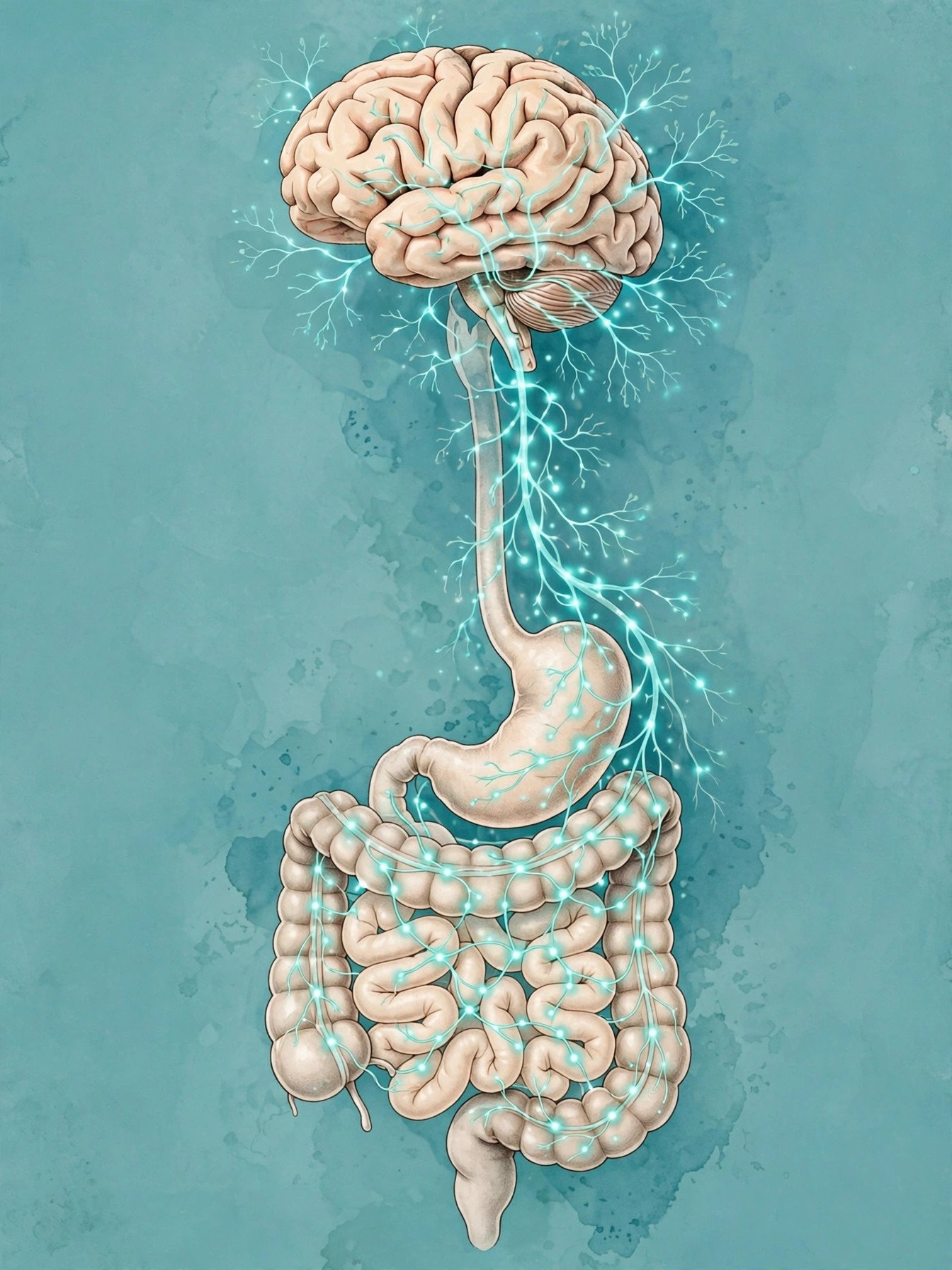
Butterflies before a presentation, nausea with bad news, the gut “feeling” about a decision — the gut-brain connection is folk wisdom that neuroscience has spent two decades validating in the lab. Your digestive system and brain are in constant, two-way communication through nerves, hormones and immune signals, and the trillions of microbes in your gut appear to be active participants in the conversation. The science is genuinely exciting — and genuinely overhyped. Here is what researchers actually know, what they suspect, and what is just marketing.
The Wiring: How Gut and Brain Talk
The vagus nerve is the information superhighway: the longest cranial nerve, running from brainstem to abdomen, carrying more signals upward (gut to brain) than downward. About 90% of its fibres are afferent — the gut talks to the brain more than the brain talks to the gut, which reframes those “gut feelings” as data, not metaphor. Alongside the nerve run hormonal signals (ghrelin, leptin and others reporting on hunger and satiety), immune messengers (inflammatory cytokines that affect mood and cognition), and microbial metabolites — chemical products of gut bacteria that enter circulation and reach the brain.
The gut also manufactures neurochemicals: roughly 90% of the body’s serotonin is produced in the gut (though gut serotonin does not cross into the brain directly — the relationship is indirect, via precursors and signalling). This is why the simplistic “gut makes happy chemicals” narrative misleads even while pointing at something real. The system is a network, not a pipeline — and networks produce subtle, distributed effects rather than simple cause-and-effect levers. For the nutritional foundations that feed this system, improving gut health with everyday foods covers the practical side.
What the Evidence Actually Shows
Established: stress disrupts the gut, and gut distress affects mood
The two-way street is solid science. Psychological stress measurably alters gut motility, permeability and microbial composition — the mechanism behind stress-induced IBS flare-ups and exam-season stomach trouble. Conversely, gastrointestinal disorders carry sharply elevated rates of anxiety and depression, and treating the gut condition often improves mood. This much is clinical consensus, not frontier speculation.
Promising: specific microbes influence behaviour
Animal studies are striking: germ-free mice show altered anxiety behaviours; transplanting gut microbes from anxious mice to calm ones transfers the anxiety phenotype. Certain probiotic strains (“psychobiotics”) show modest benefits for mood and stress in human trials. But — and this is the gap marketing ignores — animal results translate to humans unreliably, human trials are small and strain-specific, and no probiotic has anything approaching antidepressant-level evidence. Promising is not proven.
Speculative: microbiome as master controller
Claims that gut bacteria cause or cure depression, autism, obesity or Alzheimer’s outrun the evidence dramatically. Associations abound (depressed patients often have different microbial profiles), but causation is unestablished — illness changes diet, activity, medication and stress, all of which change microbes. The microbiome may be a mediator, a marker or a bystander; science does not yet know. Anyone selling certainty here is selling something else.
What You Can Reasonably Do
The evidence-based actions are refreshingly ordinary — which is precisely why they are credible:
Eat fibre diversely. The strongest dietary signal in microbiome science: diverse plant fibres feed diverse beneficial microbes. Thirty different plant foods a week (vegetables, fruits, legumes, nuts, seeds, whole grains, herbs count) is the research-backed target — ambitious but achievable, and eating healthily on a budget shows it need not be expensive.
Include fermented foods. Live yoghurt, kefir, kimchi, sauerkraut and kombucha show the most consistent benefits in human trials — a Stanford study found fermented foods increased microbial diversity and calmed inflammatory markers.
Manage stress. Since the gut-brain axis runs both ways, stress management is gut care: sleep, exercise and downregulation practices measurably benefit gut function.
Be cautious with unnecessary antibiotics. They are life-saving when needed but indiscriminate — they deplete beneficial microbes alongside targets. Never demand them for viral illnesses.
Limit ultra-processed food and excess alcohol. Both are consistently associated with poorer microbial diversity and increased gut permeability.
What not to do: expensive microbiome test kits promising personalised diets (the science cannot yet interpret your results meaningfully), extreme “gut reset” cleanses (your liver and kidneys already do this), and probiotic megadosing without a specific indication. The NHS Eatwell guidance remains the most evidence-aligned dietary framework available — unglamorous and correct.
The Future: Where Research Is Heading
The frontier is genuinely thrilling: faecal microbiota transplants (already transformative for recurrent C. difficile infection) are being trialled for other conditions; strain-specific psychobiotics may one day augment mental-health treatment; and the vagus nerve itself is a therapeutic target, with vagus-nerve stimulation approved for treatment-resistant depression. But the timeline from exciting pilot study to clinical reality is measured in decades, and most current “gut-brain” products are monetising the hype gap. Watch the research with interest; spend your money on fibre.
Sorting Evidence From Marketing
The gut-health marketplace is where evidence goes to be monetised, so a sceptical toolkit helps. Ask of any product: is there a human randomised controlled trial, or only animal studies and testimonials? Is the claim strain-specific (credible) or about “probiotics” generally (meaningless — strains differ enormously)? Is someone selling the test that diagnoses the problem their product solves? The British Dietetic Association — the professional body for UK dietitians — publishes evidence-based positions on probiotics, fibre and gut health that cut through the marketing noise. When in doubt, a registered dietitian (protected title, unlike “nutritionist”) gives personalised advice grounded in your actual health picture rather than a supplement company’s.
The meta-lesson applies beyond gut health: exciting preliminary science plus aggressive marketing equals expensive disappointment. Follow the researchers, not the retailers — university press releases are optimistic enough without a checkout button attached.
Conclusion
The gut-brain connection is real neuroscience — a dense two-way network of nerves, hormones, immune signals and microbial chemistry — with solid evidence that stress harms the gut and gut distress harms mood, promising-but-early evidence on specific microbes and mental health, and a marketing industry far ahead of the data. The rational response is beautifully boring: diverse fibre, fermented foods, stress management, judicious antibiotics. Your gut and brain will thank you in the only language they share — you feeling better, for reasons science is still mapping.
Frequently Asked Questions
Can gut bacteria affect mental health?
Probably, modestly — animal evidence is strong and early human trials of specific probiotic strains show small mood and stress benefits. But claims that microbes cause or cure depression far exceed current evidence.
What is the best diet for gut health?
Diverse plant fibres (aim for 30 different plant foods weekly), regular fermented foods, limited ultra-processed food and alcohol. This pattern has the strongest evidence in microbiome research.
Are microbiome test kits worth it?
Not currently for guiding diet — the science cannot yet translate your microbial profile into reliable personalised advice. They are interesting but not actionable; spend the money on vegetables instead.
Do probiotics work?
Specific strains help specific conditions (some digestive issues, antibiotic-associated diarrhoea), with early evidence for mood effects from “psychobiotic” strains. Generic megadoses for general wellness are unproven.
What are psychobiotics?
Probiotic strains studied for mental-health effects via the gut-brain axis. Early human trials show modest benefits for stress and mood — promising, preliminary, and strain-specific.