An alert should be a tap on the shoulder, not a hand on your sleeve all day.
The Case for Alerts, Stated Fairly
The promise behind a price alert is a decent one. You cannot watch a market all day, and you should not have to. So you choose a level that matters, set an alert, put the phone away and get on with your life. If that level is reached, the phone interrupts you once, for a reason you chose in advance. Used that way, an alert is not a toy or a temptation. It is a boundary between your attention and a market that would happily take all of it.
There are moments when that boundary genuinely helps. You may be waiting for a price to fall into a range where you had already decided you were willing to buy, slowly and in a planned way. You may want to know if a holding falls back to what you paid for it, because that fact would change a decision you have already thought through. You may simply want warning of an unusual move in something you own, so you can look properly later rather than stumble on the news days afterwards.
It is worth seeing the wider pattern too. The same feeds that learn your habits shape what reaches you first, much as how AI personalises what you see on social media decides which posts earn your attention before you have chosen anything. An alert you set yourself, at a level you chose for a reason you wrote down, is one of the few interruptions in modern life that is actually yours. That is the strongest case for alerts, and it is a real one.
The Case Against the Way Most People Set Them
The trouble is that most alerts are not set that way. They are set in a spare minute, at a level that caught the eye, with no written answer to the only question that matters: what exactly will I do when this sounds? Without that answer, the alert does not deliver a plan. It delivers a feeling, and then leaves you alone with it at whatever hour it happens to arrive.
People also set far too many. One for this coin, one for that coin, one for a rise, one for a fall, one for a level mentioned by someone else, one just in case. Each new alert feels harmless. Together they rebuild the very thing alerts were meant to replace, a market that taps you on the shoulder every few minutes and asks to be thought about. The phone stays quiet only in the sense that it buzzes politely instead of ringing.
Then there is the copying problem. Levels travel. Someone posts a chart, names a price and sounds certain, and that price ends up as an alert on hundreds of phones belonging to people with different holdings, different costs and different reasons for owning anything at all. An alert borrowed from a stranger is worse than no alert, because it feels like research while being nothing of the sort. Your levels should come from your own position and your own plan, or they should not exist.
Fatigue: the Boy Who Cried Wolf Problem
Fatigue is the quietest failure and the most predictable. An alert that fires often and means little teaches a simple lesson: this sound can be ignored. You swipe it away while making tea. You swipe it away in a meeting. You swipe it away half asleep. The gesture becomes automatic, and automatic gestures do not pause to ask whether this time is different.
That is the old fable working in modern dress. The warning that cries wolf too often does not merely annoy people. It destroys the value of the one warning that mattered. In market terms, the alert that finally carries real news, the break of a level you genuinely cared about, arrives on a phone belonging to someone who has been trained by weeks of noise to dismiss it on sight. The system worked. The human it was reporting to had been worn out by the system itself.
Understanding push notifications and how they work makes the design problem clearer. A notification is built to interrupt. It does not arrive quietly in a list for later, unless you make it. It lands on the lock screen, lights the phone and asks for a decision about itself before you have had time to think about anything else. That force is useful for a rare, important signal. Spread across a dozen casual levels, it becomes a training programme in ignoring your own tools.
Fatigue also changes how you set alerts over time, and not for the better. People who are tired of pings either switch everything off in irritation, losing the few alerts that were doing honest work, or they raise the levels so far away that the alert can only fire after a move has already happened and the useful moment to act has passed. Both responses feel like taking control. Both are really surrender, in opposite directions.
Emotion: Alerts That Trade on Your Behalf
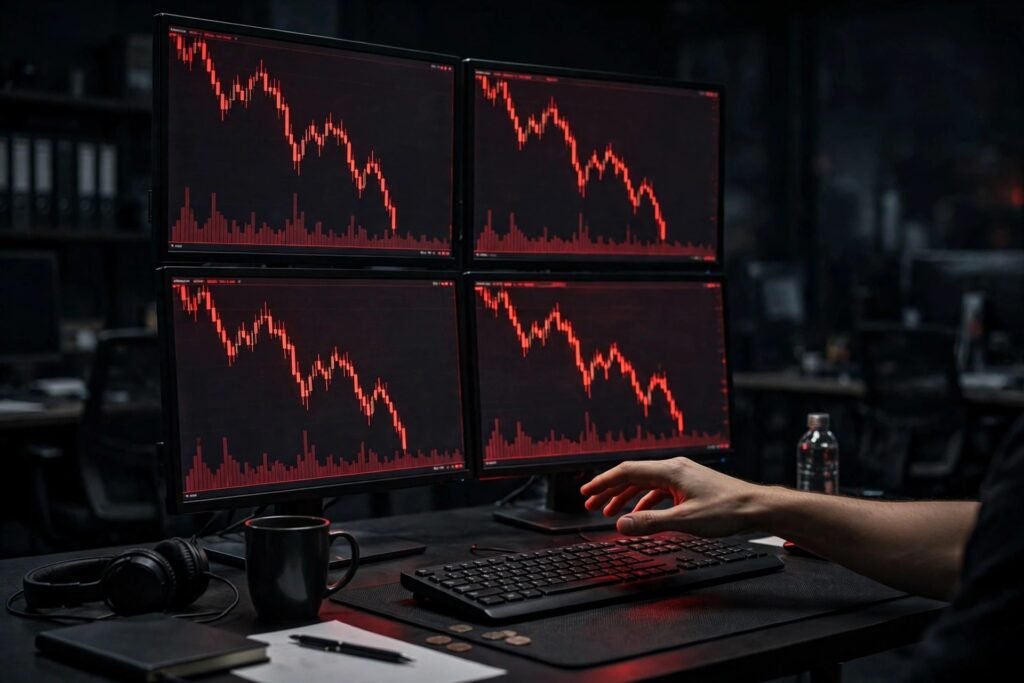
An alert never places a trade. It can still do much of a trade’s work for it, by choosing the moment when you are most likely to act badly and putting a glowing screen in your hand at exactly that moment. A fall alert arrives with red numbers and urgent language somewhere nearby. The feeling it produces has a name in ordinary life: panic. A rise alert arrives with the opposite feeling, the sense that everyone else is moving and you are being left behind.
That second feeling is powerful enough to deserve its own attention, and fear of missing out explained sets out how the sense of a closing window pushes people towards hasty choices they would not make in a quieter hour. A rising price does not make an asset better. It makes waiting feel worse. An alert that reports every rise is, in effect, a machine for manufacturing that discomfort and delivering it to your pocket throughout the day.
Drop alerts carry the mirror image risk. A sharp fall is precisely when a written plan matters most and when a person is least likely to follow one. If the honest answer to a fall alert is that you would sell in fright, then the alert is not protecting your holding. It is arranging your exit at the moment of maximum fear, which for a lively asset is often close to the moment of maximum pessimism. Selling may sometimes be right. Selling because a phone buzzed during a fall is a method, and it is a poor one.
There is a subtler emotional cost as well. Constant alerts keep a holding present in your mind far beyond its place in your life. A small position that should be a minor matter becomes a daily companion, checked in queues and mentioned in conversations. The holding has not grown. Its claim on your mood has. People rarely count that cost when they set an alert, yet over months it may be the largest one they pay.
Markets that never close make all of this heavier. A shop shuts. A market for these assets does not. If alerts are allowed to arrive through the night, they colonise sleep as well as waking hours, and a tired person makes worse decisions with less patience and a shorter temper. Protecting your nights is not softness. It is basic maintenance of the only judgement you have.
Failure: the Ping That Never Arrives
After all that, there is a plainer risk that gets discussed least. Sometimes the alert simply does not arrive. An app stops updating in the background. A phone update changes a permission. Notifications are silenced by a setting you changed for another reason and forgot. A battery dies, a signal drops, an exchange feed stalls. None of these is dramatic. All of them share one quality: you find out afterwards.
The timing is what makes silent failure cruel. You are most likely to go looking for the alert that never came after a large move, which is exactly when you most wanted warning. In calm weeks a broken alert is invisible, because nothing would have triggered it anyway. It can sit broken for a long time, offering the feeling of cover without any of the substance.
This is why an alert should never be the only thing standing between you and a loss you cannot afford. If a position is so large, or a level so important, that missing a single notification would be a disaster, the problem is the position or the plan, not the phone. Alerts are messengers. They are not guards, they are not insurance and they are certainly not a substitute for sizing a holding so that one bad day, missed or seen, remains survivable.
The Verdict and the Austere Setup That Works
The verdict, weighing both sides, is that alerts are worth keeping and worth rationing severely. The case for them is real: they return attention to your life and report the few moments you chose in advance. The case against the usual setup is stronger: noise breeds fatigue, pings stir emotion at the worst moments, and the whole arrangement can fail silently. The difference between a helpful alert and a harmful one is rarely the app. It is the discipline of the person who set it.
A working setup is austere enough to write on a small card. Keep only a handful of alerts in total. Set each one at a level where your action is already decided: a planned buying zone you have thought through, the level at which you paid, or a level that would genuinely change your view of why you hold something. If you cannot state the action in one plain sentence, delete the alert until you can.
Silence the night by default. Markets will still be there in the morning, and so will your judgement, in better repair. Review your alerts on a schedule, perhaps when you review the holdings themselves, and remove any that fired without teaching you anything or that no longer match the position. Add new ones slowly, in calm moments, never in the middle of a sharp move when every level looks urgent.
Above all, keep alerts in their proper place in the order of things. Plan first, in writing. Size second, so no single move can ruin you. Alert last, as a tap on the shoulder from a plan you already trust. Set up in that order, alerts become what they promised to be at the start: a quiet servant that speaks rarely, means what it says, and leaves the rest of your day alone.