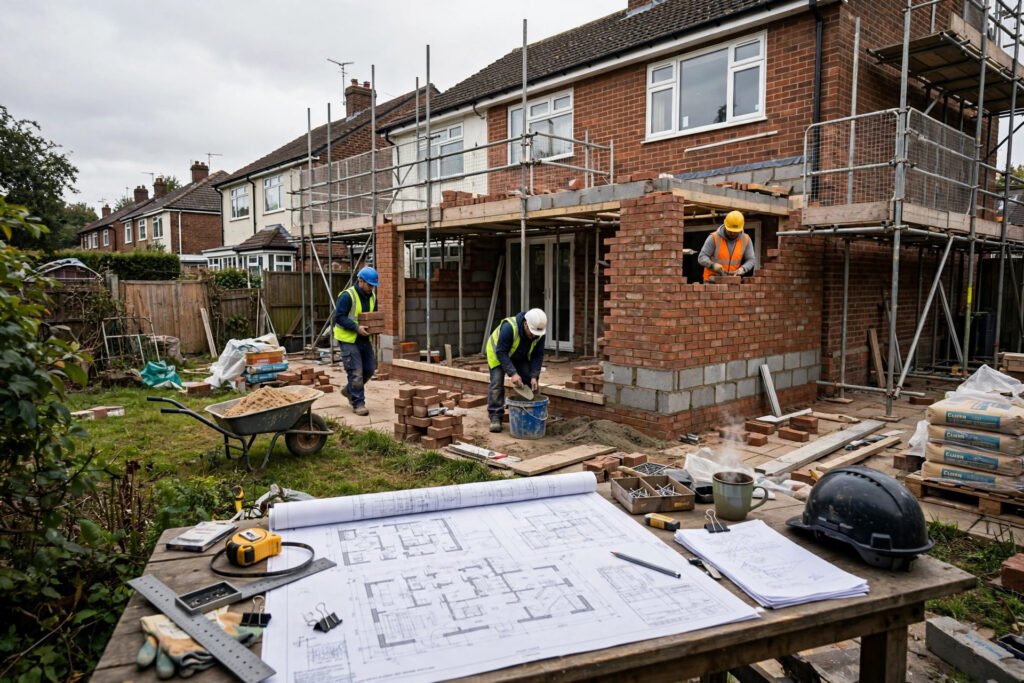
Buy slowly: distance is exactly why the careful checks matter.
What Makes Overseas Prices Look So Tempting?
The short answer is that the comparison is rigged from the start. A British buyer looks at a villa, an apartment or a village house abroad through the lens of British prices, and almost anything in a sunnier, cheaper region appears to be a bargain by that measure. More rooms, more land, a view that would cost a fortune at home: the eye converts the foreign price into familiar terms and declares it low, without asking what local buyers earn, what local homes usually fetch, or whether the property would look cheap to anyone who actually lives in that market.
Holiday feeling does the rest. Properties are viewed in the best week of the year, in warm light, with time to linger and a seller or developer who understands exactly which emotions are in the room. The price is remembered alongside the pleasure, and the two become difficult to separate afterwards. Homes bought in that mood are often bought as souvenirs of a fortnight rather than as buildings in a legal system, a tax regime and a resale market that will all still be there when the holiday is a photograph.
Distance also hides the friction that a home purchase makes obvious. Fees for moving money, charges for conversion, transfer costs and professional bills all sit outside the headline price, in the same way that anyone used to transferring crypto between exchanges without overpaying learns to count the cost of the transfer, not just the amount sent. The lesson travels honestly between the two subjects: money that crosses borders rarely arrives untouched, and a price compared without its transfer costs is a price understated. Temptation, in short, is what a foreign property looks like before its full context is priced in.
Which Legal Traps Catch British Buyers?
The traps are mostly ordinary, which is why they work. Title is the first: whether the seller truly owns what is being sold, whether the building matches its permissions, whether debts attach to the property itself rather than to its previous owner. Planning is the second, catching buyers of charming rural buildings that were extended without consent, or land sold with confident talk of building where building was never allowed. In a familiar system you sense these risks instinctively. In a foreign one, in another language, the instincts stay at home.
Off-plan purchases carry a trap of their own. The buyer pays in stages for a home that does not yet exist, trusting a developer whose finances they cannot easily judge. If the developer fails, the money and the dream are entangled in a foreign legal process at exactly the moment the buyer is furthest from help. Completed homes are not immune either: inheritance rules, marital property customs and registration practices differ sharply between countries, and a purchase that would be routine in Britain can distribute rights in ways a British buyer never intended.
The protection against nearly all of this is unglamorous and standard: an independent local lawyer, acting only for you, checking title, permissions, debts and contract terms before money moves. Independent is the operative word, because a lawyer recommended by the seller or developer, however charming, carries a divided loyalty at best. A clear primer on title and proving ownership of property shows why the question of who owns what, provably and in writing, sits beneath every safe purchase anywhere. Abroad, that foundation simply has to be verified in a system you do not yet understand, which is a reason for more checking, never less.
Mortgage There or Remortgage Here?
Borrowing where the property stands has a logic that appeals to careful buyers. The debt and the asset sit in the same currency, so if that currency moves against your home currency, the loan and the value move together rather than pulling apart. Local lenders also know the local market and its paperwork, and their willingness to lend against a property is itself a rough test of its legitimacy. Against that stand unfamiliar application processes, documentation in another language and terms that need patient translation before they can be compared honestly with anything at home.
Remortgaging a British home to buy abroad is simpler in every administrative way. One lender, one language, one set of rules you already live under, and the foreign purchase proceeds as a cash buy, which sellers abroad often welcome. The risk is concentration: your British home now carries the debt for two properties, and the foreign asset’s value, measured in the currency you must ultimately repay in, can drift away from the loan secured on your own roof. Simplicity has been bought by placing the family home behind a holiday decision.
There is no universal winner, only a fit between the borrowing and the buyer’s wider position. Income in the property’s currency strengthens the local mortgage case. A short intended holding period, or a purchase small beside the value of the British home, changes the remortgage calculation again. What both routes share is the need to model the unglamorous version: payments if rates rise, repayments if the exchange rate turns, and an exit if plans change. A mortgage is a long promise made in a short mood, and abroad the promise is written in a system you are still learning to read.
What Does the Exchange Rate Do to a Deposit?
Between offer and completion, a fixed foreign price becomes a moving British one. The deposit is agreed as a share of a price set in another currency, and the balance follows weeks or months later, so every shift in the exchange rate between those dates rewrites what you actually pay. A rate that moves in your favour feels like a gift. A rate that moves against you can add a sum large enough to break a careful budget, arriving at the worst possible moment, when contracts are signed and retreat is expensive.
This is not a rare misfortune but a structural feature of buying across currencies, and it deserves a place in the decision from the first viewing. Sellers of foreign exchange services will happily explain the risk while selling the remedy, so a neutral grounding in foreign exchange and how currency moves is worth having before those conversations begin. The rate is not a detail administered by your bank at the end. It is one of the prices of the property, set by a market that does not know or care that you have a completion date.
Prudent buyers plan for movement rather than hoping against it. They hold a margin beyond the expected cost, they avoid committing every available resource at an assumed rate, and they take advice on timing and fixing transfers where that genuinely helps rather than where it merely sounds sophisticated. Above all they judge the purchase at a rate less kind than today’s, and ask whether it still makes sense. A property that only works at a favourable exchange rate is not cheap. It is a currency bet with a house attached, and it should be recognised as one before the deposit leaves the account.
How Much Extra Must Sit Beyond the Price?
More than the holiday mood suggests. Buying costs abroad commonly add a meaningful slice on top of the price: taxes on the transfer, notary and registration charges, legal fees for the independent advice already described, and the costs of moving and possibly borrowing money across borders. The exact shape differs by country, which is precisely why general promises about allowances mislead and why your own lawyer’s estimate, for your own purchase, belongs in the budget before an offer is made rather than after.
Beyond completion, ownership abroad carries its own continuing list. Local property taxes, community charges in developments, insurance, maintenance arranged at a distance, management for any letting, travel for the visits that ownership quietly requires, and eventually the costs and taxes of selling in that same foreign system. None of these is a reason to refuse the idea. All of them are reasons the price on the advertisement should be treated as the entry fee to a set of obligations, not as the whole cost of the adventure.
The honest method is a written budget with three columns in spirit: the price, the costs of buying, and the costs of the first period of owning, each estimated from evidence rather than optimism. If the total frightens you, the purchase was more expensive than you thought and the fright has done its job cheaply. If the total still works, you have bought something rarer than a bargain, which is a clear view of what you are taking on. Buyers who skip this page tend to write it later anyway, in a harder currency of surprise.
So Is Now the Moment, or Is Waiting Wiser?
The honest answer is that timing is the smallest part of the decision. Markets abroad, like markets at home, refuse to announce their turning points in advance, and a sound property bought carefully at an ordinary moment will serve its owner better than a flawed one bought brilliantly at the perfect dip. Waiting is wiser when it is used for the work that makes buying safe: learning the area in different seasons, testing the rental or resale market with real questions, building the relationship with an independent lawyer and watching the currency with a budget in hand.
Waiting is not wiser when it is only postponement dressed as prudence, because the checks listed here do not complete themselves with time. The buyer who will skip title checks next year is the buyer skipping them today, and the property market will not fix that. Buy now, in other words, when the property is understood, the legal ground is verified, the borrowing is matched to the risk and the money beyond the price is already accounted for. Wait when any of those is missing, and treat the waiting as a task list rather than a mood.
Distance, which opened every question in this piece, is also the answer that closes it. A purchase far away cannot be popped back to, argued with over a fence or kept an eye on from the next street, so its safety has to be built entirely in advance, on paper, by other people’s verified work and your own slow questions. Buy slowly, check the title, borrow in awareness of the currency, budget beyond the price, and the foreign home can be what it promised to be in the sunlight. Skip those steps, and the same sunlight is merely the lighting in which a British buyer met an avoidable problem.