To find one number as a percentage of another, divide the first number by the second, then multiply the result by 100. So, to express 18 as a percentage of 60, work out 18 ÷ 60 = 0.3, then 0.3 × 100 = 30%. That is the whole method: one division, one multiplication, and a percent sign at the end.
Related reading: British news updates covers this in detail.
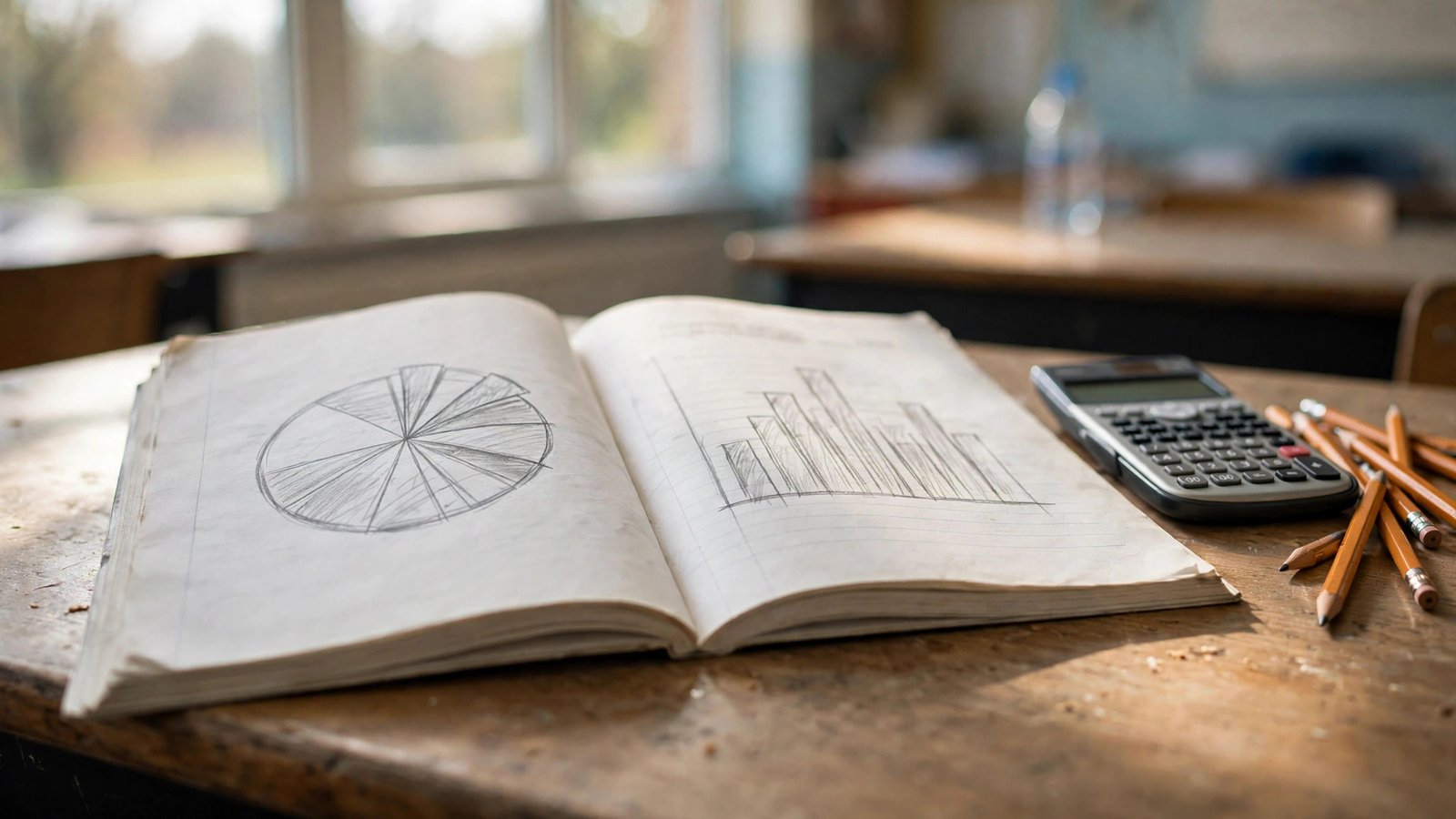
The formula, written out properly
Call the number you are converting the part, and the number you are comparing it against the whole:
(part ÷ whole) × 100 = percentage
It is worth understanding why this works, because it stops you from mixing the numbers up. A percentage is simply a fraction rescaled so that the whole is worth 100. Dividing the part by the whole gives you the fraction; multiplying by 100 does the rescaling. Once that clicks, you will never divide the wrong way round again.
Worked examples
Example 1: a GCSE paper
You scored 34 out of 45 in a maths paper. As a percentage, that is (34 ÷ 45) × 100 = 75.6%, rounded to one decimal place. A tidy result — comfortably a grade 7 at GCSE.
Example 2: the cricket
England are chasing 240 to win and have reached 180 for 6. They have scored (180 ÷ 240) × 100 = 75% of the runs they need, with four wickets in hand. Commentators do this sum in their heads all afternoon.
Example 3: a January sale
A £60 coat is reduced to £45. The sale price as a percentage of the original is (45 ÷ 60) × 100 = 75%, which tells you the discount is the remaining 25%. Retailers bank on shoppers not doing this check.
Example 4: a party guest list
You invited 60 people and 45 have RSVP’d yes. Attendance stands at (45 ÷ 60) × 100 = 75% — a useful figure if you are catering. Our guide to what a baby shower is has more on planning guest lists for celebrations.
The question people always mix up
Two questions sound nearly identical but need opposite methods:
- “What is 20% of 80?” — multiply: 80 × 0.20 = 16.
- “Express 16 as a percentage of 80.” — divide, then multiply by 100: (16 ÷ 80) × 100 = 20%.
The rule of thumb: if the question says “as a percentage of”, you are dividing. If it says “per cent of” a number, you are multiplying. Examiners adore testing this distinction, so it is worth getting straight before you sit a paper.
Where you will actually use this
Beyond the classroom, this one calculation quietly runs half of adult life in Britain. Working out a 20% VAT-inclusive price, checking whether a “30% off” deal is genuine, calculating a deposit as a share of a house price, or figuring out what proportion of your monthly pay goes on rent — it is all the same sum. The single-person discount on council tax is 25%; a decent restaurant tip is 10–12.5%; mortgage lenders think in loan-to-value percentages. Learn the method once and you will use it weekly.
Mistakes to watch for
Dividing the wrong way round. Working out 60 ÷ 18 gives 333%, which is obvious nonsense for “18 as a percentage of 60”. Always divide the part by the whole — the smaller story goes on top, so to speak.
Forgetting the × 100. 18 ÷ 60 = 0.3 is a decimal, not a percentage. The multiplication by 100 is what turns it into 30%. This is the single most common slip in exam papers.
Rounding too early. Keep two or three extra digits while you work and round only the final answer. GCSE mark schemes actively penalise premature rounding, and in real life it is how small errors creep into budgets.
Panicking at answers over 100%. Percentages above 100 are perfectly valid whenever the part is bigger than the whole. A shop that planned to sell 80 gig tickets and sold 120 achieved (120 ÷ 80) × 100 = 150% of its target.
Try these yourself
- Express 27 as a percentage of 90.
- A class of 32 pupils includes 20 girls. What percentage of the class is female?
- House prices in a town rose from £210,000 to £252,000. The new price is what percentage of the old one?
- A phone battery shows 3.4 hours of screen time out of a 5-hour capacity. What percentage is used?
- In a survey, 1,150 of 2,000 respondents supported the proposal. What percentage is that?
Answers: 1) 30% 2) 62.5% 3) 120% 4) 68% 5) 57.5%
Conversions like these turn up in all sorts of everyday questions. If you are wrestling with dates rather than decimals, our guide to how many weeks are in 4 months walks through another common one.
Frequently asked questions
How do I find a number as a percentage on a calculator?
Type the part, press ÷, type the whole, press =, then × 100 and =. On a phone calculator that is 18 ÷ 60 × 100 = 30. Most scientific calculators have a % key, but doing it manually is more reliable and works on every device.
Can a percentage be more than 100%?
Yes. Whenever the part exceeds the whole, the answer tops 100%. A charity that aimed to raise £80,000 and raised £120,000 hit 150% of its target — something fundraisers are always delighted to report.
How do I turn a fraction into a percentage?
Divide the numerator by the denominator and multiply by 100 — exactly the method above. So 3/4 becomes (3 ÷ 4) × 100 = 75%. The BBC Bitesize guide to percentages has interactive practice pitched at KS3 and GCSE level.
What is the difference between a percentage and a percentage point?
If interest rates rise from 4% to 6%, that is a rise of 2 percentage points — but a 50% increase relative to the original rate. News reports mix these up constantly; now you will spot it every time.
Where can I practise this properly?
National Numeracy offers free UK-focused numeracy challenges that build exactly this skill, pitched at adults rather than schoolchildren.