To choose a wedding officiant in the UK, first understand the legal picture: a civil ceremony needs a registrar from the local register office, a religious wedding needs an authorised religious officiant, and an independent celebrant can lead a beautiful personal ceremony but cannot legally marry you in England or Wales. Book your registrar 12 or more months ahead for a Saturday, then choose a celebrant or religious officiant whose style fits you.
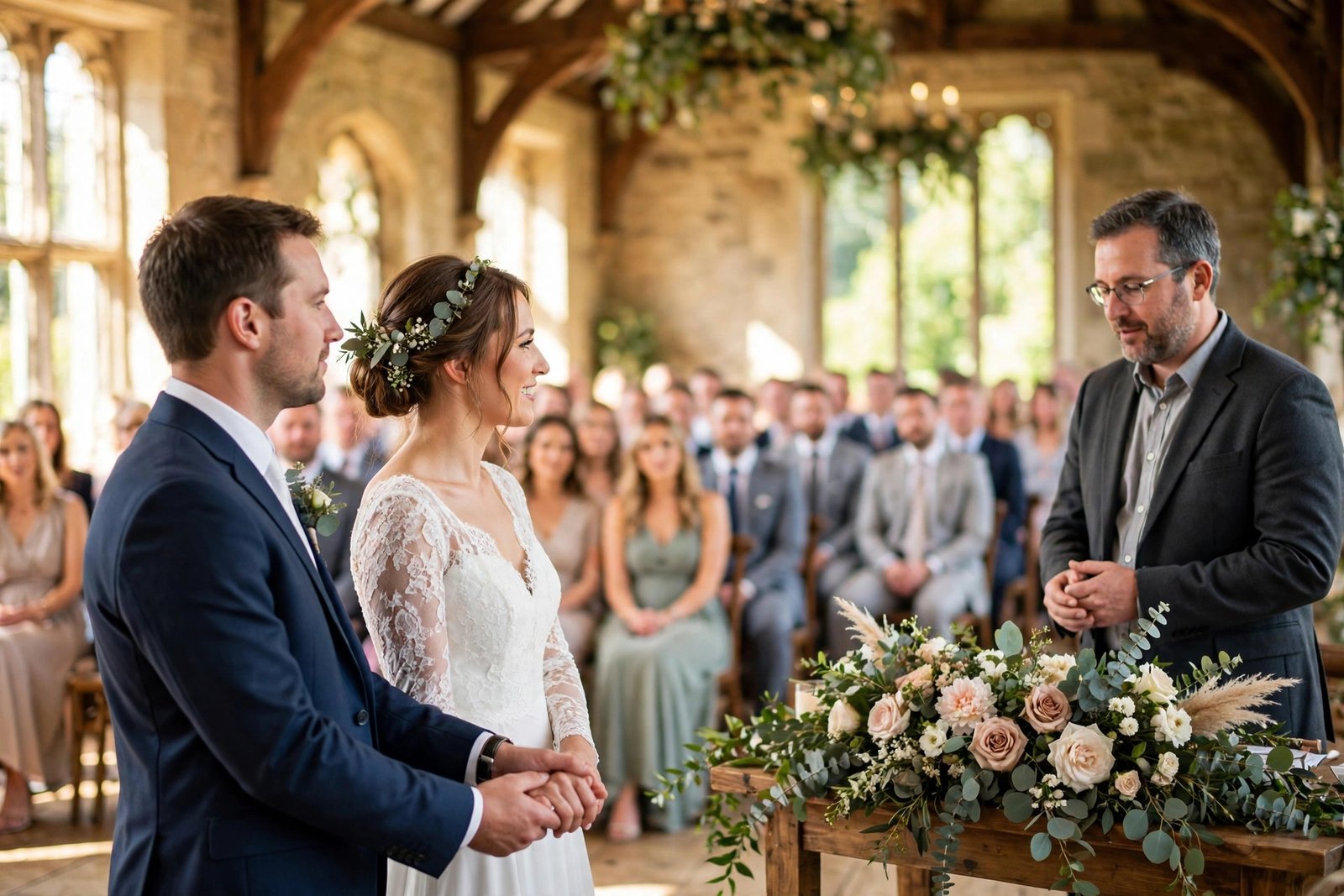
“Officiant” is one of those wedding words that means something slightly different depending on who you ask — and in Britain, the distinction matters legally. Get it wrong and you can end up with a gorgeous ceremony that, in the eyes of the law, never happened. Here is how the pieces fit together.
What “Officiant” Actually Means in the UK
There are three routes to a wedding in England and Wales, and each has a different person at the front:
- A registrar — employed by the local register office, conducts civil ceremonies at register offices and licensed venues. This is the default legal route.
- An authorised religious officiant — a vicar, priest, rabbi, or imam (among others) authorised to conduct marriages in registered places of worship. Church of England vicars, for example, act as registrars for the weddings they conduct.
- An independent celebrant — conducts personalised, non-legal ceremonies anywhere you like: woodlands, beaches, your back garden. Lovely — but in England and Wales you must separately complete the legal formalities with a registrar.
The gov.uk guide to getting married sets out the legal requirements plainly and is the definitive reference if anything here conflicts with what a supplier tells you.
The Scotland difference
Scotland plays by its own rules: humanist celebrants there can legally marry you, which is why Scotland hosts a far higher share of celebrant-led legal weddings. If a celebrant-led legal ceremony appeals, a Scottish wedding is worth considering — Gretna Green did not become famous by accident.
The Registrar Route: Practicalities
If you are marrying at a licensed venue, you book the registrar separately through the register office covering that district — the venue does not do it for you. Registrars are in high demand for summer Saturdays, so contact the register office as soon as your venue date is fixed, ideally a year or more out. You will also need to give notice at your local register office at least 28 days before the wedding (and no more than 12 months ahead), each paying a notice fee of around £35.
On the day, the registrar’s ceremony is short and standardised — the legal wording is fixed, though most registrars allow you to add personal vows, readings, and music around it. Meet them beforehand if possible; some register offices offer a pre-wedding chat, and it helps the ceremony feel personal rather than procedural.
The Celebrant Route: Freedom With a Footnote
Celebrants are storytellers. They will interview you, write a ceremony that sounds like you, and conduct it wherever you fancy. For couples who want rituals, humour, or cultural blends a standard civil ceremony cannot accommodate, a celebrant is transformative.
The footnote: in England and Wales, pair the celebrant ceremony with the legal signing — either a brief register-office appointment (the “2+2” intimate legal ceremony, often on a weekday for a modest fee) or a registrar-attended ceremony at your licensed venue. Many couples do the legal bit quietly a few days before and treat the celebrant ceremony as the “real” wedding. Just keep the two events straight in your own planning.
Questions to Ask Any Officiant or Celebrant
- Are you available on our date, and what is the total fee (including travel and rehearsal)?
- How many weddings have you conducted, and can we see a sample ceremony script?
- How do you personalise the ceremony — interviews, questionnaires, drafts for approval?
- What happens if you are ill on the day? (Celebrants should have a backup network.)
- For registrars: how much personalisation is allowed within the legal wording?
Costs vary widely: registrar fees for a venue ceremony typically run a few hundred pounds, Church of England weddings have a set statutory fee (around £600+ including extras), and independent celebrants generally charge £600–£1,500 depending on experience and region.
Your officiant choice ties closely to your venue — if you have not booked one yet, start with how to book a wedding venue. And if all of this formality is making you dream of something smaller, read how to elope instead of a wedding.
Timing: When Each Booking Needs to Happen
The officiant timeline catches couples out because the legal and ceremonial bookings run on different clocks. The registrar should be booked as soon as your venue date is fixed — 12 months out for a summer Saturday is not early. Giving notice at the register office happens much later: no earlier than 12 months and no later than 28 days before the wedding.
Celebrants are more flexible but the good ones still book up 9–12 months ahead for peak season. If you are having a Church of England wedding, speak to the vicar early too — there are legal preliminaries (banns or a licence) with their own timelines. Put all three dates — registrar booking, notice appointment, and ceremony — in one place so nothing slips.
Officiant FAQs
Can a friend or family member marry us in the UK?
Not legally, unless they happen to be a registrar or authorised religious officiant. A friend can absolutely lead the ceremonial part as a “celebrant,” but the legal marriage still needs the proper official.
Do we need a rehearsal with the officiant?
Helpful but not essential. Celebrants often offer one; registrars rarely do, since their ceremonies follow a fixed structure. A quick run-through of the processional order with your coordinator usually suffices.
Can we write our own vows?
Yes — with any route. The legal declarations are fixed wording, but personal vows can be added around them. Celebrants give you the most freedom here.
How do we find a good celebrant?
Look for membership of a professional body, recent reviews, and a chemistry call before booking. If their sample scripts make you tear up, you have found the right one.