Choose a wedding band by setting your budget first — most UK couples spend between £150 and £600 per ring — then picking a metal that suits your lifestyle, and a width and profile comfortable enough to wear every single day. Buy from a reputable UK jeweller whose rings carry proper hallmarking, get sized professionally, and allow four to six weeks for ordering, especially if you want engraving.
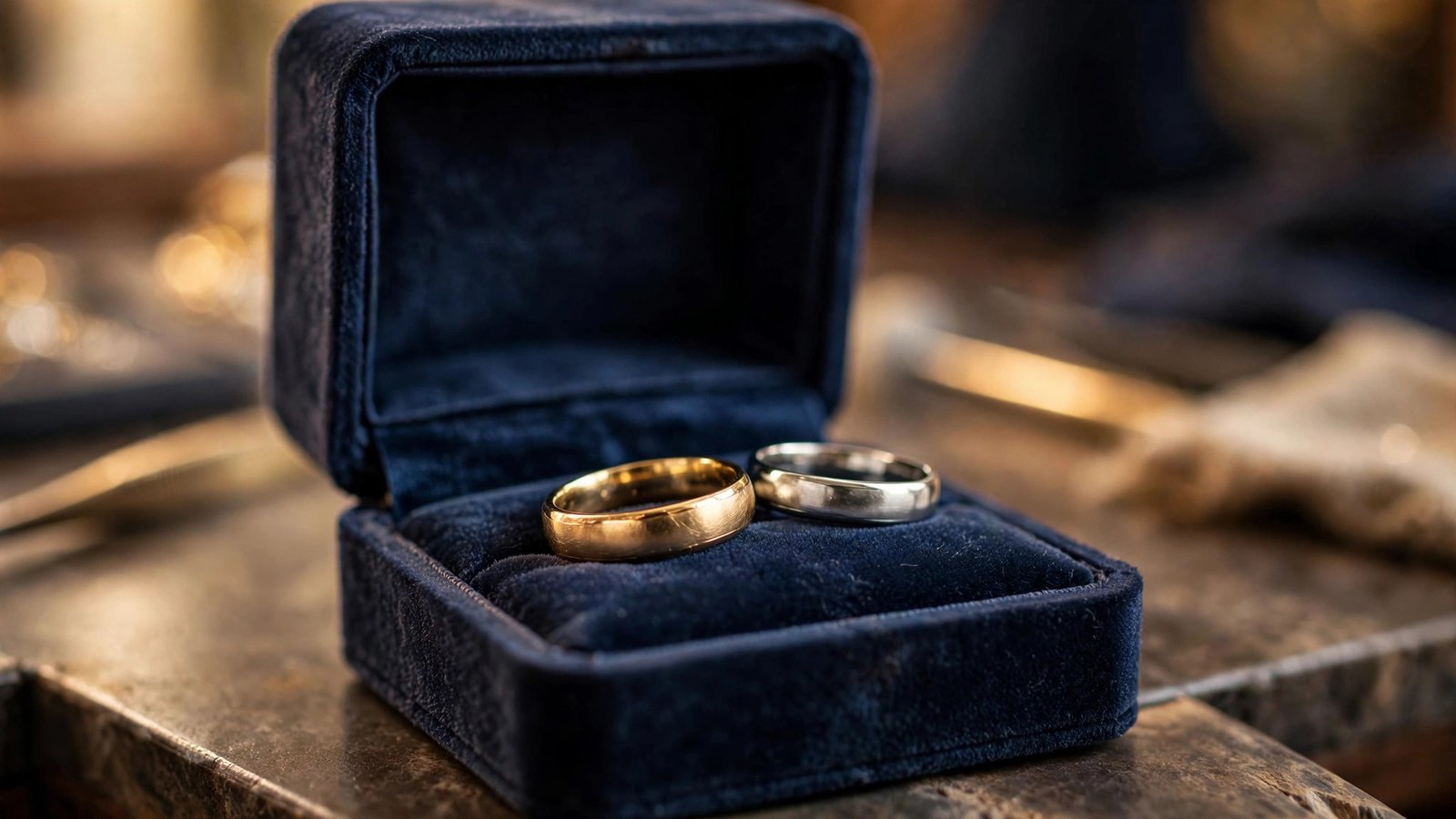
Start with a realistic budget
Wedding bands (the plain metal rings exchanged at the ceremony — “wedding ring” and “wedding band” mean the same thing in the UK) range from under £100 for a simple titanium band to several thousand for platinum with diamonds. A sensible middle ground for 9ct or 18ct gold is £250–£600 per ring.
Decide the budget before you fall in love with anything in the display case. Jewellers are skilled at showing you the £1,200 platinum option first; knowing your ceiling keeps the experience enjoyable rather than stressful. Remember the band is only one line in the wedding budget — and unlike the flowers, you will still be paying attention to it in forty years.
Choosing the metal
The metal determines the look, the weight, the durability and much of the price. The main contenders in Britain:
- Yellow gold (9ct or 18ct): the classic. Warm, traditional, and easy to resize later. 9ct is harder-wearing and cheaper; 18ct is richer in colour but softer.
- White gold: the look of platinum at a lower price, though the rhodium plating needs re-coating every couple of years.
- Rose gold: fashionable and distinctive; suits warmer skin tones beautifully.
- Platinum: the premium choice — dense, naturally white, hypoallergenic and enormously durable. Expect £600+ for a plain band.
- Palladium: platinum’s lighter, cheaper cousin; similar look, easier on the wallet.
- Titanium and tungsten: modern, featherweight (titanium) or satisfyingly hefty (tungsten), and very affordable. The trade-off: most cannot be resized, so your size must be certain.
Match the metal to your life, not just your taste. If you work with your hands — nursing, building, gardening — platinum or titanium will shrug off daily knocks that would scar softer gold. If you have a nickel allergy, stick to platinum, palladium or high-carat gold.
Width, profile and fit
Men’s bands typically run 5–7mm wide, women’s 2–5mm, but these are conventions, not rules. Wider bands feel more substantial and show off the metal; narrower bands sit more discreetly, especially alongside an engagement ring. Try several widths on — the difference between 4mm and 6mm is surprisingly dramatic on the finger.
Profile is the cross-section shape: court (rounded inside and out — the most comfortable), D-shape (flat inside, rounded out), and flat. For a ring you will never take off, the court profile’s rounded interior is worth its weight in gold — literally. Ask for a “comfort fit”.
One practical point: if the band will sit against an engagement ring, consider a shaped or “wishbone” band that curves around the setting, or choose a straight band slightly narrower than the engagement ring so the two sit flush.
Matching or individual?
There is no rule that bands must match. Many couples choose complementary rather than identical rings — same metal, different widths, for instance. What matters is that each of you loves your own ring, since you are the one wearing it daily. That said, if you are planning a coordinated celebration, our guide to baby showers shows how British couples are personalising every milestone their own way.
Hallmarking: the UK legal bit
Here is something many buyers do not know: in the UK, it is illegal to sell a gold, silver, platinum or palladium item above a certain weight without a hallmark — an independent mark struck by one of the four UK assay offices (London, Birmingham, Sheffield, Edinburgh) guaranteeing the metal’s purity. For gold wedding bands, the threshold is just 1 gram, so virtually every gold band sold here must be hallmarked.
Always check for the hallmark before you buy, especially from online sellers or market stalls. The government’s hallmarking guidance explains what the marks mean. A proper UK hallmark is your guarantee that “18ct gold” is genuinely 18ct gold — not just a hopeful description.
Sizing and timing
Get sized professionally by a jeweller, ideally in the afternoon when fingers are at their largest, and avoid sizing on very hot or cold days. Your dominant hand’s fingers run slightly larger. If you are between sizes, size up — a slightly loose ring is wearable; a tight one lives in a drawer.
Order four to six weeks before the wedding for standard bands, longer for bespoke designs or engraving. Engraving the wedding date inside the band is a lovely touch and costs £20–£50. And buy from a jeweller with a sensible resizing policy — fingers change over the decades, and a good jeweller will adjust plain bands for a modest fee.
Finally, think about the celebration itself. If you are planning drinks for the reception, our guide to how many beers are in a keg will help you work out quantities — one less thing to guess at.
Your wedding band questions
Should the wedding band match the engagement ring metal?
It looks most harmonious when they match, and different metals can wear against each other over time (platinum will slowly abrade softer gold). But plenty of couples mix metals deliberately — just be aware of the wear issue.
How much should a wedding band cost in the UK?
Anything from £80 for plain titanium to £1,500+ for platinum. The sweet spot for most couples is £150–£600 per ring in 9ct or 18ct gold. Spend what feels right; the marriage matters more than the metal.
Can wedding bands be resized?
Plain gold, platinum and palladium bands usually can, within a size or two. Tungsten and titanium generally cannot, and bands with diamonds all the way round (eternity styles) are difficult. This is a key question to ask before buying alternative metals.
Do I need insurance for a wedding band?
For modest bands, adding them to your home contents insurance as specified items is usually enough. For platinum or diamond bands worth £1,000+, consider standalone jewellery insurance — and get a valuation certificate from the jeweller.