
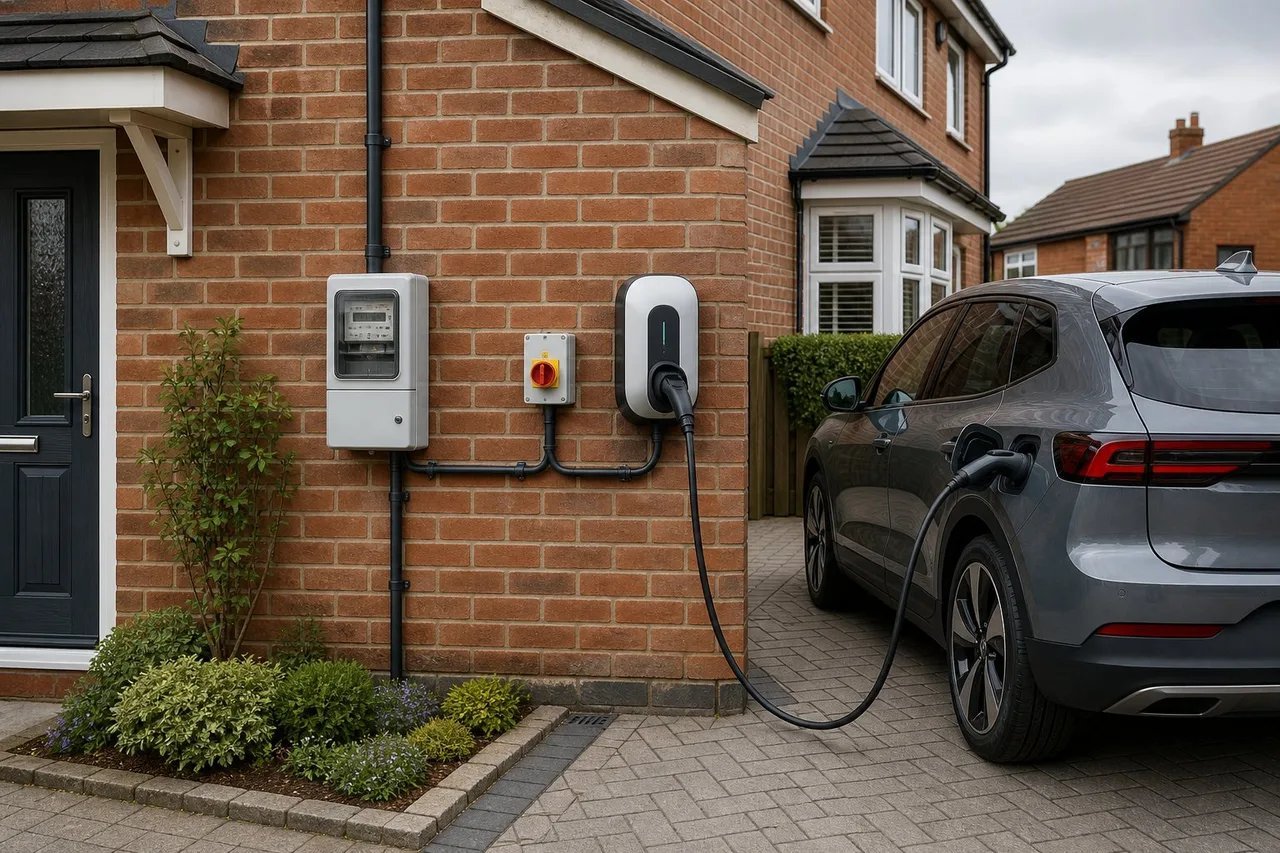
Charging an electric car on a standard 3-pin plug works — technically — in the same way that filling a swimming pool with a garden hose works: you’ll get there eventually, but you’ll question your life choices along the way. A proper home charger delivers a full charge overnight, costs far less per mile than public charging, and — installed properly — is one of those purchases that quietly pays for itself. The EV home charger installation cost in the UK in 2026 typically lands between £800 and £1,500 all-in, but the range is wide and the details matter. Here’s the complete breakdown.
EV home charger installation cost UK: the numbers
The charger unit: £400–£800
A 7kW home charger (the UK standard — charges most EVs from empty to full in 6–10 hours overnight) costs £400–£800 for the unit itself. The popular names: Ohme (brilliant for cheap overnight tariffs — it automatically schedules charging for the cheapest hours), Pod Point (the UK’s biggest installer network, solid and well-supported), Easee (compact, clever load-balancing), and Hypervolt (British-made, excellent app). Smart features worth paying for: tariff integration (talks to Octopus Intelligent Go and similar, charging only when electricity is cheapest), solar integration (diverts excess solar to the car), and load balancing (won’t overload your home’s electrical supply).
Installation: £300–£700
Standard installation — charger on the wall near your consumer unit, straightforward cable run, no electrical upgrades — typically costs £300–£500. The price climbs when: the cable run is long or complex (detached garage 20m from the house), your consumer unit needs upgrading (£200–£400 extra), you need groundworks (trenching across a garden), or your electrical supply needs DNO (Distribution Network Operator) approval for load management. Get a proper survey — reputable installers do them free — because the “standard installation” in the advert and your actual house are often different things.
Total: £800–£1,500 typical
Most UK installations land in this band. Budget £1,000–£1,200 as a planning figure for a straightforward job with a good smart charger. Quotes vary wildly between installers — get three, and be suspicious of anyone quoting without a survey.
Grants: what’s still available in 2026
The old £350 OZEV grant for homeowners ended in 2022, which catches people out — but support hasn’t vanished:
- Renters and flat owners: the EV chargepoint grant still offers up to £350 off installation for renters and flat-dwellers (check GOV.UK’s electric vehicle chargepoint grants for current eligibility — rules evolve).
- Landlords: separate grants cover chargepoints for rental properties — worth knowing if you rent out property.
- Workplaces: the Workplace Charging Scheme offers vouchers toward business installations.
- Scotland: the Energy Saving Trust Scotland has historically offered additional interest-free loans — check current availability.
Always check GOV.UK directly before budgeting — grant schemes change, and installer websites aren’t always current.
The running costs (where the real savings are)
Installation is the headline, but running costs are the story. Charging at home on a standard tariff costs roughly 24p/kWh in 2026 — about £12–£15 for 200 miles. Switch to an EV-specific overnight tariff (Octopus Intelligent Go, OVO Charge Anytime, British Gas Electric Driver) at 7–9p/kWh overnight, and that 200 miles costs £3.50–£4.50 — roughly 2p per mile, versus 15–20p per mile for petrol. A smart charger that auto-schedules for cheap hours (Ohme excels here) pays its premium back within a year for average mileage.
Compared to public charging — 50–80p/kWh at rapid chargers — home charging is 70–85% cheaper. For anyone driving 8,000+ miles a year, the charger installation typically pays for itself in 12–18 months through fuel savings alone. That’s before you factor in the convenience of never visiting a petrol station again.
Practical considerations before you book
- Off-street parking is effectively required. No driveway or garage? Trailing cables across pavements is illegal in most areas (trip hazard, liability). Some councils are trialling pavement cable channels — check yours — but for most flat-dwellers without parking, public/workplace charging remains the answer.
- Check your electrical supply. Older homes with 60A fuses may need a supply upgrade (your DNO does this, sometimes free). The installer’s survey covers this.
- Choose your installer carefully: look for OZEV-authorised installers (required for grants), NICEIC/NAPIT electrical registration, and proper reviews. The cheapest quote from an unknown outfit for high-voltage work is not the place to economise.
- Think about the future: if a second EV is plausible, ask about load-balanced dual-charger setups — cheaper to provision now than retrofit later.
- Solar synergy: if you have (or plan) solar panels, a charger with solar diversion (excess generation goes to the car instead of the grid) is genuinely brilliant — free motoring on sunny days.
Charging is one part of the home-energy picture. If you’re looking at the broader costs of running your home, our guides to boiler servicing costs and reducing heating bills cover the other big-ticket items — and the Energy Saving Trust is the authoritative source for all things home energy.
Tethered vs untethered: which charger type?
Home chargers come in two flavours: tethered (cable permanently attached to the unit) and untethered/socketed (you plug in your car’s own cable). Tethered is more convenient — grab the connector and plug in, no faffing with the boot — and the cable is always there. Untethered looks neater on the wall and works with any cable, which matters if you have (or might get) cars with different connector types, though Type 2 is now the universal UK standard so this matters less than it used to.
My take: tethered for daily drivers — the 10-second convenience, twice a day, every day, adds up to genuine quality of life. Choose untethered only if the charger sits somewhere public-facing where an attached cable might attract attention, or if you genuinely expect to charge visitors’ cars with different connectors. Either way, get a 7.5m cable option if the choice exists — 5m sounds plenty until you park slightly awkwardly one rainy night.
The practical takeaway
Budget £1,000–£1,200 for a standard 7kW installation with a good smart charger (Ohme or Pod Point), get three surveyed quotes, and check GOV.UK for current grants before you commit. Then switch to an EV overnight tariff at 7–9p/kWh — that’s where the real money is: 2p-per-mile motoring that pays back the installation within 18 months for average drivers. The charger is the enabler; the tariff is the saving.


