A standard UK keg holds 50 litres of beer, which works out at roughly 88 pints. Smaller kegs are common too: a 30-litre keg serves about 53 pints, while a 20-litre keg gives you around 35 pints — so the exact answer depends on which size you’re looking at.
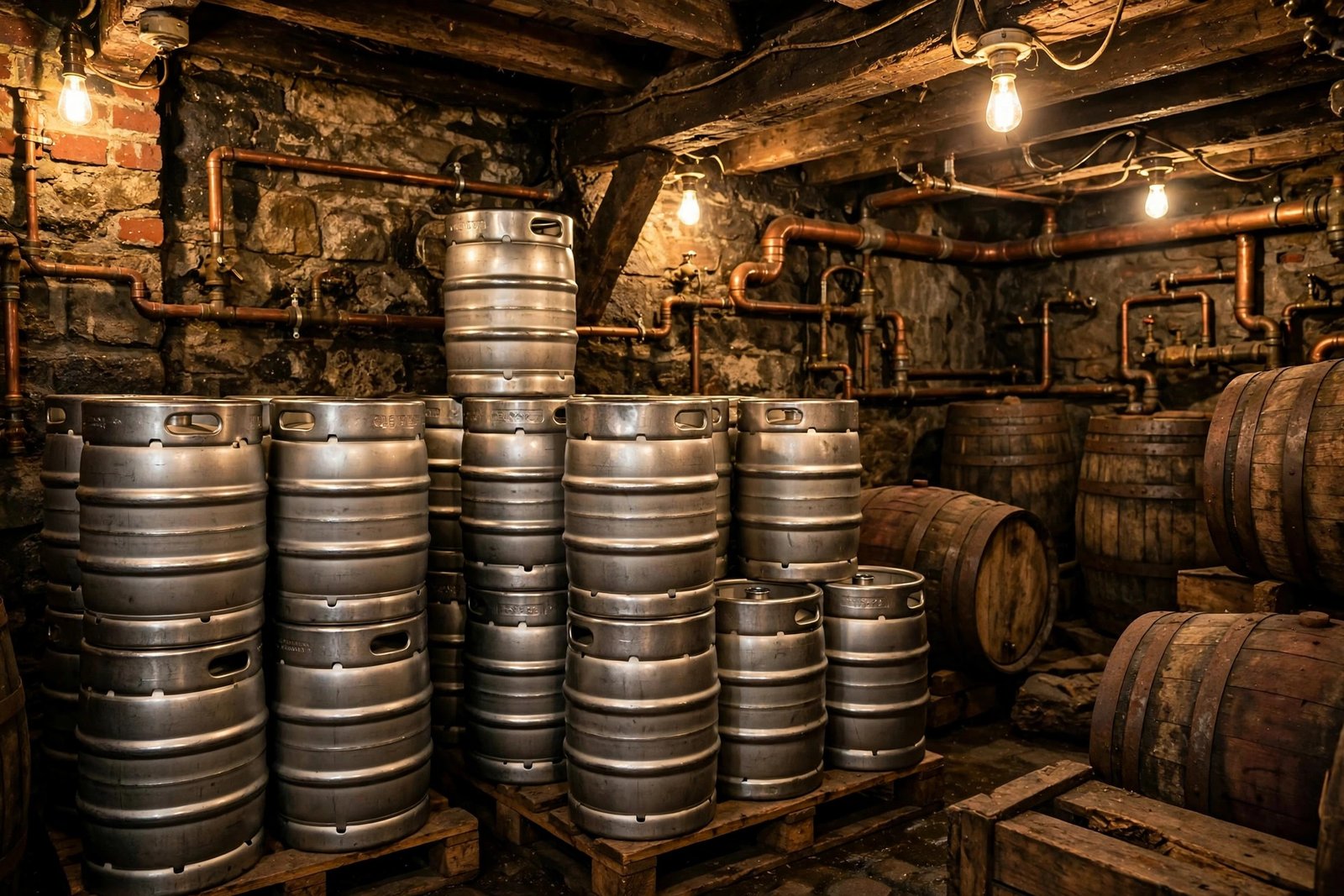
If you’re planning a party, stocking a home bar, or just settling a pub argument, keg sizes can be surprisingly confusing. The UK uses metric kegs measured in litres, while much of the advice online comes from America, where barrels are measured in gallons. Here’s how it all translates into pints — the unit that actually matters.
UK keg sizes at a glance
Most beer sold in kegs in Britain comes in one of three sizes. The figures below assume a standard UK pint of 568ml, with a small allowance for wastage and the foam on top:
- 50-litre keg — about 88 pints. This is the standard “full-size” keg used by pubs and breweries across the UK.
- 30-litre keg — about 53 pints. Popular with smaller pubs, restaurants and event bars.
- 20-litre keg — about 35 pints. A handy size for home bars, small gatherings and craft beer venues.
You’ll sometimes also come across the firkin, a traditional cask holding 9 imperial gallons (about 41 litres), which yields roughly 72 pints. Firkins are casks rather than kegs, though — they serve live, unpasteurised real ale conditioned in the container, whereas keg beer is filtered and served under gas pressure.
How UK kegs compare with American sizes
A lot of keg-size charts online are American, and they don’t map neatly onto British measures. The US “half-barrel” — the big keg you see at American parties — holds 15.5 US gallons (58.7 litres), or about 103 UK pints. A US quarter-barrel holds roughly 62 pints, and a US sixth-barrel (sometimes called a “sixtel”) holds about 35 UK pints.
The practical takeaway: if you’re reading an American guide, knock roughly 15% off the serving numbers to convert US pints to proper UK pints. Better still, stick to the metric sizes above when buying in Britain — UK breweries and wholesalers quote in litres, not barrels. If you’re curious about the smaller American sizes sometimes seen at craft beer bars, our guide to how many beers are in a 1/6 keg breaks that one down in detail.
How many people will a keg serve?
It depends how thirsty your guests are, but a decent rule of thumb for a party is two to three pints per person over an evening. On that basis:
- A 50-litre keg (88 pints) comfortably serves 30–40 guests.
- A 30-litre keg (53 pints) suits 18–25 guests.
- A 20-litre keg (35 pints) covers 10–15 guests.
Always round up rather than down — running dry halfway through a wedding reception is worse than having a few pints left over. And remember that not everyone drinks beer, so factor in wine, soft drinks and no-alcohol options too. If you’re weighing up whether a keg is the most economical option, it’s worth comparing against how many beers are in a keg bought in other formats like cases and multipacks.
What does a keg cost in the UK?
Prices vary enormously by beer style, brewery and region, but as a rough guide in 2026:
- A 50-litre keg of standard lager bought direct from a brewery or wholesaler typically costs £120–£200, plus a refundable deposit of £30–£50 on the keg itself.
- Craft IPA, stout or specialist beers in 30-litre kegs often run £90–£160.
- A 20-litre “party keg” from a brewery shop usually costs £50–£90.
That works out at roughly £1.40–£2.30 per pint for the beer itself — comfortably cheaper than pub prices, which averaged well over £5 a pint in London and around £4.50 elsewhere by 2026. You’ll also need dispensing equipment: a basic tap and CO2 setup can be hired for £30–£60 for a weekend, and many breweries lend or rent the kit when you buy the keg from them. Don’t forget the hidden weight — a full 50-litre keg is seriously heavy, as explained in our guide to how much a keg weighs, so plan how you’ll move it.
Keeping your keg fresh
Beer in an unopened keg stays fresh for several months if kept cool (ideally 11–13°C) and out of direct sunlight — check the best-before date the brewery stamps on it. Once tapped, a keg served with CO2 pressure will stay good for 6–8 weeks; one served with a simple party pump that lets air in should be finished within 2–3 days before it goes flat and stale.
Let the keg settle for a few hours after transport before tapping it, or you’ll pour nothing but foam. And drink responsibly — at around 2.3 units per pint of 4% lager, a 50-litre keg contains roughly 200 units of alcohol. The Drinkaware website has sensible guidance on units and pacing yourself.
Frequently asked questions
Is buying a keg cheaper than buying pints at the pub?
Almost always, yes. Even after deposits and equipment hire, keg beer typically costs £1.50–£2.50 per pint — less than half the average UK pub price. The savings are biggest on standard lagers and smallest on premium craft beers.
How long does beer last in a keg once it’s opened?
With a proper CO2 dispense system, 6–8 weeks. With a hand pump or party tap that introduces air, aim to finish it within 2–3 days. Unopened and stored cool, a keg keeps for months up to its best-before date.
What’s the difference between a keg and a cask?
Keg beer is filtered, pasteurised and served under CO2 pressure — think lager and most craft beer. Cask beer (real ale) is alive: it undergoes a secondary fermentation in the cask and is served by hand pump without added gas. A firkin cask holds about 72 pints.
Can I buy a keg for a party at home in the UK?
Yes. Many breweries and specialist off-licences sell 20-litre and 30-litre kegs to the public, often with tap hire included. You’ll usually pay a refundable deposit on the keg, and you may need to order a few days in advance.