A made-up formula bottle is good for 2 hours at room temperature, counted from the moment your baby starts the feed — and any leftover milk must be thrown away afterwards, never saved or reheated. If you want to prepare bottles in advance, cool them quickly and store them in the back of the fridge at 5°C or below, where they keep for up to 24 hours.
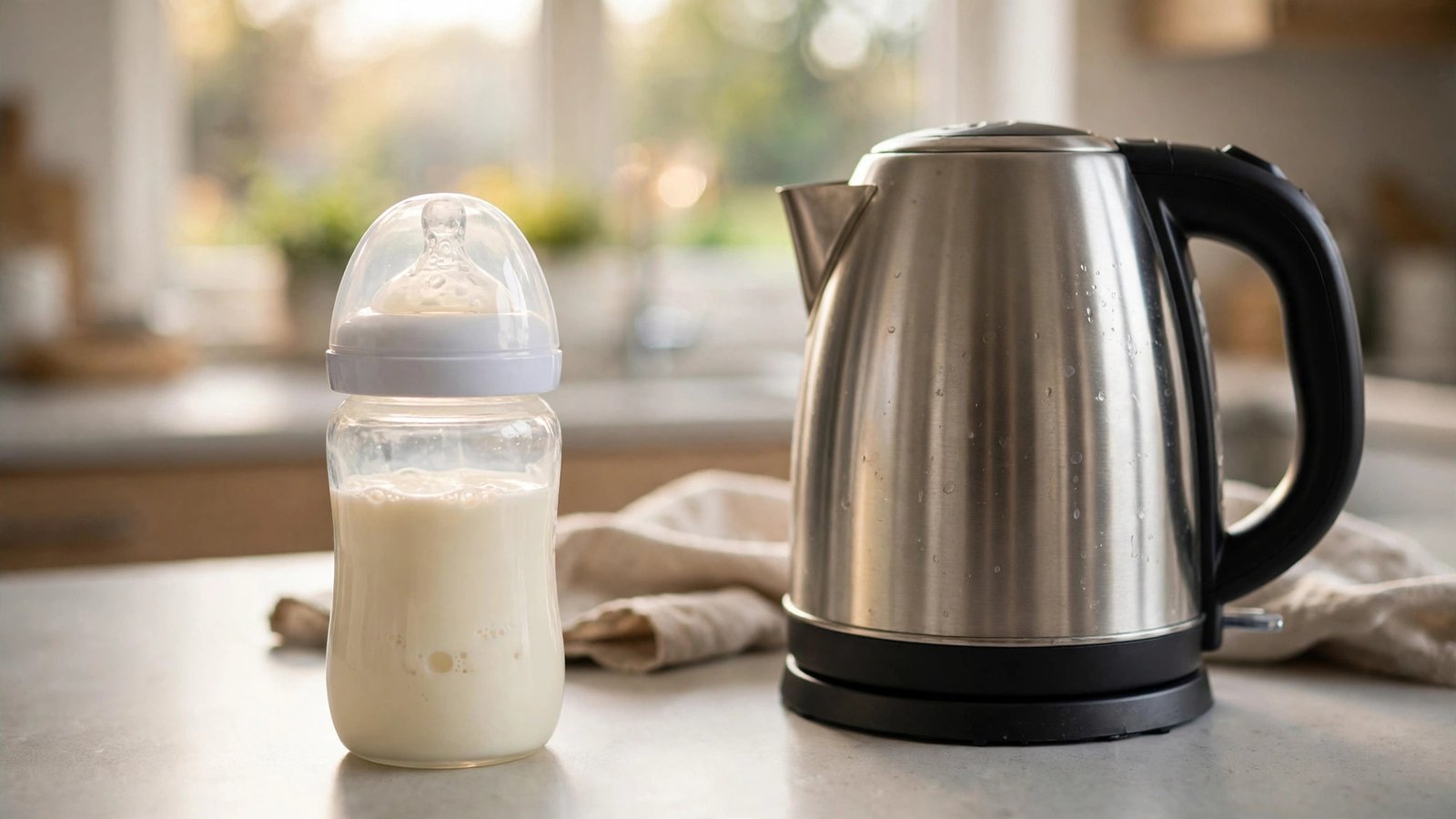
The two-hour rule, explained
Powdered infant formula is not sterile, and once it is mixed with water it becomes an excellent place for bacteria to multiply — warmth and nutrients are all they need. That is why the NHS guidance is unambiguous: a bottle is safe at room temperature for up to two hours from the start of the feed, and unfinished milk should be discarded after that.
Note the clock starts when feeding begins, not when you mixed the bottle. A bottle made at 2pm and first offered at 3pm must be finished or binned by 5pm — the mixing time plus the feeding window still has to sit inside safe limits, so in practice, offer freshly made bottles promptly.
It can feel wasteful to pour away an unfinished bottle, especially at 3am when formula costs what it does. But a baby’s immune system is still learning, and stomach bugs that an adult would shrug off can hospitalise a newborn. The two-hour rule is one of those boundaries worth treating as sacred.
Storing made-up formula in the fridge
Batch preparation is perfectly fine if you do it properly:
- Make up the bottles with water at 70°C or above, exactly as the packet instructs — this temperature kills bacteria that may be present in the powder.
- Cool them quickly under a cold running tap.
- Put them straight into the back of the fridge (the coldest part), at 5°C or below. Do not leave them cooling on the worktop for ages first.
- Use within 24 hours, and transport them in a cool bag with an ice pack if you are taking them out.
Label bottles with the time they were made if you are preparing several — tired parents at 4am should not have to do detective work.
What about keeping a bottle warm?
This is where many parents come unstuck. A bottle kept warm — in a bottle warmer, a jug of hot water, or tucked against your body — is sitting in the bacterial danger zone, and the two-hour limit shrinks dramatically. The NHS advises against keeping made-up bottles warm for long periods. If your baby prefers warm milk, warm a chilled bottle just before the feed by standing it in hot water for no more than 15 minutes, shake it, and always test the temperature on the inside of your wrist first.
Microwaves are a definite no: they heat unevenly and can create scalding hot spots in the milk even when the bottle feels lukewarm.
Powder versus ready-to-feed formula
Ready-to-feed liquid formula (sold in cartons and bottles) is sterile until opened, which makes it the most convenient option for nights out, travel and the hospital bag. Once opened, though, the same rules apply: use within two hours at room temperature, or refrigerate and use within 24 hours. It costs more per feed than powder — often two to three times as much — so many families use powder at home and ready-to-feed for outings. If you are heading out for the day, our guide to packing a diaper bag shows how to carry feeds safely.
Formula feeding on the go
The gold-standard method for days out: carry a vacuum flask of freshly boiled water (it stays above 70°C for several hours in a good flask), a sterilised bottle, and pre-measured formula powder in a dispenser. Make up each feed fresh when your baby is hungry. It sounds like a faff, but after a week it becomes second nature — and it sidesteps every storage worry entirely.
For shorter trips, a chilled bottle transported in a cool bag with an ice pack is fine for up to two hours, or four if you are confident the bag stayed properly cold. When in doubt, make it fresh.
One more timing tip for new parents: feeding schedules are often tracked against your baby’s age in weeks rather than months. If you are converting between the two, our guide to how many weeks are in four months will sort you out.
How to tell if formula has gone off
When in doubt, throw it out — but spoiled formula does give itself away. A sour or unusually sharp smell is the clearest sign, as is milk that looks separated, lumpy or discoloured even after a good shake. Sometimes the baby tells you first: a feed that is suddenly refused after enthusiastic starts is worth investigating. Never be tempted to “just taste it” as a safety test and carry on regardless; an adult palate is no substitute for the clock.
One related timing rule worth knowing: once a tub or box of powdered formula is opened, most manufacturers advise using it within four weeks. Write the opening date on the lid with a marker pen — in a sleep-deprived household, nobody remembers when anything was opened.
Formula bottle FAQs
- Can I reheat an unfinished bottle later?
No. Once your baby has drunk from a bottle, bacteria from their mouth have entered the milk. Discard leftovers within two hours of the feed starting and make up a fresh bottle next time. - Can I put a half-finished bottle back in the fridge?
No — the same reason. Refrigeration slows bacterial growth but does not reverse contamination from feeding. Only un-fed bottles can be stored. - How long does an unopened carton of ready-to-feed formula last?
Check the best-before date on the packaging; unopened cartons keep at room temperature until then. Once opened, treat it exactly like made-up formula: two hours at room temperature or 24 hours refrigerated. - Is it safe to make bottles with tap water?
Yes, in the UK — but it must be freshly boiled and cooled to no less than 70°C before mixing, to sterilise the powder. Do not use water that has been boiled and left standing, and never use bottled mineral water routinely, as the mineral content is unsuitable for babies. - My baby didn’t finish the bottle after 90 minutes. Can I offer the rest at the two-hour mark?
You can offer it right up to the two-hour limit, but not beyond. When the clock runs out, the milk goes down the sink — no exceptions, however much is left.