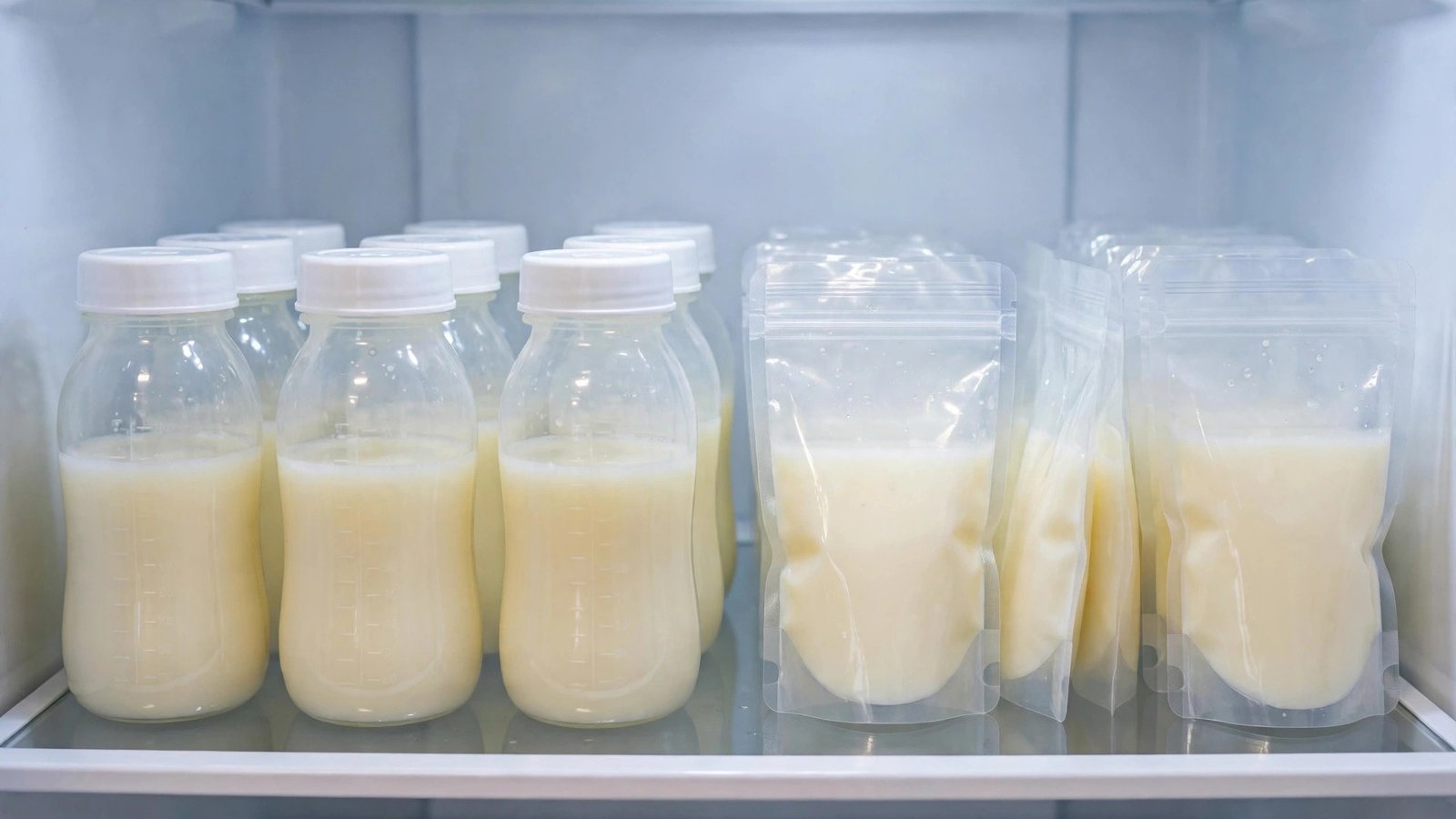
Expressed breast milk lasts up to 8 days in the fridge when stored at 4°C or below, placed towards the back of the fridge where the temperature is most stable. That’s the NHS guidance, and it assumes clean, sterilised containers and good hygiene during expressing. At room temperature (up to 26°C), breast milk keeps for up to 6 hours, and in a freezer at -18°C or below it lasts up to 6 months — though using it within 3 months is ideal for the best quality.
Breast milk storage times at a glance
These are the widely used UK guidelines, based on NHS advice:
- Room temperature (up to 26°C): up to 6 hours
- Fridge (4°C or below): up to 8 days
- Freezer (-18°C or below): up to 6 months (best within 3 months)
- Defrosted milk (in the fridge): use within 24 hours, and never refreeze
One important caveat: if your fridge runs warmer than 4°C — and many do — stick to the shorter end of these ranges. A cheap fridge thermometer (a few pounds from any supermarket) takes the guesswork out. Store milk towards the back of the fridge, never in the door, where the temperature swings every time it’s opened.
How to express and store breast milk safely
Good storage starts with clean expressing. Wash your hands thoroughly, and make sure any pump parts, bottles, or storage bags are sterilised before use — steam sterilisers, cold-water sterilising tablets, or boiling all do the job. Express into a clean container, seal it, and label it with the date and time. If you’re combining milk from different expressing sessions, cool the fresh milk in the fridge first before adding it to already-chilled milk.
Use proper breast milk storage bags or clean, food-grade containers with tight lids — ordinary sandwich bags aren’t sterile and can leak or split. Leave a little space at the top if you’re freezing, as milk expands. Small portions (60–120ml) are practical: they thaw faster and you waste less if your baby doesn’t finish a feed.
Warming and using stored milk
Breast milk can be served cool, at room temperature, or warmed — whatever your baby prefers. To warm it, stand the sealed bottle or bag in a jug of warm (not boiling) water for a few minutes, swirling gently to mix the fat back in. Never microwave breast milk: microwaves heat unevenly and can create scalding hot spots, as well as damaging some of the milk’s beneficial properties.
Always test the temperature on the inside of your wrist before feeding — it should feel lukewarm, not hot. Give the milk a gentle swirl (not a vigorous shake) to blend any separated layers; separation into a creamy top layer and thinner milk below is completely normal.
Once your baby has started a feed, use the milk within 2 hours and discard whatever is left. Bacteria from your baby’s mouth contaminate the milk, so leftover milk shouldn’t be saved for later — however tempting it feels to waste that liquid gold.
What not to do
A few firm rules protect your baby. Don’t refreeze thawed breast milk. Don’t add warm, freshly expressed milk directly to a container of chilled or frozen milk — cool it first. Don’t store milk in the fridge door, and don’t keep it past the recommended times “just in case”; when in doubt, throw it out. And while we’re on food safety myths: breast milk that’s been properly stored doesn’t need to be boiled or re-sterilised before use.
Expressing at work or on the move
Many mums express at work after maternity leave, and UK law is on your side: employers must provide suitable facilities to rest and are expected to support breastfeeding employees, including somewhere private to express (not a toilet) and fridge space for storage. A cool bag with ice packs keeps milk safe for up to 24 hours when you’re out and about — handy for the commute or a day trip.
Building a small stash takes the pressure off. Even expressing once a day after the morning feed — when supply is often highest — gradually builds a reserve. Be patient with yourself in the early days; expressing is a skill, and output varies enormously. A calm, unhurried routine helps, as does keeping feeds themselves relaxed — settling newborn hiccups and winding your baby properly can make the whole feeding rhythm smoother. Some mums find a couple of minutes of mindful breathing before expressing helps their let-down too.
Frequently Asked Questions
- Can I mix breast milk from different days?
- Yes, but cool freshly expressed milk in the fridge before adding it to milk expressed earlier. Keep the date of the oldest milk as the container’s date, and follow the 8-day fridge rule from that earliest date.
- Why does my stored breast milk smell soapy?
- A soapy or metallic smell is usually caused by lipase, an enzyme that breaks down fats during storage. It’s harmless and most babies don’t mind. If your baby refuses it, scalding freshly expressed milk (heating just to bubbling, then cooling quickly) before freezing deactivates the lipase.
- Can I store breast milk in any clean bottle?
- Use sterilised, food-grade containers or purpose-made breast milk storage bags. Avoid ordinary plastic bags or containers not intended for food, and never use bottles with a worn or cracked teat for storage.
- How do I know if stored breast milk has gone off?
- Trust the clock more than your nose — stick to the recommended times. Milk that’s been stored too long or at the wrong temperature should be discarded. Sour-smelling milk that was properly stored is rare, but if it smells distinctly sour, don’t use it.
- Does freezing breast milk destroy its nutrients?
- Freezing preserves most of the nutritional and immune benefits, though levels of some live cells and antibodies reduce over time — which is why using frozen milk within 3 months is recommended where possible. It’s still far superior to no breast milk at all.
For the full official guidance, see the NHS page on expressing and storing breast milk, and the NCT offers one-to-one breastfeeding support from trained counsellors across the UK.