To make hummus smoother than shop-bought, you need to do two things the factories do: blitz the tahini and lemon first, and get the chickpea skins out of the equation. Do that and homemade hummus goes from rustic to restaurant-silky.
Shop-bought hummus is fine, but it’s never as good as the silky stuff you get in a proper Middle Eastern restaurant. Here’s how to close that gap at home with nothing fancier than a food processor and a bit of patience.
Make Hummus Smoother Than Shop Bought: The Method That Actually Works
Here’s how I do it, in order. Nothing fancy here, just the steps that actually move the needle.
Blitz tahini and lemon first
Put your tahini, lemon juice, garlic and salt in the food processor and blitz for a full two minutes before the chickpeas go anywhere near it. This whips the tahini into a pale, fluffy cream, and it’s the foundation of silky hummus. Most recipes add everything at once, which is exactly why most homemade hummus is a bit grainy.
Once this becomes habit, you’ll do it without thinking and wonder why you ever did it differently.
Peel the chickpeas (yes, really)
The papery skins are the main thing standing between you and smoothness. Tip a tin of chickpeas into a bowl of water and rub them gently between your hands: the skins float off and you can skim them away. It takes about five minutes and makes an astonishing difference. Alternatively, simmer the chickpeas with a teaspoon of bicarbonate of soda for 20 minutes and the skins practically dissolve.
Don’t overthink it: the method is forgiving as long as you respect this part.
For more ideas along these lines, have a look at ripen avocados quickly.
Use ice water, not tap water
With the motor running, drizzle in three to four tablespoons of ice-cold water. The cold water helps the mixture emulsify into something light and whipped rather than dense and pasty. Add it gradually: you can always add more, but you can’t take it out. The hummus should be softer than you think: it firms up in the fridge.
This is where patience pays off. Rush it and you’ll notice the shortcut.
Be generous with the tahini
A lot of home recipes skimp on tahini, and it shows. For one 400g tin of chickpeas, use at least 80g (about five tablespoons) of good tahini. It should taste nutty and rich, not just beany. Good tahini, the runny kind from Middle Eastern grocers rather than the stiff supermarket jars, makes a noticeable difference.
People underestimate this step because it looks simple. It looks simple because it works.
Season boldly at the end
Salt, lemon and garlic need to be assertive: bland hummus is a tragedy. Taste and adjust with the motor running. A pinch of ground cumin is traditional in some regions and delicious, though purists may object. A glug of your best olive oil goes on top for serving, not blended in, where it would weigh things down.
If you take one thing from this section, make it this: the details compound.
Serve it properly
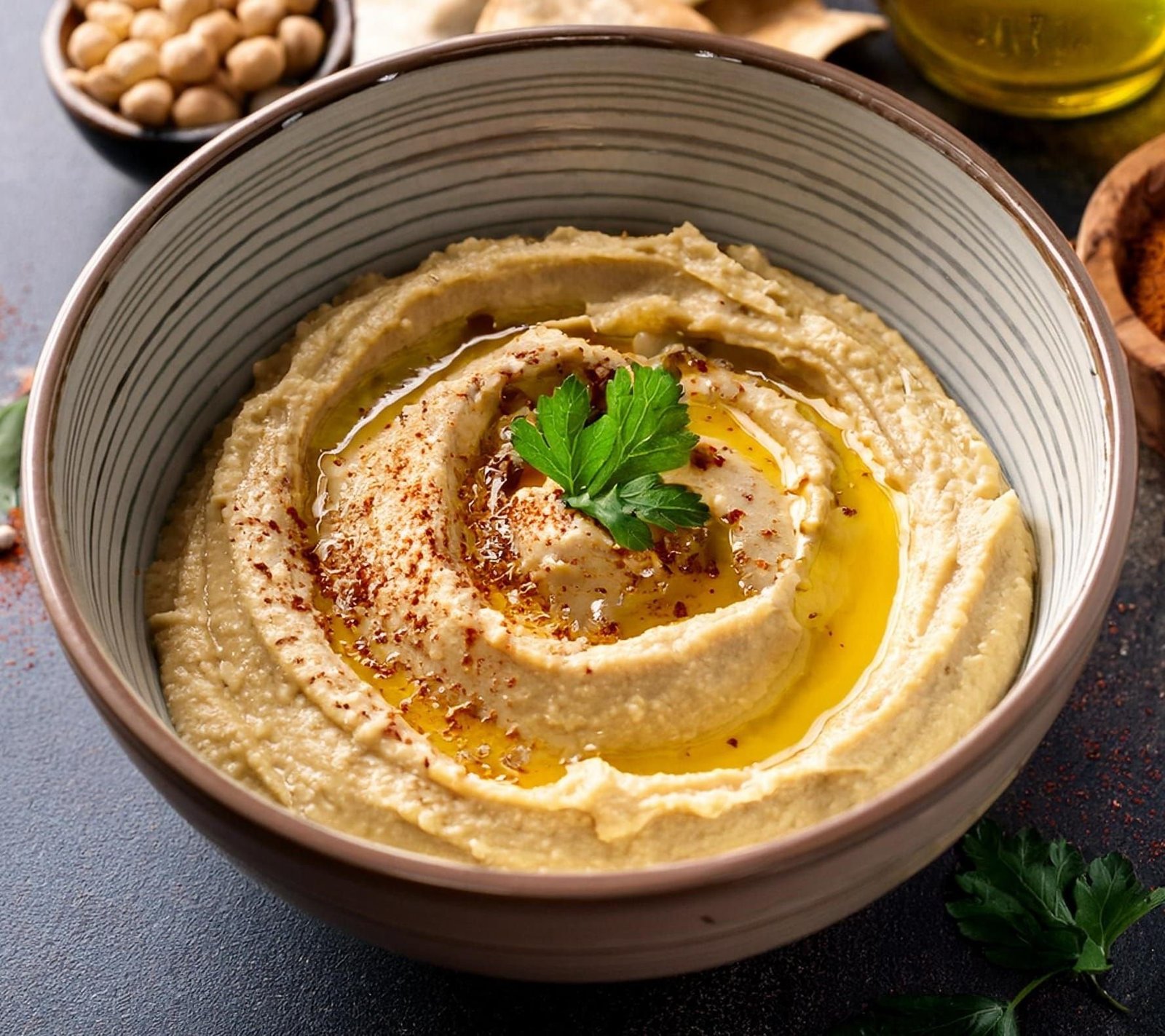
The classic presentation is a swoosh: spoon the hummus into a shallow bowl, drag the back of the spoon in a spiral to make a well, and fill it with olive oil. Scatter over whole chickpeas, paprika, and chopped parsley. Serve at room temperature, not fridge-cold: cold mutes all the flavours you’ve worked to build.
There’s no shortcut around this one, but honestly, it’s the satisfying part anyway.
Where It Usually Goes Wrong
If something goes wrong, it’s almost always one of these. Worth a quick read before you start.
Adding everything at once
Tahini needs its solo blitzing time to whip up properly. Chickpeas added too early weigh it down into graininess.
Skipping the skins
It’s tempting to skip the peeling, but the skins are the number one cause of gritty hummus. Five minutes of rubbing is worth it.
Under-seasoning
Hummus needs more salt and lemon than you think. Taste it on bread, not off a spoon: bread mutes flavour, so season boldly.
Handy Tips Worth Knowing
Once you’ve got the basics down, these are the small habits that make everything easier next time round.
- Dried chickpeas, soaked overnight and cooked until very soft, give the absolute silkiest result. Tinned are fine for weeknights. You’ll thank yourself later.
- A high-speed blender gives smoother hummus than a food processor, but you’ll need to scrape down more often. It becomes second nature quickly.
- Warm chickpeas blend smoother than cold ones. If using tinned, warm them through in their liquid first. Worth doing from day one.
- Leftover hummus keeps for four to five days in the fridge with a thin layer of olive oil on top. This one’s free and it works.
For more ideas along these lines, have a look at christmas dinner shortcuts that still impress.
The UK Angle
Here’s the UK-specific bit: what’s available, what it costs, and where I’d actually spend my money.
Good tahini from a Middle Eastern grocer (there’s usually one on every high street) costs £3 to £4 and is far runnier and nuttier than the stiff supermarket jars. It’s the single best upgrade you can make.
It’s also worth checking the NHS Eat Well guide if you want to dig deeper.
Tinned chickpeas are about 65p in UK supermarkets. Dried are even cheaper per portion if you’re willing to plan ahead.
What People Usually Ask
Here are the things people usually want to know once they’ve read the main guide.
Why is my hummus bitter?
Usually the tahini: older or poor-quality tahini can taste bitter. Try a fresher jar, and balance with a little more lemon and salt. Too much raw garlic can also add harshness.
How long does homemade hummus keep?
Four to five days in an airtight container in the fridge. The lemon juice helps preserve it. If it smells sour or fizzy, it’s past its best.
The Short Version
If you skimmed the above, this is the part to actually read: the essentials, nothing else.
- Blitz tahini and lemon first — Put your tahini, lemon juice, garlic and salt in the food processor and blitz…
- Peel the chickpeas (yes, really) — The papery skins are the main thing standing between you and smoothness. Tip a…
- Use ice water, not tap water — With the motor running, drizzle in three to four tablespoons of ice-cold water. The…
- Be generous with the tahini — A lot of home recipes skimp on tahini, and it shows. For one 400g…
- Season boldly at the end — Salt, lemon and garlic need to be assertive: bland hummus is a tragedy. Taste…
- Serve it properly — The classic presentation is a swoosh: spoon the hummus into a shallow bowl, drag…
Wrapping It Up
Let’s pull it all together.
Silky hummus is a method, not a recipe: whip the tahini and lemon first, peel the chickpeas, drizzle in ice water, be generous with good tahini, and season boldly. Serve it at room temperature with a proper swoosh of olive oil. Once you’ve had it this smooth, the tubs start tasting like a compromise.
The bottom line on make hummus smoother than shop bought: it’s simpler than it looks once you break it into steps. Work through the method above at your own pace, and don’t be afraid to adapt it to your situation.
For more ideas along these lines, have a look at make afternoon tea sandwiches properly.
It’s also worth checking the Food Standards Agency if you want to dig deeper.