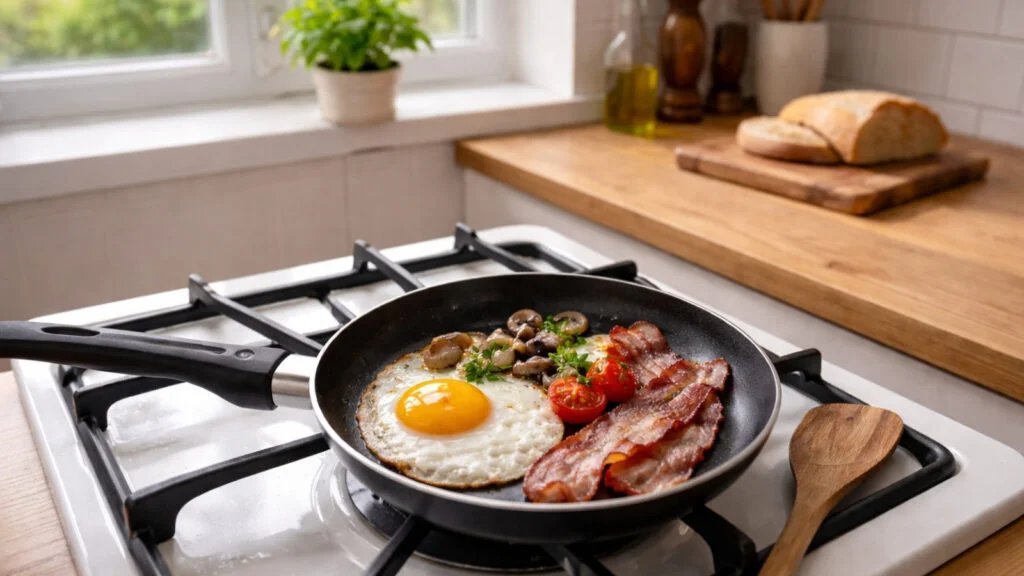
Learning to cook for one without wasting food is mostly about changing how you shop and store, not how you cook. The recipes barely change: the system around them does.
I lived alone for years and went through the classic phases: the wilted bag of salad, the half onion mummifying in the fridge, the good intentions. Here’s the system that finally fixed it.
Cook For One Without Wasting Food Without the Stress
Forget overcomplicated advice. This is the straightforward version that works in a real kitchen on a real weeknight.
Shop little and often
The single biggest change: stop doing a giant weekly shop. Smaller shops two or three times a week mean everything gets used at peak freshness. It sounds less efficient, but throwing away a third of a big shop is the real inefficiency. A quick stop at the shop on the way home takes ten minutes and transforms your waste levels.
This is where patience pays off. Rush it and you’ll notice the shortcut.
Embrace the freezer as your sous chef
Your freezer is how one person eats variety without waste. Freeze bread in slices, grate cheese before freezing, portion mince and chicken into single servings, and freeze half tins of tomatoes and coconut milk in ice cube trays. Almost everything freezes well in single portions if you portion it first.
People underestimate this step because it looks simple. It looks simple because it works.
Related reading: our take on freezer meals to batch cook.
Build meals around long-life staples
Eggs, pasta, rice, tins, frozen veg, oats, and hard cheeses last for ages and form the backbone of solo cooking. Then you only need to buy the fresh bits: a piece of fish, some greens, a lemon. A well-stocked cupboard means you’re never more than 20 minutes from dinner, even with an empty fridge.
If you take one thing from this section, make it this: the details compound.
Master the art of the planned leftover
Cook two portions on purpose and eat the second for lunch tomorrow. This isn’t sad meal prep: it’s just sensible. Curries, stews, pasta sauces and grain bowls all do this beautifully. The trick is choosing dishes that reheat well and actually looking forward to them, not suffering through them.
There’s no shortcut around this one, but honestly, it’s the satisfying part anyway.
Learn single-serve cooking properly
A small frying pan, a small saucepan and a microwave rice portion are your best friends. An omelette with whatever veg is left, egg fried rice, a single chicken breast with greens, beans on toast done properly with good bread: these are real dinners, not compromises. Cook the amount you’ll eat and there’s nothing to waste.
Do it properly the first time and you’ll never have to troubleshoot it later.
Use up bits with template meals
Keep a mental list of clean-out meals: stir fry (any veg plus soy sauce), frittata (any veg plus eggs and cheese), soup (any veg plus stock), fried rice (any bits plus rice and egg). When the fridge has oddments, pick the template that fits. Nothing languishes, everything gets eaten.
This might feel like extra effort now, but it saves time and disappointment down the line.
A Few Things That Genuinely Help
Think of these as the finishing touches. Small effort, noticeable difference.
- Buy loose fruit and veg so you can take exactly one carrot or two mushrooms instead of a whole bag. Worth doing from day one.
- Herbs in pots on the windowsill beat bunches that rot in the fridge. Basil, parsley and chives are easy starters. This one’s free and it works.
- Half a tin of anything goes into a small container in the fridge and gets used within two days, or frozen in portions. Simple, but surprisingly effective.
- A small slow cooker or a single-serve air fryer makes solo cooking genuinely enjoyable rather than a chore. I wish someone had told me this years ago.
Related reading: our take on cook jacket potatoes in an air fryer.
What Tends to Go Wrong
A quick heads-up on the usual pitfalls, so you can sidestep them entirely.
Buying family packs to save money
A kilo of chicken breasts is only cheaper if you actually eat them all. Smaller packs you finish beat bulk packs you bin.
Cooking four portions ‘to be safe’
Without a plan for the leftovers, they sit in the fridge until they’re a science experiment. Cook what you’ll eat, or plan the second meal.
Ignoring the freezer
The freezer is the solo cook’s greatest tool. If you’re not using it strategically, you’re making life harder than it needs to be.
What to Know in the UK
Before you start, here’s what’s worth knowing about doing this on this side of the Atlantic.
M&S and Waitrose do excellent dine-in deals, but for everyday solo cooking, Aldi and Lidl’s smaller packs and loose veg are kinder to both waste and wallet.
For a second opinion, BBC Good Food’s recipe collection is always a solid reference.
Too Good To Go bags from local shops are a cheap way to stock up, but be honest about what you’ll actually use: a bargain you bin is no bargain.
Quick Answers to Common Questions
A few questions come up again and again on this topic, so let’s deal with them head on.
Is it cheaper to cook for one or buy ready meals?
Cooking wins comfortably once you have the staples. A solo home-cooked dinner typically costs £1.50 to £3 versus £3.50 to £5 for a decent ready meal, and it tastes better.
What are the best freezer containers for single portions?
Small reusable containers around 500ml, silicone muffin trays for sauces and stocks, and zip-lock bags frozen flat. Label everything: frozen mystery meals get ignored.
Quick Recap
Short on time? Here’s the whole thing condensed into the key points.
- Shop little and often — The single biggest change: stop doing a giant weekly shop. Smaller shops two or…
- Embrace the freezer as your sous chef — Your freezer is how one person eats variety without waste. Freeze bread in slices,…
- Build meals around long-life staples — Eggs, pasta, rice, tins, frozen veg, oats, and hard cheeses last for ages and…
- Master the art of the planned leftover — Cook two portions on purpose and eat the second for lunch tomorrow. This isn’t…
- Learn single-serve cooking properly — A small frying pan, a small saucepan and a microwave rice portion are your…
- Use up bits with template meals — Keep a mental list of clean-out meals: stir fry (any veg plus soy sauce),…
The Takeaway
So, where does that leave us?
Cooking for one without waste means shopping small and often, freezing in single portions, leaning on long-life staples, and having clean-out template meals for the oddments. It’s a system, not a talent. Set it up once and the wilted-salad era is over for good.
So that’s cook for one without wasting food, demystified. It’s one of those things that seems complicated until you’ve done it once, and then you wonder what all the fuss was about.
Related reading: our take on cook asparagus so it stays green.
For a second opinion, the NHS Eat Well guide is always a solid reference.