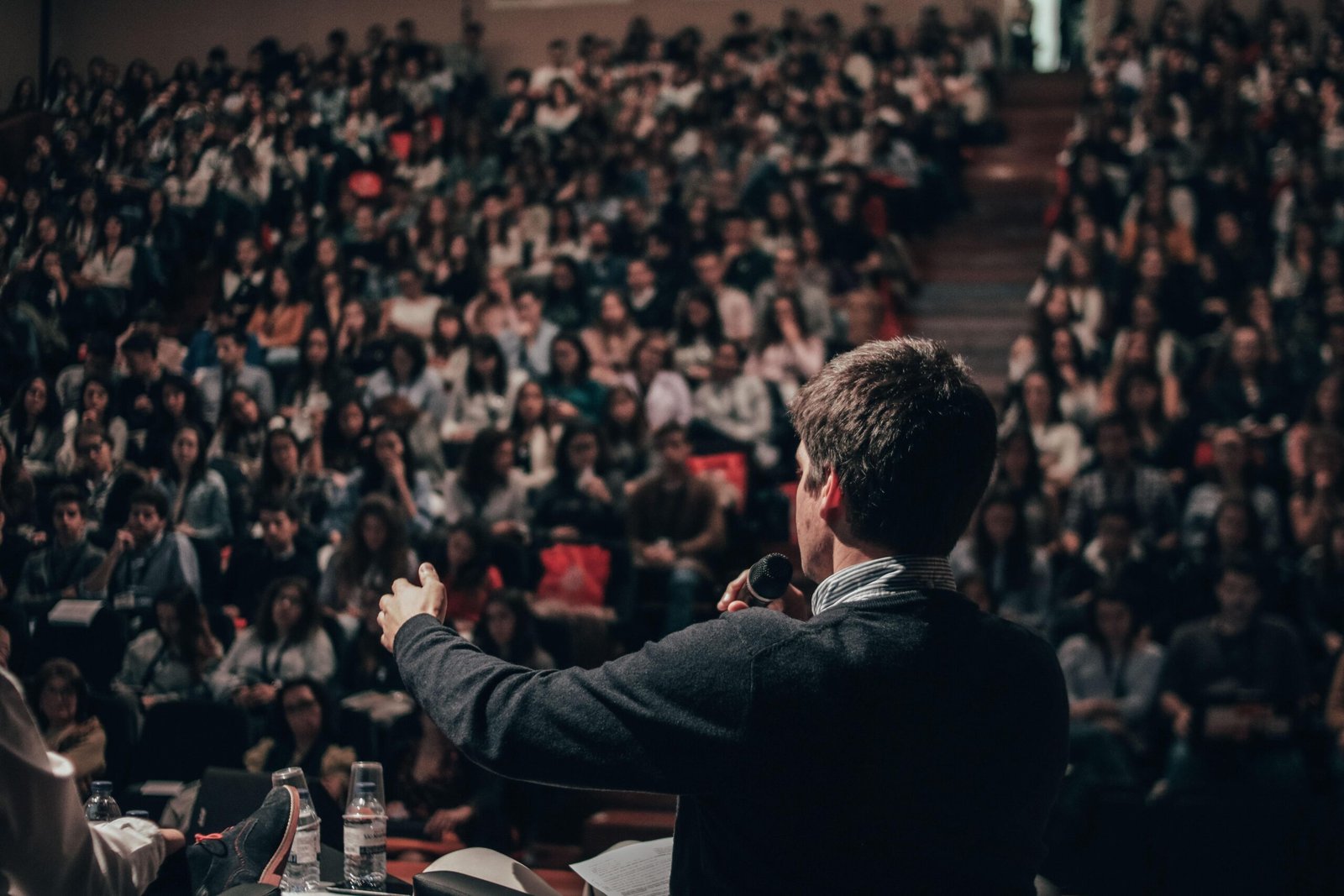
Your hands are shaking. Your mouth is dry. Your carefully prepared points have evaporated, and there are forty people looking at you expectantly. Public speaking anxiety is one of the most common fears in the world — more common than spiders, heights, or death, according to multiple surveys. But here’s the thing the confident speakers know: confidence for public speaking isn’t a personality trait. It’s a skill, built through preparation and practice like any other. Even the great orators were terrified once.
How to build confidence for public speaking: preparation is 80% of it
Most speaking anxiety is really preparation anxiety. The speakers who look effortless prepared relentlessly — they just hide it well:
- Know your first 60 seconds cold. The opening is where nerves peak. Memorise (not read) your first minute — your name, your topic, your hook. Once you’re through it, muscle memory takes over and the nerves drop dramatically.
- Structure simply. Tell them what you’ll tell them, tell them, tell them what you told them. Three main points maximum — audiences remember three things, not twelve. Write each point as a single sentence; if you can’t, it’s not clear enough yet.
- Prepare for the worst questions. List the five hardest questions you could be asked and prepare answers. You’ll probably never need them — but knowing you could handle them kills a huge chunk of anxiety.
- Visit the room. If possible, see the venue beforehand — where you’ll stand, how the mic works, where the clicker is. Unknown environments amplify nerves; familiar ones calm them.
- Have a backup for tech. Print your notes. Save the slides on a USB and in the cloud. Know what you’ll do if the projector dies (talk without slides — you’ve prepared the content, not the deck).
Practice like it’s real
- Out loud, standing up, timed. Reading silently doesn’t count — your mouth needs the rehearsal. Time it ruthlessly; running over is the commonest amateur mistake.
- Record yourself. Painful, invaluable. You’ll spot the filler words (“um,” “so,” “basically”), the rushing, the hands in pockets. One recording session fixes more than ten silent read-throughs.
- Practice in front of humans. A friend, a partner, the dog — anyone. The jump from empty room to audience is where nerves spike, so narrow it gradually.
- Join Toastmasters. Seriously — Toastmasters International has hundreds of UK clubs where you practise speaking in a supportive, structured environment for a tiny membership fee. It’s the single fastest confidence-builder most people ever find.
Manage the body, calm the mind
Anxiety is physical before it’s mental — address the body first:
- Breathe properly. Not the shallow chest-breathing of panic — slow diaphragmatic breaths: in for four, hold for four, out for six. Two minutes of this before you start measurably lowers heart rate.
- Power pose (it works, sort of). The research is debated, but standing tall with open posture for two minutes genuinely makes most people feel more confident. At minimum, it beats hunching in a corner scrolling your notes.
- Warm up your voice. Hum, do tongue twisters, speak a paragraph out loud. A warmed-up voice doesn’t crack; a cold one does — usually on the first word.
- Reframe the adrenaline. Shaking hands, racing heart, dry mouth — that’s your body preparing to perform, not failing. Olympic athletes feel exactly this. Tell yourself “I’m excited” instead of “I’m terrified” — studies show this reappraisal measurably improves performance.
- Arrive early, chat to the audience. Say hello to people as they arrive. It’s much easier to speak to a room of familiar faces than a sea of strangers.
During the talk: the techniques that hide nerves
- Slow down. Nerves make everyone rush. Deliberately speak slower than feels natural — it will sound normal to the audience and authoritative to boot. Pause between points; silence feels eternal to you and thoughtful to them.
- Pick three friendly faces. Rotate eye contact between them. You don’t need to scan the whole room — three anchors make you look engaged without the overwhelm.
- Have water. Dry mouth is universal. A sip gives you a natural pause and a moment to collect your thoughts. Nobody minds.
- Notes are fine. Cards with bullet points (not a script — reading sounds dead). Glance, don’t read. Even experienced speakers use notes.
- Expect imperfection. You will stumble on a word. A slide will be wrong. Someone’s phone will ring. Audiences don’t mind — they mind you minding. Acknowledge with humour and move on.
Build the muscle over time
Confidence compounds. Deliberately seek small stages: speak up in meetings, volunteer for the team update, do the wedding speech, present at the local club. Each one makes the next easier — the fear never fully vanishes, but your relationship with it changes from dread to manageable buzz. Keep a “speaking log” of what went well each time; on bad days, it’s proof of progress. And remember that the audience wants you to succeed — nobody attends a talk hoping the speaker fails. They’re on your side before you say a word.
These skills transfer everywhere — the same techniques help with small talk at networking events, and learning any high-stakes skill follows the pattern in our guide to learning a new skill as an adult.
Handling Q&A without panic
Q&A terrifies speakers more than the talk itself — the loss of control. Tactics: repeat each question back (buys thinking time and ensures everyone heard it), answer briefly then stop (don’t ramble from nerves), and have phrases ready for the unknown — “That’s a great question I don’t have the full answer to; here’s what I do know…” is honest and respected. If someone is hostile, stay calm and factual — the audience always sides with the composed speaker. And it’s fine to say “I don’t know, but I’ll find out” — bluffing destroys credibility faster than ignorance.
The takeaway
To build confidence for public speaking: prepare relentlessly (especially the first 60 seconds), practise out loud and on camera, join Toastmasters for real reps, manage the physical symptoms with breathing and reframing, and slow down during the talk. Confidence isn’t the absence of nerves — it’s having a system that works despite them. Every confident speaker you admire was once exactly where you are now.