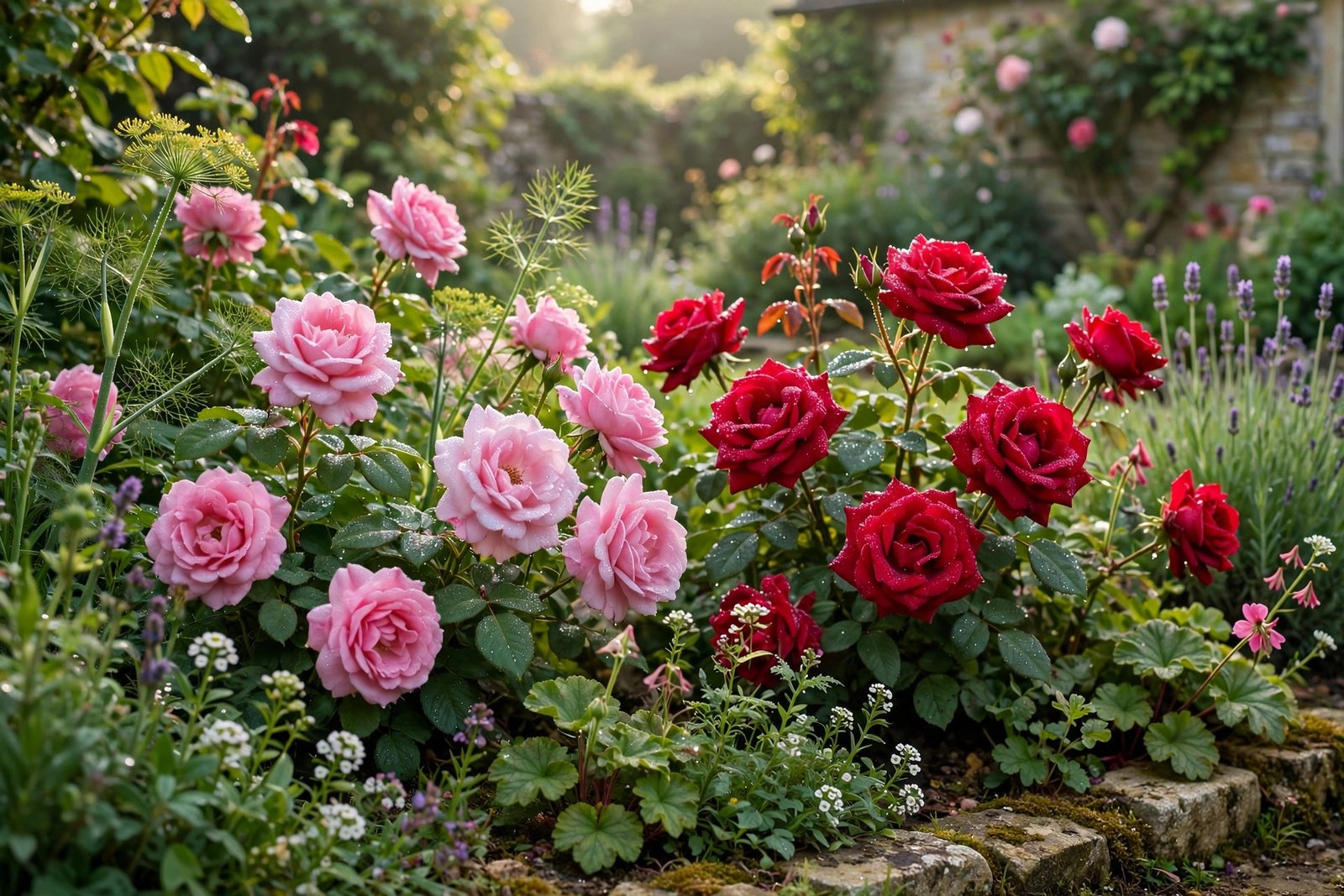
Roses have a reputation for being fussy, prima-donna plants — and that reputation is mostly marketing. In reality, roses are tough, forgiving shrubs that have survived centuries of neglect in British gardens. What beginners actually struggle with is not the rose itself but the avalanche of contradictory advice: seventeen types of feed, mysterious pruning codes, and garden-centre staff pushing products you do not need. Here is how growing roses actually works, stripped of the folklore.
How Roses Actually Work: The 60-Second Botany
A rose is a woody shrub that wants three things: sun, air circulation and a decent drink. It stores energy in its canes (stems) over winter, pushes out new growth in spring, flowers on that new growth through summer, then hardens off in autumn. That cycle explains nearly every rule you will read: pruning works because cutting back stimulates the vigorous new growth that carries flowers; feeding works because flower production is energy-intensive; and most diseases strike when leaves stay wet and airless.
Roses are grafted onto hardy rootstocks in the UK, which is why a delicate-looking hybrid tea can survive a Yorkshire winter. The graft union — the knobbly bump near the base — should sit just below soil level when planting. Understanding this single fact prevents the most common beginner disaster: planting too deep or too shallow.
Choosing Your First Roses: What Actually Matters
Ignore the 200 varieties at the garden centre and filter by three criteria: disease resistance, repeat flowering, and scent (optional). Modern shrub roses and many David Austin English roses are bred for disease resistance, which eliminates 80% of beginner heartache. “Repeat flowering” means blooms from June to October rather than one June flush — check the label, because once-flowering varieties disappoint beginners who expect summer-long colour.
Buy bare-root roses between November and March for the best value: they cost half the price of potted roses, establish faster, and the planting window suits the British climate perfectly. A bare-root rose looks like a bundle of sticks — alarming, but normal. Soak the roots for an hour before planting, dig a hole wide enough to spread the roots naturally, and water deeply. Container roses can be planted any time the ground is not frozen, but they cost more and need more aftercare watering in their first summer.
Start with three to five plants, not twenty. A small group teaches you everything — planting, pruning, feeding, deadheading — without turning your garden into a chore. For companion planting ideas that keep the whole bed low-maintenance, see the best low-maintenance garden ideas for busy people.
Planting: The Part Everyone Overcomplicates
Dig a hole roughly 45cm wide and deep. Mix the excavated soil with well-rotted compost or manure — not fresh manure, which burns roots. Spread the roots over a small mound in the hole’s base, position the graft union just below the surface, backfill, firm gently with your boot, and water with a full can even if it is raining. Then mulch with 5–8cm of bark or compost, keeping it clear of the stems.
Site selection matters more than soil perfection: roses need at least four to six hours of direct sun and should not sit in a frost pocket or a wind tunnel. They dislike competing with tree roots and being splashed by soil during rain — which is why mulching matters. Clay soil? Roses actually like clay’s nutrients; just improve drainage with organic matter. If your ground is heavy clay throughout, the advice in growing vegetables in a small UK garden on working with difficult soil applies equally to rose beds.
Pruning: The Fear-Free Method
Pruning terrifies beginners, but here is the liberating truth: it is very hard to kill a rose by pruning it wrong. The plant wants to grow; your cuts just direct that energy. The simple method for bush and shrub roses: in late February or March, remove dead, damaged and crossing stems, then cut the remaining healthy stems back by roughly half to an outward-facing bud. Step back. Done.
For climbing roses, the approach differs: keep the main structural canes, tie them in horizontally (horizontal stems produce far more flowers than vertical ones — this single trick transforms a mediocre climber), and prune side shoots back to two or three buds. Ramblers flower on the previous year’s growth, so prune them right after flowering in late summer instead of spring. When in doubt, remember: spring pruning for bush roses, post-flowering pruning for ramblers.
Deadheading — snipping off spent blooms — encourages repeat flowering through summer. Cut back to the first healthy five-leaflet leaf below the faded flower. Stop deadheading in early autumn so hips can form; this also signals the plant to harden off for winter.
Feeding and Watering: Less Than You Think
Roses are hungry, but “hungry” means two feeds a year, not a weekly chemistry set. Apply a granular rose fertiliser in March as growth starts and again in June or July. That is genuinely it for most gardens. Overfeeding produces soft, sappy growth that attracts aphids and blackspot — the exact problems beginners blame on the rose being “difficult”.
Water deeply once a week in dry spells during the first year; established roses (year two onwards) cope with most British summers unaided. Water the soil, not the leaves — wet foliage invites blackspot, the most common rose disease. A watering can at the base beats a sprinkler every time. If blackspot does appear (purple-black blotches with yellow halos), pick off affected leaves, bin them (never compost), and improve air circulation. Resistant varieties may shrug it off entirely, which is why variety choice at purchase matters more than any spray.
The Honest Truth About Pests and Diseases
Aphids will find your roses — they find everyone’s roses. A strong jet of water dislodges most of them, and ladybirds and hoverflies will arrive within days if you do not spray broad-spectrum insecticides that kill the predators too. This is the great irony of rose pest control: spraying often makes aphid problems worse by wiping out their natural enemies. Tolerate a few aphids; blast the infestations; let the garden’s food web do the rest.
Blackspot, mildew and rust are the big three fungal issues, all worsened by wet leaves and poor airflow. Prevention — resistant varieties, morning watering at the base, spacing, and clearing fallen leaves in autumn — outperforms cure every time. Fungicide sprays exist, but most home gardeners never need them if the fundamentals are right. The Royal Horticultural Society’s rose disease guides confirm that cultural control beats chemical control for home growers.
Choosing Varieties for Reliability
If you want the highest odds of success, start with roses that have earned the RHS Award of Garden Merit — an independent assessment of garden performance, not a marketing badge. The RHS rose growing guide lists AGM varieties alongside detailed cultivation advice, and it is the single best free resource for UK rose growers. Look particularly for varieties noted for disease resistance and repeat flowering; these two traits together eliminate most of what beginners find difficult. Buy from specialist rose nurseries rather than supermarkets where possible — the plants are better graded, the varieties accurately labelled, and the advice knowledgeable.
Conclusion
Growing roses as a beginner comes down to five unglamorous decisions: buy disease-resistant, repeat-flowering varieties; plant bare-root in winter with the graft just buried; prune simply in spring without fear; feed twice a year and water the soil, not the leaves; and let predators handle the aphids. Do those five things and your roses will thrive while the neighbour who bought seventeen products wonders what went wrong. Roses are not delicate — they are survivors that have been waiting centuries for someone to stop overthinking them.
Frequently Asked Questions
When is the best time to plant roses in the UK?
November to March for bare-root roses, which are cheaper and establish best. Container-grown roses can go in any time the ground is workable, but need diligent watering through their first summer.
Why are my rose leaves turning yellow with black spots?
That is blackspot, a common fungal disease. Remove affected leaves, bin them rather than composting, water at the base instead of overhead, and improve air circulation. Choosing resistant varieties next time prevents most of it.
How far back should I prune my roses?
For bush roses, cut healthy stems back by about half in late winter to an outward-facing bud, removing dead and crossing wood entirely. It is very difficult to kill a rose by pruning — they respond to hard pruning with vigorous regrowth.
Do roses need full sun all day?
They need at least four to six hours of direct sun daily. Morning sun is ideal because it dries dew quickly, reducing fungal disease. Deep shade produces leggy growth and few flowers.
Can I grow roses in pots?
Yes — choose compact or patio varieties, use a large pot (minimum 45cm deep), John Innes No. 3 compost, and water and feed more attentively than in-ground roses. Repot or top-dress with fresh compost every couple of years.