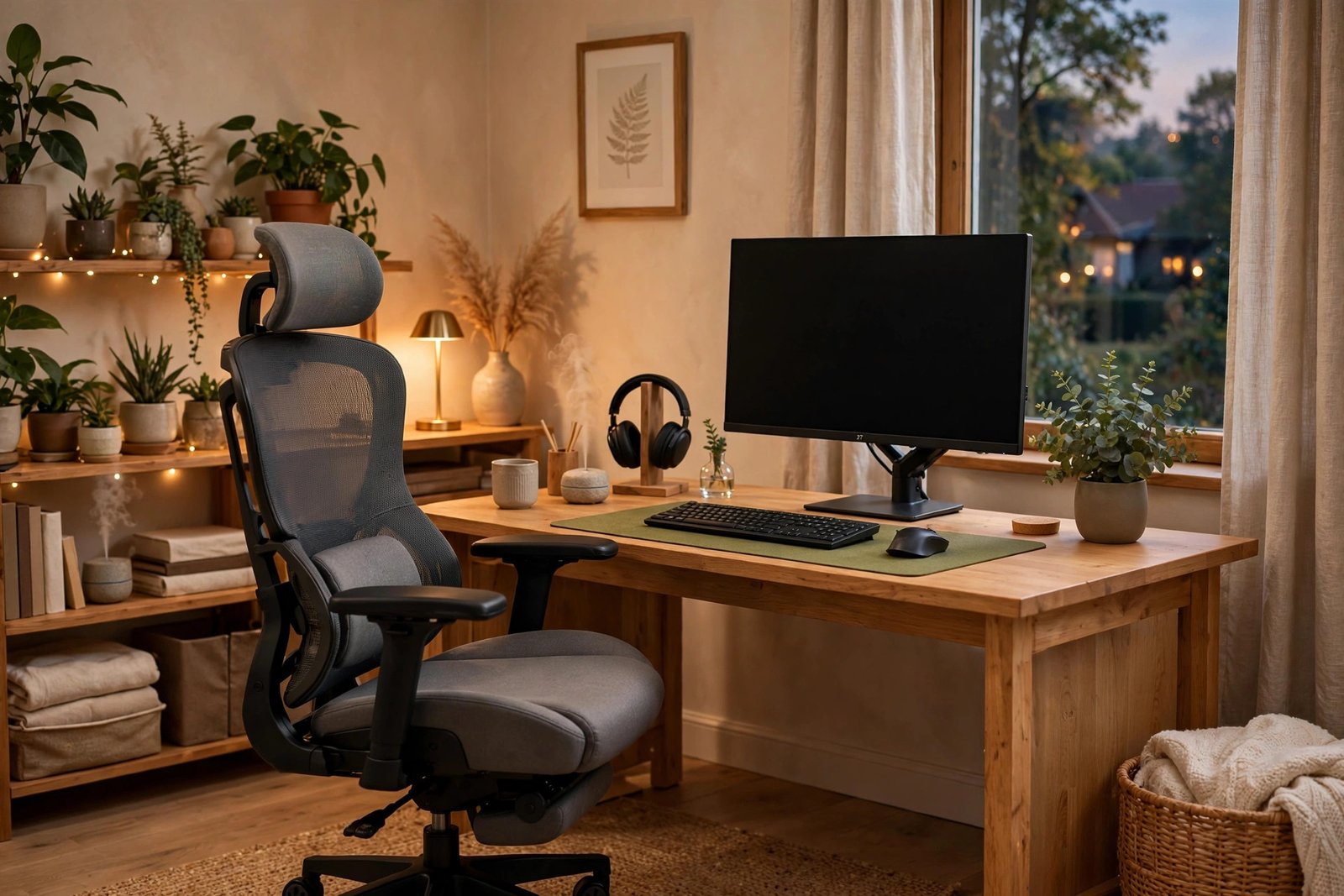
Gaming chairs are among the most aggressively marketed — and most misunderstood — purchases in the setup world. The racing-seat aesthetic promises performance; the reality for many buyers is a stiff, sweaty chair that hurts after three hours. Meanwhile, the genuinely comfortable options often do not look like “gaming chairs” at all. Here is the honest guide to choosing comfort without wasting money on branding.
The Uncomfortable Truth About Racing-Style Chairs
The bucket-seat design was borrowed from motorsport, where its job is holding a driver in place under lateral G-forces. At a desk, there are no lateral G-forces — the side bolsters just restrict movement and trap heat. Many racing-style chairs use dense, flat foam that feels supportive for twenty minutes in a showroom and punishing by hour three. The “lumbar pillow” strapped to most of them is an admission of failure: a well-designed chair does not need an add-on pillow to support your back.
This does not mean all gaming chairs are bad — the better ones have genuinely improved, with softer foam, adjustable lumbar mechanisms and breathable fabrics. But the category’s price premium is largely aesthetic. A £250 racing chair typically contains £120 of chair and £130 of branding. Knowing this reframes the whole purchase: you are buying ergonomics, not an image.
What Actually Determines Comfort
Adjustability beats padding. The chair must fit your body: seat height (feet flat, knees at ~90°), seat depth (2–3 fingers between seat edge and knee), armrest height and width (shoulders relaxed, elbows ~90°), lumbar support position, and tilt tension. A moderately padded chair with full adjustments beats a plush fixed chair every time — bodies differ, and fixed geometry fits almost nobody perfectly.
Lumbar support is the single most important feature. Look for adjustable (height and depth) built-in lumbar, not a strap-on pillow. Your lower back’s curve needs meeting, not approximating.
Fabric over “PU leather”. Bonded/PU leather peels within 2–3 years and sleeps hot. Fabric breathes, lasts longer and costs less — the only advantage of PU leather is wiping clean, which matters if you eat at the desk.
Build quality in the mechanism. The tilt mechanism and gas lift are the failure points. Chairs with recognised mechanism brands and 5+ year warranties signal real engineering; 1-year warranties signal disposable furniture. Check the weight rating honestly — it correlates with frame strength.
For the desk setup around the chair, fixing desk posture and choosing keyboard and mouse matter as much as the seat — comfort is a system. And if space is tight, creating a home office in a spare corner covers fitting it all in.
The Ergonomic Office Chair Alternative
Here is the industry’s open secret: a good ergonomic office chair usually beats a gaming chair at the same price for long-session comfort. Mesh backs breathe better than any racing seat, synchronous tilt mechanisms move with your body, and the category competes on ergonomics rather than aesthetics. Refurbished premium office chairs (Herman Miller, Steelcase, Haworth) at £300–£600 outperform new £300 gaming chairs so comprehensively it is barely a contest — they were engineered for 8-hour workdays, which is exactly what long gaming sessions are.
The trade-off is honest: office chairs look like office chairs. If the gaming aesthetic genuinely matters to your setup’s joy, that is a valid preference — just recognise you are paying for it in comfort per pound. Hybrid options exist: several manufacturers now make ergonomic chairs with subtle gaming styling, splitting the difference sensibly.
Buying Smart: The Practical Checklist
- Try before buying where possible. Twenty showroom minutes reveal pressure points no review can. Sit, adjust everything, lean back, sit forward.
- Check the returns policy. A chair needs a week of real use to judge. Buy from retailers with 30-day returns; the best test is your own desk.
- Measure your space. Big “XL” racing chairs overwhelm small rooms and small users — match chair size to body size, not aspiration.
- Budget realistically: £150–£250 gets a decent fabric gaming chair or entry ergonomic chair; £250–£400 the sweet spot for quality; £400+ buys premium ergonomics or refurbished flagships. Below £100, expect 18-month lifespans.
- Ignore “4D armrests” marketing: what matters is whether armrests adjust to support your arms without hunching — the number of dimensions is trivia.
- Second-hand premium beats new budget: a used £600-design chair at £200 outlasts and out-comforts a new £200 chair. Check gas lift function and fabric condition.
What the Ergonomics Research Says
Occupational health research is clear on what prolonged sitting does: static postures increase spinal disc pressure, reduce circulation and correlate with musculoskeletal complaints — which is why ergonomists care less about chair brands and more about movement variety and postural support. The NHS guide to sitting correctly distils the evidence into simple geometry: feet flat, knees at right angles, lower back supported, screen at eye level, and regular breaks. No chair, however expensive, substitutes for getting up.
The UK’s Health and Safety Executive takes display-screen ergonomics seriously enough to regulate it for workplaces, and its guidance on display screen equipment applies equally to a gaming setup: the workstation should fit the worker, seating should support the lumbar curve, and prolonged static postures should be broken up. Gamers routinely sit longer than office workers — tournament sessions run six to eight hours — making these principles more relevant, not less. The practical takeaway: budget as much thought for break habits and desk geometry as for the chair itself, because the research says the system matters more than any single component.
Conclusion
Choosing a comfortable gaming chair means ignoring the racing-seat theatre and buying adjustability: proper lumbar support, fabric over peeling PU leather, a trustworthy mechanism and warranty, sized to your body and tested at your desk. Seriously consider an ergonomic office chair — or a refurbished premium one — instead; your back does not care about the branding. Comfort is engineered, not styled, and the chair you forget you are sitting in is the one you chose correctly. Take the home trial seriously — adjust everything over a full week of normal use, and trust your body over the marketing.
Frequently Asked Questions
Are gaming chairs bad for your back?
Not inherently, but many racing-style chairs prioritise looks over ergonomics — poor lumbar support and restrictive bolsters cause problems in long sessions. Well-designed models with adjustable lumbar are fine; ergonomic office chairs are usually better value for back health.
How much should I spend on a gaming chair?
£150–£250 for decent quality, £250–£400 for the sweet spot. Below £100, expect short lifespans. Consider refurbished premium office chairs at £300–£600 as the best comfort-per-pound option.
Is mesh or fabric better than PU leather?
Mesh and fabric breathe better, last longer and do not peel. PU leather’s only real advantage is easy wipe-cleaning. For long sessions, breathable materials win clearly.
What is the most important chair feature?
Adjustable lumbar support — it determines whether your lower back is supported over hours. After that: seat-depth adjustment, armrest adjustability and a quality tilt mechanism.
Can I use an office chair for gaming?
Absolutely — and often better. Ergonomic office chairs are designed for 8-hour sitting days, which is exactly what marathon gaming sessions demand. The aesthetic differs; the comfort usually wins.