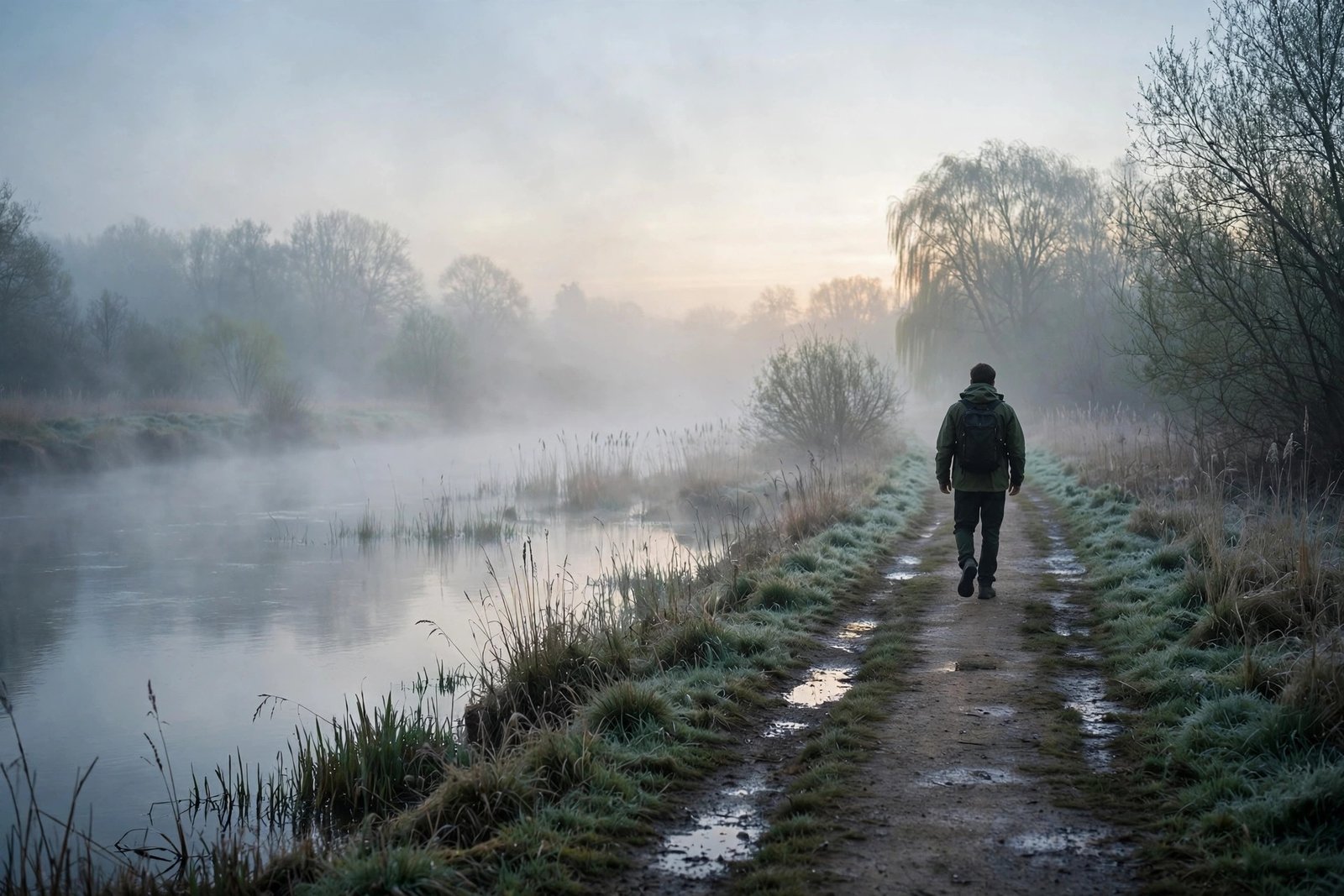
Type “build mental resilience” into a search engine and you will drown in £299 courses, £15-a-month apps and weekend retreats in the Mournes priced like a used car. The resilience industry has a vested interest in making bounce-back-ability sound like something you purchase. But psychologists who actually study resilience — people like Ann Masten at the University of Minnesota, whose decades of research reframed resilience as “ordinary magic” rather than rare trait — tell a different story. Resilience is built from ordinary processes, most of them free, and the honest cost of building it in Derry is close to nothing. This guide prices it properly.
What Mental Resilience Actually Is
Resilience is not toughness, stoicism or “positive vibes.” The American Psychological Association defines it as the process of adapting well in the face of adversity, trauma, tragedy or significant stress — note process, not trait. It is what you do, not what you are. And Masten’s landmark finding, replicated across decades and cultures, is that resilience emerges from ordinary adaptive systems: supportive relationships, cognitive flexibility, self-regulation, agency, and hope. No heroics required. No purchase necessary.
This reframes the cost question entirely. If resilience were a rare trait, you might need to buy it. Since it is a set of ordinary processes, you build it the way you build anything: with reps, in daily life, mostly free.
The Free Foundations (£0)
Relationships: the master resilience factor
Across every major resilience study, one factor dwarfs all others: connection to other people. A single trusted relationship — partner, friend, family member, mentor — predicts resilient outcomes more strongly than any technique. In Derry, this infrastructure is free and abundant: the GAA club, the running club along the quay, the choir, the Men’s Shed, the community centre coffee morning. Joining costs little or nothing; the resilience dividend is the largest available. Loneliness, conversely, is a resilience tax — addressing it is the highest-ROI resilience investment there is.
Sleep, movement, daylight: the physiological base
Resilience is partly physiological — a sleep-deprived, sedentary brain regulates emotion poorly, full stop. The free prescriptions: 7–9 hours of sleep (the non-negotiable foundation), daily movement (a walk along the Foyle costs nothing; exercise is among the best-evidenced mood regulators), and daylight exposure (particularly valuable in Derry’s dark winters — morning light anchors the circadian and mood systems). None of these cost a penny. All of them outperform most paid interventions.
Cognitive flexibility: the learnable core skill
The cognitive heart of resilience is reframing: the ability to interpret adversity in ways that preserve agency. Not toxic positivity (“everything happens for a reason!”) but accurate flexibility: “This is hard AND I have handled hard things before.” “This door closed AND other doors exist.” The beginner practice is the three-stories exercise: for any setback, write three interpretations — the catastrophic one, the neutral one, the growth one. The catastrophic story is usually the loudest, not the truest. Practising this deliberately for a month measurably shifts default explanatory style — which is, not coincidentally, the mechanism behind learned optimism (Seligman’s research) and much of CBT.
The Low-Cost Tier (£5–£50)
Some things worth paying small amounts for: books — Option B (Sandberg & Grant), Man’s Search for Meaning (Frankl), Learned Optimism (Seligman) — £8–£12 each, or free from Derry’s Central Library on Foyle Street. Journaling supplies — a notebook (£3) for the daily practice of naming emotions and tracking coping wins. Community courses — the Nerve Centre, Holywell Trust and community associations run low-cost wellbeing courses; the Healthy Living Centre network offers affordable programmes. A light box (£30–£50) for winter months if low mood is seasonal — cheaper than one therapy session and evidence-backed for SAD.
The Professional Tier (£40–£150+/session — When It’s Worth It)
Honesty requires saying when free is not enough. Therapy — particularly CBT, which directly trains the cognitive-flexibility and regulation skills at resilience’s core — is the evidence-based accelerator. Private therapy in Derry/Northern Ireland typically costs £40–£70 per session; 8–12 sessions of CBT is the standard course. That is £320–£840 — real money, and worth it when: adversity has overwhelmed your coping (bereavement, trauma, breakdown), you are stuck in patterns free tools cannot shift, or a professional diagnosis (depression, anxiety disorder, PTSD) is in play.
Before paying, exhaust the free professional options: your GP can refer to NHS talking therapies; Lifeline NI (0808 808 8000) offers free 24/7 crisis support; workplace EAP schemes often include 6 free counselling sessions people forget they have; charities like MindWise and Aware NI offer low-cost support. The Mind website maps what is available by area.
The Derry-Specific Resilience Landscape
Derry has particular resilience assets worth naming. The city’s community and voluntary sector is unusually strong — a legacy of the Troubles era, when communities learned to hold together under sustained pressure. Organisations like the Bogside and Brandywell Health Forum, community restorative justice projects, and the dense network of residents’ associations are resilience infrastructure in the truest sense: ordinary people, mutual aid, shared identity. Research on collective resilience shows communities with strong social fabric recover from shocks faster — Derry’s is battle-tested.
The physical environment helps too: the Walled City walks, Gransha Park, the Foyle riverside paths, the Sperrins within reach — green and blue space access is consistently linked to stress recovery and mood regulation, and Derry is rich in it, free at the point of use.
Building It: The 90-Day Practice
Days 1–30: foundations. Fix sleep first (the master regulator). Daily 20-minute walk. One social contact per week minimum — scheduled, not hoped-for. Begin the three-stories reframing exercise on small setbacks. Days 31–60: skills. Add journaling (10 minutes, emotions + coping wins). Practise the pause-and-choose response to one trigger per week. Take on one manageable challenge — the thing you have been avoiding — and survive it deliberately. Days 61–90: stress-inoculation. Deliberately expand the comfort zone in small doses: the difficult conversation, the new class, the cold-water dip at Portstewart. Each survived challenge is resilience evidence deposited in the bank. Review: which practices helped most? Keep those permanently.
Two companion skills multiply resilience directly: managing stress when work overwhelms handles the acute side, and escaping the social comparison trap removes one of the biggest background drains on mental bandwidth.
Conclusion: The True Price
So what does building mental resilience really cost in Derry? £0 for the foundations that deliver most of the value — relationships, sleep, movement, daylight, reframing practice, journaling with a £3 notebook. £5–£50 for the accelerators — books, community courses, a winter light box. £40–£70 a session for professional therapy when adversity exceeds self-help’s reach — money well spent, not money wasted, and free NHS and charity routes exist first. The resilience industry wants you to believe bounce-back-ability is purchased. The research says it is practised — in ordinary life, with ordinary tools, starting with a walk along the Foyle and a decision to call the friend. That is the whole price list, and the most important items are free.
Frequently Asked Questions
Is resilience something you’re born with?
Partly heritable temperament plays a role, but the dominant finding across decades of research is that resilience is a process built from learnable skills and relationships — and that it can be strengthened at any age. The “ordinary magic” framing exists precisely because most resilient people are ordinary people with good systems, not extraordinary individuals.
How long does it take to become more resilient?
Noticeable shifts in coping typically emerge within 8–12 weeks of deliberate practice — roughly the length of standard resilience and CBT programmes. Deeper trait-level change builds over 6–12 months. Like fitness, it responds to consistent training and atrophies without it; resilience is maintained, not achieved.
Can resilience be harmful — like tolerating things you shouldn’t?
Yes, and this matters. Resilience is adapting well to adversity — but some adversity should be changed, not adapted to: abusive relationships, exploitative work, unsafe conditions. The resilient move is sometimes leaving, reporting or fighting, not enduring. Distinguish “I can cope with this” from “I should have to.”
What is the difference between resilience and just “toughening up”?
Everything. “Toughening up” usually means suppression — stuffing emotions down, which research links to worse outcomes. Resilience means processing: feeling the emotion, regulating it, reframing the situation, seeking support, and acting effectively. The toughened person looks strong until they break; the resilient person bends and recovers.
Where can I get free mental health support in Northern Ireland?
Your GP is the gateway to NHS talking therapies. Lifeline NI (0808 808 8000) provides free 24/7 crisis counselling. Aware NI offers support groups for depression. Samaritans (116 123) is free around the clock. The NHS mental health hub maps options by need and urgency.