Glasgow gym memberships run £25–£50 a month, and the city’s rain makes the “I’ll just run outside” plan a seasonal fantasy. A home gym solves both problems — but the fitness industry wants you to believe it costs thousands. It does not. A genuinely effective home gym that covers strength, cardio and mobility can be built for £150–£400, paying for itself against membership fees within a year. Here is the real cost breakdown, the buying order that avoids waste, and the Glasgow-specific tips that matter.
The Honest Cost Breakdown
A complete beginner home gym needs surprisingly little. Here is what each tier really costs at UK prices:
- £0–£50 — the bodyweight starter: a decent exercise mat (£15–£25), a skipping rope (£8–£12), and free workout apps. This covers cardio, core and mobility. Plenty of people get fit here and never spend more.
- £100–£200 — the adjustable dumbbell kit: add a pair of adjustable dumbbells (£60–£120 second-hand). Adjustable beats fixed-weight sets — one pair replaces an entire rack, critical in a Glasgow flat where space is the real currency.
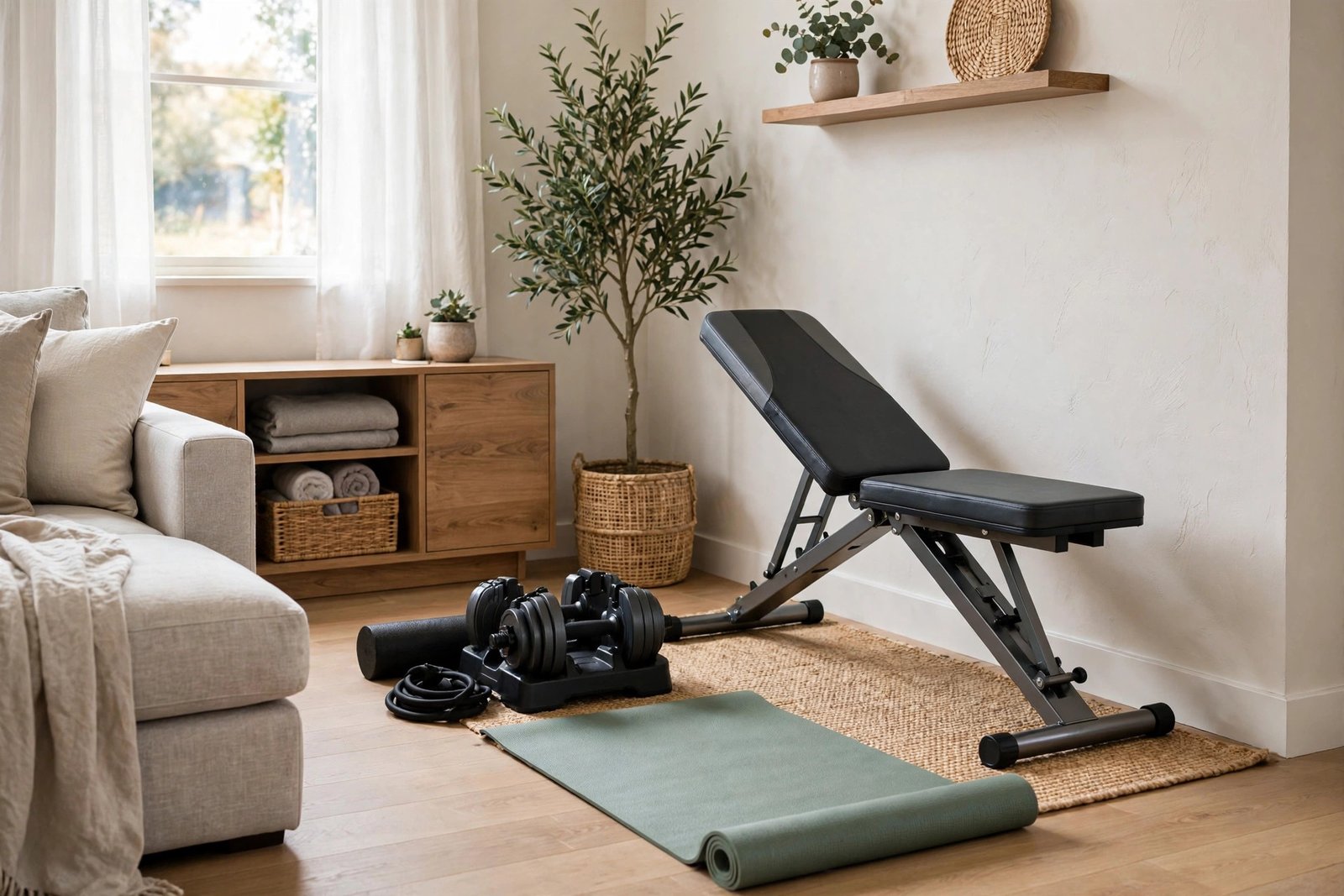
- £200–£400 — the full setup: add a sturdy flat/incline bench (£60–£100), resistance bands set (£15–£25), and a pull-up bar that fits a doorframe (£25–£40). This combination trains every major muscle group with progressive overload — the actual mechanism of getting stronger.
Beyond £400 you are buying comfort and variety, not results: cable machines, squat racks and cardio machines are luxuries. A £1,500 treadmill gathers dust at exactly the same rate as a £150 skipping rope when motivation fades — the difference is the size of the regret.
The Buying Order That Prevents Waste
The number-one home-gym mistake is buying everything at once. Enthusiasm peaks on purchase day and equipment bought in bulk becomes an expensive clothes rack. Instead, buy in stages and earn each upgrade with consistency:
Month 1: mat + skipping rope. Train three times a week. If you are still going at week four, you have proven the habit.
Month 2: adjustable dumbbells. This single purchase unlocks real strength training.
Month 3: bench + bands + pull-up bar. Now you have a complete gym.
Month 6+: only add equipment to solve a specific limitation you have actually hit.
This staged approach also spreads the cost to £50–£100 a month — less than most Glasgow gym memberships — while guaranteeing every purchase gets used. The NHS exercise guidelines (150 minutes of moderate activity weekly plus strength work twice a week) are fully achievable with the month-three setup.
Where to Buy Cheap in Glasgow
Glasgow is one of the UK’s best cities for second-hand fitness gear. The city’s huge student population means a constant churn of barely-used equipment on local resale groups, especially in June–July when students leave and in January when resolutions die. Adjustable dumbbells that retail at £120 routinely sell for £50–£70 barely used — iron does not wear out.
Checklist for second-hand buys: dumbbells should adjust smoothly with no cracked plates; benches must be rock-solid with no wobble (test it); pull-up bars need intact doorframe pads to protect your woodwork — relevant if you rent, since deposit deductions for damaged frames are a classic Glasgow letting-agency move. For new gear, budget sports retailers and January sales offer the best value; avoid no-name ultra-cheap benches, where the saving is your safety margin. If joint issues limit your options, read the best exercise for bad knees and low-impact workouts for beginners over 50 before choosing equipment.
Space: The Real Glasgow Constraint
Most Glaswegians are not working with a spare garage — they have a bedroom corner or a living-room alcove. Design for that reality. Adjustable dumbbells replace nine pairs of fixed weights in one square foot. A folding bench slides under a bed. Resistance bands live in a drawer. A doorframe pull-up bar needs zero floor space. Your entire £300 gym can occupy less space than an armchair.
Practicalities for flats: put rubber matting or interlocking foam tiles (£15–£25) under your training area — it protects floors, damps noise for downstairs neighbours, and marks your “gym zone” psychologically. Train at considerate hours; nothing kills a home-gym habit like a neighbour dispute. And ventilate — a small room with a working human in it gets humid fast, which is miserable and bad for equipment.
What Actually Gets Results (It’s Not the Gear)
Here is the uncomfortable truth the equipment industry buries: results come from progressive overload and consistency, not equipment. Progressive overload means gradually doing slightly more — an extra rep, a heavier setting, a slower tempo — over months. A £60 pair of adjustable dumbbells used with progressive overload for a year will transform your body; a £2,000 multi-gym used randomly will not.
The minimum effective programme: two to three full-body sessions a week, 30–45 minutes each. Squat or lunge pattern, hinge pattern, push, pull, carry, core — six movements cover everything. Track it in a notebook or free app; how long strength training takes to show results sets realistic expectations (visible changes typically take 8–12 weeks of consistency). The people who get results are not the ones with the best gear — they are the ones who are still training in month six.
Why It Is Worth It: The Health Dividend
Beyond the money maths, a home gym pays a health dividend that memberships rarely deliver: elimination of friction. Research on exercise adherence consistently finds that convenience predicts consistency more than motivation does — the workout you can start in 30 seconds beats the theoretically superior one requiring a 20-minute drive. The NHS summary of exercise benefits — better sleep, mood, heart health, and reduced disease risk — accrues to the person who trains consistently, not the person with the best facilities. A modest home setup used three times weekly outperforms a premium membership used twice monthly on every health measure that matters.
Conclusion
A genuinely effective home gym in Glasgow costs £150–£400 bought in stages, pays for itself against membership fees within a year, and fits in the corner of a flat. Buy a mat and rope first, earn the dumbbells with a month of consistency, add a bench and bands at month three, and source it all second-hand where the student churn makes Glasgow a buyer’s market. The equipment is the easy part — the programme and the habit are the gym. Build those, and the corner of your bedroom outperforms any membership you have ever paid for and abandoned by March.
Frequently Asked Questions
How much does a basic home gym cost in the UK?
£150–£400 for a complete setup (mat, adjustable dumbbells, bench, bands, pull-up bar) bought sensibly, much of it second-hand. You can start effectively for under £50 with bodyweight basics.
Is a home gym cheaper than a gym membership?
Yes, within the first year for most people. At £25–£50 a month, a membership costs £300–£600 a year — every year, forever. A home gym is a one-off cost that typically breaks even in 8–12 months.
Can I build muscle with just adjustable dumbbells?
Absolutely. Adjustable dumbbells plus progressive overload build serious strength for years. Most lifters never outgrow them; they add equipment for variety, not necessity.
What is the best home gym equipment for a small flat?
Adjustable dumbbells (one pair replaces nine), resistance bands (drawer-sized), a folding bench, and a doorframe pull-up bar. The lot fits in less space than an armchair.
How do I stay motivated training at home?
Schedule sessions like appointments, track every workout, follow a simple programme rather than improvising, and buy equipment in stages so each purchase rewards proven consistency.