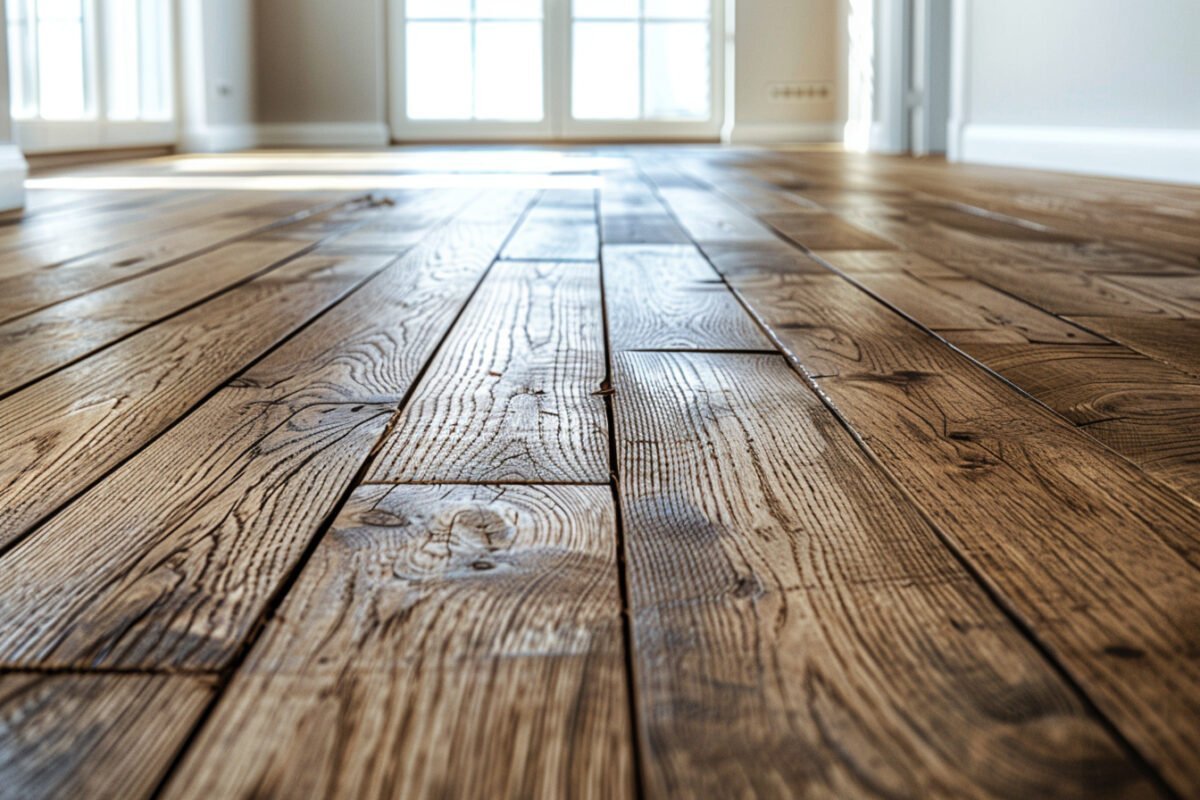
Squeaky floorboards are the soundtrack of British homes — charming to visitors, maddening at 2am when someone gets up for the bathroom. When people ask how can I fix squeaky floorboards upstairs, the good news is that most squeaks have a simple mechanical cause: wood moving against wood, or against a nail. Fix the movement, silence the squeak.
I’ve silenced floors in two Victorian houses, including one landing that announced every footstep like a drum solo. Here’s the diagnostic approach and every fix that works, from the 30-second trick to the proper repair.
How can I fix squeaky floorboards upstairs? Find the exact spot
Squeaks happen where boards move: a board rubbing against its neighbour, a board lifting slightly off the joist and dropping back, or a nail that’s worked loose and slides in its hole. Walk the floor slowly, shifting your weight, and mark every squeak with masking tape — you’ll usually find clusters around joists or doorways where traffic is heaviest. Have someone walk while you listen from below if you can access the ceiling beneath; the exact joist location is gold dust for the proper fix.
The quick diagnostic: press down firmly on the squeaking board. If the squeak stops under pressure, the board is lifting off the joist — it needs screwing down. If it squeaks when boards rub sideways against each other, that’s friction between boards — lubricant territory. If the whole area bounces, the joist itself may need attention (rare, but check for notched or damaged joists if bounce is severe). Most upstairs squeaks are the first two, both very fixable.
- Mark every squeak with tape — walk slowly, shift weight
- Press down: squeak stops = board lifting off joist
- Sideways rub = friction between boards
- Listen from below to pinpoint the joist
- Check for bounce — severe bounce needs a closer look
The fixes, simplest first
The 30-second fix: powdered talc, graphite powder or even washing-up liquid worked into the joints between squeaking boards. It lubricates the wood-on-wood friction and silences minor squeaks instantly — genuinely. Sweep it into the gaps, walk it in, sweep off the excess. It won’t last forever (months, typically) but for mild cases it’s all you need, and it’s free if you raid the bathroom cabinet.
The proper fix: screws. Where a board lifts off the joist, drive 50mm wood screws through the board into the joist — two per board per joist, positioned to avoid the old nails. Pre-drill to prevent splitting, countersink slightly, and the board is pulled tight to the joist permanently. Screws beat nails because they don’t work loose; if the existing nails are the problem, driving a screw alongside each nail locks everything solid. For boards under carpet, use breakaway screws designed for the job — they snap off below the surface so you don’t even lift the carpet (£15 for a kit, brilliant invention).
From below, and the tricky cases
If you can access from underneath (an unfinished ceiling below, or during other work), the pro method is shimming: tap thin wooden shims coated in wood glue into the gap between the board and the joist, then screw up through the joist into the board. No visible fixings upstairs, completely silent result. While you’re under there, check for pipes rubbing on joists — a common mystery squeak — and clip them with felt-lined pipe clips.
Tricky cases: squeaks under tiled bathrooms (fix from below or live with it), engineered boards glued to concrete (injected adhesive kits exist, £20–£30), and the dreaded squeak that moves — which usually means multiple loose boards in an area, so treat the whole zone, not just one spot. And if you’re laying new flooring over the boards anyway, screw every board to every joist first — ten minutes of prevention that guarantees silence under the new floor for decades.
Prevention: silent floors from the start
If you’re laying a new floor — or have the boards up for other work — prevention takes minutes and lasts decades. Screw every board to every joist with 50mm screws (not nails — screws don’t work loose), two per board per joist. Where boards meet, a thin bead of flexible wood adhesive in the tongue-and-groove stops the friction squeaks before they start. Check the joists themselves: sister any that are notched, cracked or bouncy with a bolted timber alongside — a bouncy joist will defeat every board-level fix.
For new installations over boards: a layer of 6mm plywood screwed through to the joists (screws long enough to bite the joist, not just the boards) creates a rock-solid, silent base for laminate, LVT or engineered wood — and it’s what professionals do, because callbacks for squeaks under new floors are expensive. Between floors, acoustic insulation in the joist void (dense mineral wool) cuts both squeaks and airborne noise. The ten minutes of screwing during installation buys thirty years of silence — the best trade in all of flooring.
- Screw (don’t nail) every board to every joist — 50mm screws
- Flexible adhesive in tongue-and-groove joints
- Sister any damaged or bouncy joists
- 6mm plywood over boards before new flooring — the pro method
- Acoustic mineral wool between joists for noise
Silent floors, simple methods
Talc for friction squeaks, screws for lifting boards, shims from below for the invisible fix. Mark them all, fix them in one session, and enjoy the deeply satisfying silence of a floor that doesn’t narrate your midnight movements.
Before laying any new floor over the boards, lay laminate flooring myself is the laminate guide and best flooring for a busy family hallway covers hallway flooring choices. For tool reviews, Which? home improvement guides is the independent source.
The silent-floor philosophy: squeaks are movement, and movement is fixable — during installation with screws, after the fact with screws, talc, or shims. The floor that narrates your midnight movements is a floor asking for twenty minutes of your attention. Give it, and enjoy the silence. Keep a small kit — talc, screws and a torch — in one box, and the next squeak gets fixed the day it appears instead of joining the chorus. Silent floors are not luck; they are maintenance.