You don’t need a landscaper to have a lovely garden — you need a weekend, a plan, and about £200 spent in the right places. When people ask how can I make my garden look nice on a budget, I always start with the same observation: the difference between a scruffy garden and a nice one is rarely money. It’s tidiness, definition and a few confident decisions.
I’ve transformed three gardens on tight budgets, including a rental with a jungle out back. Here’s the method: the free wins first, then where small money makes the biggest difference.
How can I make my garden look nice on a budget? Tidy first, spend later
Before spending a penny, do the free work — it delivers 70% of the transformation. Mow and edge the lawn (edging with a half-moon edger, £15, is the single most ‘designed’ looking thing you can do), weed the beds properly, prune the overgrown shrubs, sweep the patio, and jet-wash the paths and decking (borrow or hire a pressure washer for £40/day if you don’t own one). Cut back anything blocking light — gardens shrink visually when they’re overgrown, and opening them up costs nothing.
Then define the spaces. A garden looks ‘designed’ when areas have clear purposes and edges: lawn here, beds there, seating there. Cheap bark chips (£5–£8 a bag) or gravel define beds instantly; a mown path through longer grass creates a meadow feel for free. Hide the ugly bits — wheelie bins, compost, the neighbour’s shed — with a £30 willow screen or a strategically placed shrub. Tidiness plus definition is the whole secret; everything after this is decoration.
- Mow, edge, weed, prune — the free 70% transformation
- Pressure-wash patios, paths and decking
- Define beds with bark chips or gravel
- Screen ugly bits (bins, sheds) with willow screening
- Create clear zones: lawn, beds, seating, each with an edge
Where small money makes the biggest difference
Paint is the budget gardener’s superpower. A tin of fence paint (£25 for 5L) transforms tired fencing — dark colours (Cuprinol’s Urban Slate, Ronseal’s Tudor Black Oak) make planting pop and look expensive; pale colours brighten shady plots. Paint the shed too, and mismatched pots in one colour family for instant cohesion. Next: lighting. Solar stake lights are mostly feeble, but £20–£40 of decent solar string lights or a few solar spotlights transform the garden after dark — the cheapest ‘wow’ in gardening.
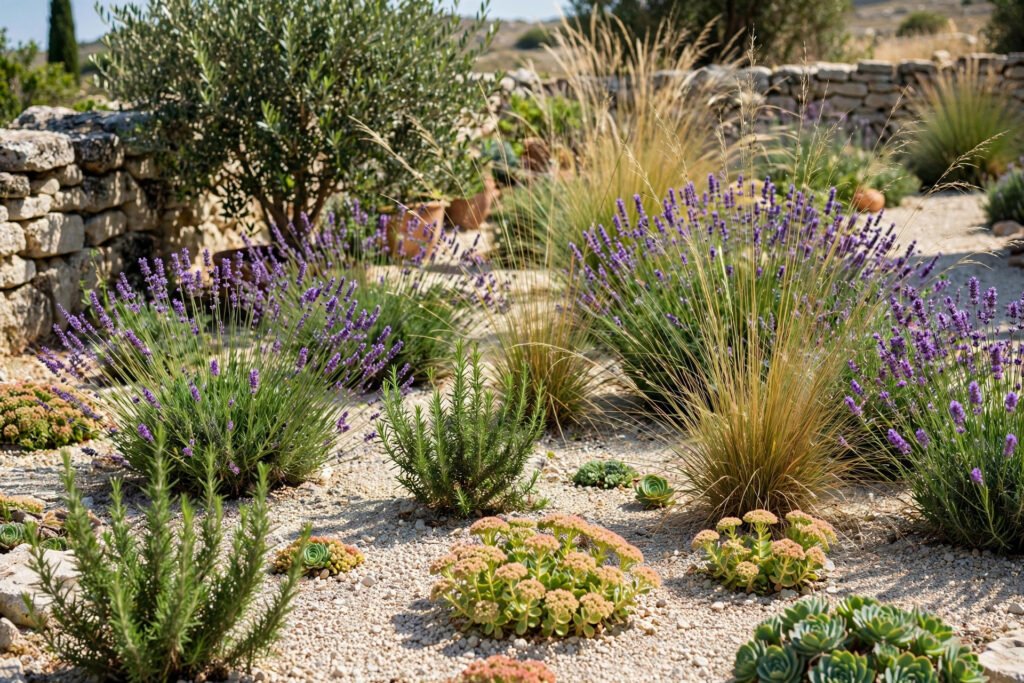
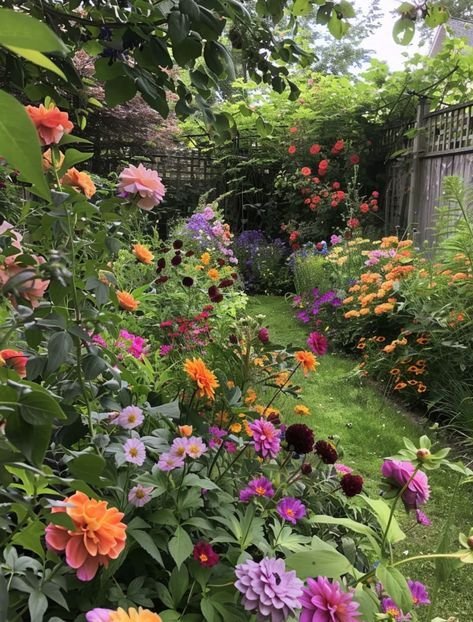
For plants, think structure first, flowers second. Three or four evergreen shrubs (£8–£15 each from supermarkets or B&Q) give year-round backbone; fill around them with cheap and cheerful perennials, divided from friends’ gardens for free (gardeners love giving away divisions — just ask). A £5 bag of wildflower seeds scattered on a sunny patch delivers a summer meadow. And buy at the right time: garden centres discount heavily in late summer, and bare-root plants in winter are half the price of potted.
Layout tricks and the seating area
Every garden needs a destination — a reason to walk to the end. A simple seating area, even just two chairs and a small table on a gravel circle, draws the eye through the space and makes the garden feel bigger. Position it to catch the evening sun if you can. A second-hand bench (£20–£40 on Facebook Marketplace, sanded and painted) under a tree is pure charm. Curves beat straight lines in small gardens: a gently curving bed edge or path makes the space feel larger and more natural than rigid rectangles.
If the lawn is more moss than grass, don’t fight it expensively — scarify, overseed (£15 for a box that covers 100m²), and feed it; or embrace a clover lawn, which stays green, needs less mowing and feeds pollinators. For patios, second-hand slabs from demolition yards or Marketplace cost pennies versus new — a random pattern of reclaimed slabs looks more characterful than cheap new ones anyway. The budget garden rule: buy second-hand hardscape, buy new plants, and never pay full price in May.
Free plants and materials: the budget gardener’s network
The best garden centre is other gardeners. Perennial divisions (hostas, geraniums, asters, daylilies) need splitting every few years, and gardeners give away the surplus gladly — ask on local gardening groups, allotment societies, or just compliment a neighbour’s borders and ask. Freecycle, Freegle and Facebook Marketplace overflow with free plants, pots, slabs and soil from garden clearances — set up alerts and be quick. Seed swaps (local gardening clubs, seed libraries) trade packets for pennies.
Materials go free too: councils give away wood chip from tree works (check your council’s website — many deliver free), demolition yards sell reclaimed slabs and bricks for a fraction of new, and skips outside renovation projects (ask first, always) yield timber, bricks and sometimes plants. Autumn is prime free-plant season: gardeners dividing perennials, neighbours clearing, garden centres dumping unsold stock. The £300 budget garden from the main guide drops to under £100 when half the plants and materials arrive free — the garden network is the ultimate budget tool.
- Perennial divisions from gardeners — just ask
- Freecycle/Freegle/Marketplace: free plants, pots, slabs
- Seed swaps and libraries for pennies
- Council wood chip — often free delivered
- Reclamation yards for cheap slabs, bricks, timber
- Autumn: peak season for free plants and clearances
The £300 garden transformation
Tidy ruthlessly, edge everything, paint the fences dark, add solar lights, plant evergreen structure plus cheap perennials, and create one seating destination. Total: a weekend’s work and £200–£300 for a garden that looks professionally thought-through.
For keeping it that way with minimal effort, best low maintenance garden ideas for busy people is your next read, and best way to clean a patio in spring covers the spring patio clean. For money-saving garden tips, MoneySavingExpert’s household money-saving tips is full of clever ideas.
The budget-garden mindset: money is the least interesting input. Time, observation, and the gardening community’s legendary generosity build better gardens than big spending — because a garden grown from divisions, swaps and finds has stories, and stories are what make gardens beloved rather than merely beautiful.