Walk into some homes and they just smell… good. Not perfumed, not overpowering — just fresh and inviting in a way that makes you want to stay. Then there’s the alternative: the faint whiff of last night’s curry, damp towels, and the bin that should have gone out yesterday. If you want to make your home smell nice without candles — whether it’s a tenancy rule, pets, kids, or just not fancying an open flame — there are better, longer-lasting options anyway. Candles scent the air for an hour; fixing the source scents it for good.
How to make your home smell nice without candles: find the source first
No amount of reed diffusers will beat a smelly source. Before adding nice smells, eliminate the bad ones:
- The kitchen bin. The number one culprit. Empty it every 2–3 days, wash it monthly with hot water and bicarbonate of soda, and sprinkle bicarb in the bottom of the fresh bag — it absorbs odours brilliantly.
- Soft furnishings. Curtains, sofa covers, rugs, and cushions absorb cooking smells and pet odour. Wash what you can; for the rest, a bicarbonate of soda sprinkle left for an hour then vacuumed off works wonders.
- The washing machine. If your laundry smells musty, the machine is the problem — run a monthly 90°C service wash with soda crystals, wipe the door seal (the black gunk is mould), and leave the door ajar between washes.
- Drains. Pour half a cup of bicarb followed by half a cup of white vinegar down smelly plugholes, leave ten minutes, flush with boiling water.
- Shoes and sports kit. Bicarb in shoes overnight; sports kit washed promptly, never left in the bag.
- Pets. Wash bedding weekly, groom regularly, and keep litter trays scrupulously clean. A cleaning routine that actually works prevents pet smells from ever building up.
Simmer pots: the cheapest luxury
The single best candle alternative costs pennies: a saucepan of water on the lowest heat with nice-smelling things in it. Combinations that work:
- Classic cosy: orange slices, cinnamon sticks, cloves, and a splash of vanilla.
- Fresh and clean: lemon slices, rosemary sprigs, and a few drops of vanilla.
- Autumn: apple slices, cinnamon, star anise, and orange peel.
- Spring: cucumber slices, mint, and lemon.
Simmer for 1–2 hours, topping up the water — never let it boil dry. It makes the whole house smell incredible, costs almost nothing (use the ends and peelings you’d bin anyway), and it’s completely safe around kids and pets. This is the trick estate agents use before viewings, and now you know.
Diffusers, sprays, and scent layering
- Reed diffusers (£5–£15) — the workhorse. One per room, flip the reeds weekly, and they’ll scent a space for 2–3 months. Put them where air moves (near doorways, not buried on a shelf). The Which? reviews of home fragrance products can help you avoid the ones that smell of nothing after a week.
- Room sprays — for instant impact before guests arrive. One spray of a decent linen spray on curtains and sofas, and the house smells freshly done. Make your own: water, a splash of vodka (as an emulsifier), and 20 drops of essential oil in a spray bottle.
- Essential oil diffusers — ultrasonic diffusers (£15–£25) fill a room with scented mist. Lovely, but check pet safety — some essential oils (tea tree, eucalyptus, citrus in quantity) are toxic to cats and dogs.
- Scented sachets — dried lavender in drawers, wardrobes, and shoe cupboards. Cheap, lasts months, and clothes smell wonderful.
- The oven trick: after cooking something smelly, put a small ovenproof dish of vanilla extract or coffee grounds in the cooling oven — it absorbs and replaces the cooking smell.
Baking: the nuclear option
Nothing — nothing — makes a home smell better than baking. Bread, cinnamon rolls, banana bread: the smell lingers for hours and creates an atmosphere no product can match. You don’t even need to be good at it — a packet mix works. Time it for an hour before guests arrive and you’ll seem like the kind of person whose house always smells of vanilla. (Nobody needs to know about the packet.)
The everyday habits that keep it fresh
- Ventilate daily. Ten minutes of open windows, even in winter, does more than any product. Stale air is the enemy; fresh air is free.
- Wash bedding weekly. You spend eight hours a night in it — it holds smell more than anything else in the house.
- Cook with the extractor on and a lid on. Prevents cooking smells migrating to every soft furnishing in the house.
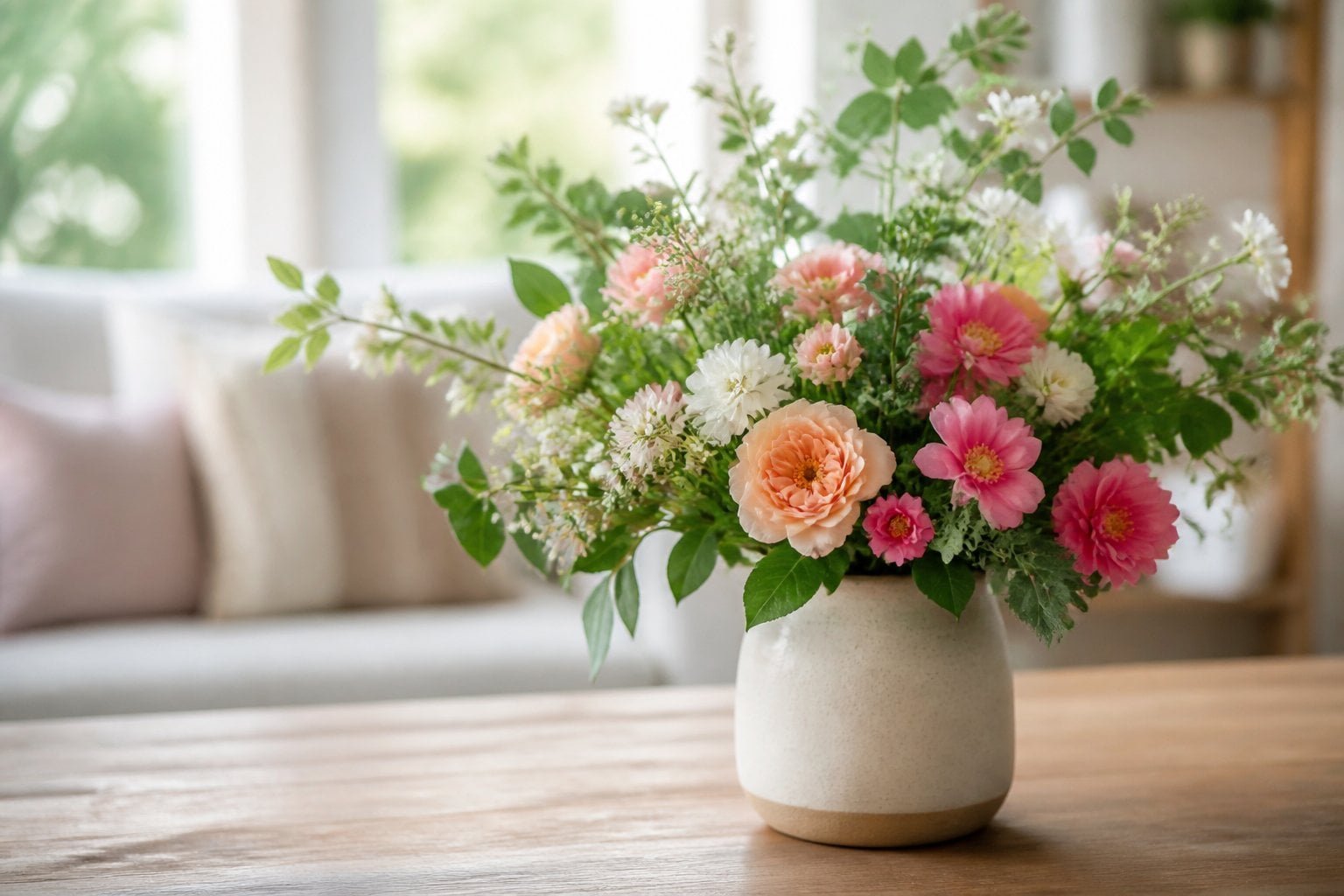
- Fresh flowers or eucalyptus. A £3 bunch from the supermarket scents a room for a week. Eucalyptus in the shower (tied to the showerhead, not in the water) releases scent in the steam and lasts for weeks.
- Pick a signature scent. Use the same fragrance family across diffusers, sprays, and cleaning products. A house with one coherent scent feels intentional and luxurious; five competing fragrances smell like a department store.
Scent is part of what makes a place feel like yours — especially in rented spaces where you can’t change much else. Our guide to making a rented flat feel like home covers the bigger picture, but getting the smell right is the fastest win in it.
Seasonal scent rotation
One advanced move: rotate your home’s scent with the seasons, the way you’d rotate a wardrobe. Fresh citrus and green notes for spring, light florals for summer, warm spice for autumn, pine and cinnamon for winter. It keeps the scent feeling intentional rather than background noise (noses adapt to constant smells), and the seasonal switch becomes a little ritual that marks the year’s turning. You don’t need all four at once — just notice when the current scent stops registering, and switch.
The takeaway
To make your home smell nice without candles: eliminate the sources first (bin, soft furnishings, washing machine, drains), then layer in scent with simmer pots, reed diffusers, and the occasional bit of baking. Ventilate daily, wash bedding weekly, and pick one signature scent. It costs less than a fancy candle habit — and it works better, because you’re fixing the air, not just perfuming it.