
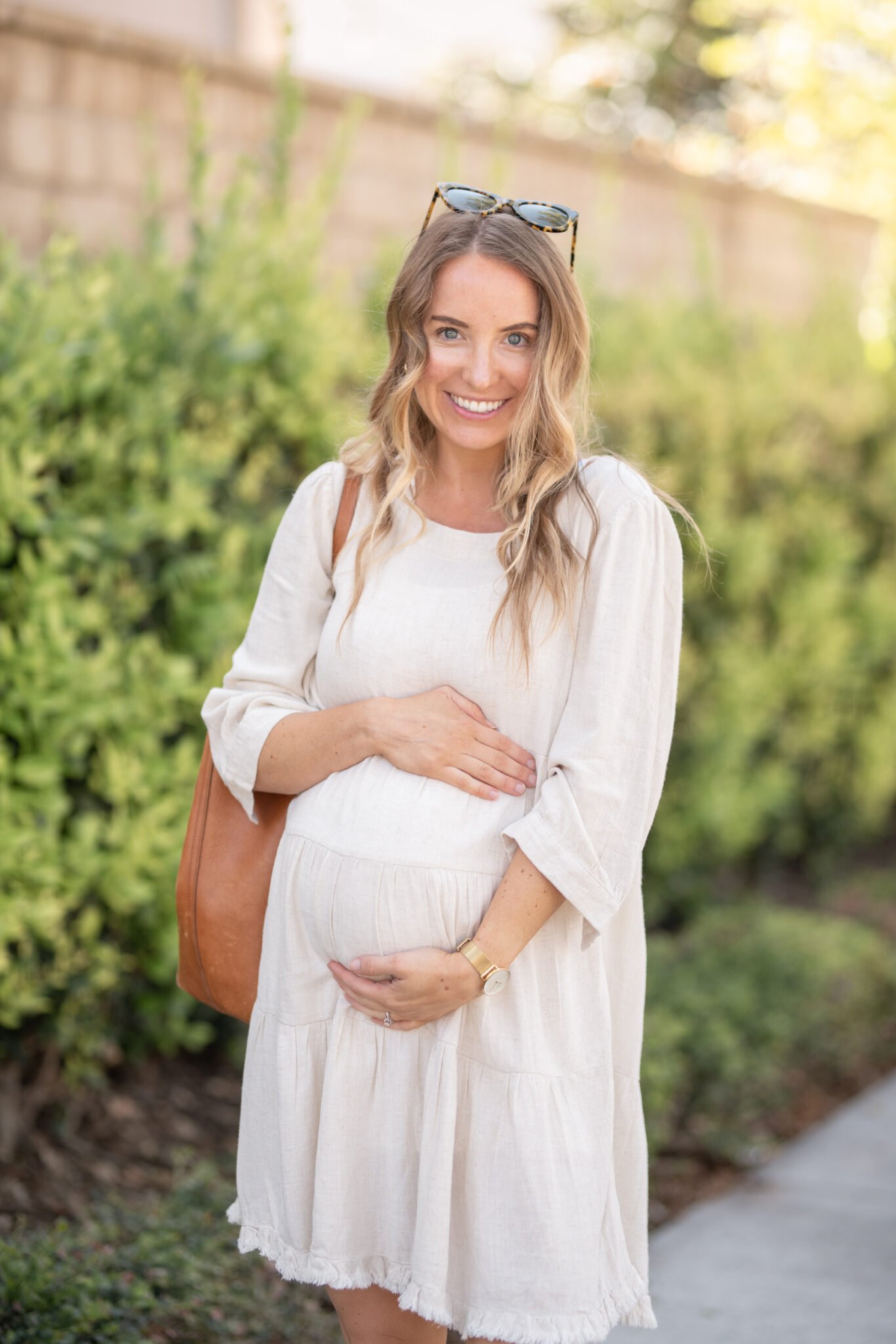
Maternity wear has a reputation problem: too much of it looks like it was designed by someone who’s never been pregnant, all shapeless smocks and novelty prints. But it doesn’t have to be that way. The UK shops selling good maternity clothes that aren’t frumpy prove you can dress your pregnant self with the same style you’d choose any other time — just with better engineering. Here’s where to shop.
What makes maternity clothes “not frumpy”: proper shaping (empire waists, ruching, wrap fronts that define rather than hide), good fabric (quality jersey with recovery, not thin clingy stuff), contemporary design (the same trends as main ranges, adapted), and versatility (nursing-friendly, post-bump wearable). Frumpy isn’t about coverage — it’s about giving up on design.
Which UK shops sell good maternity clothes that are not frumpy
Best overall
- ASOS Maternity — the widest range by far: trend-led dresses, jeans, workwear and occasion pieces (£15–£60), with new drops constantly. The first stop for non-frumpy maternity.
- H&M Mama — affordable, on-trend basics and dresses; the everyday rotation at high-street prices.
- Seraphine — the premium high-street maternity brand (worn by actual royalty): beautiful wrap dresses, tailored coats and occasion wear (£40–£150) that look expensive.
Quality and longevity
- JoJo Maman Bébé — Breton tops, quality knits and dresses (£25–£70) that last beyond pregnancy and wash beautifully. The “buy it once” choice.
- Isabella Oliver — investment maternity: stunning wrap dresses and tailoring (£80–£180) designed to flatter every stage. Cost-per-wear actually works here.
- Bumpsuit / Hatch (via UK stockists) — the premium basics brands: cloud-soft jumpsuits and dresses that feel like luxury loungewear but look polished.
Budget and secondhand
- Vinted / eBay bundles — maternity clothes are worn for months and resold constantly; nearly-new bundles from premium brands at 70–80% off. The smartest maternity shopping there is.
- Supermarket ranges (George, Tu) — surprisingly decent basics at £8–£20; great for the pieces you’ll wear hardest.
- Boohoo / PrettyLittleThing Maternity — very affordable trend pieces; quality varies, best for short-lived trends.
Non-maternity hacks
Some of the best “maternity” clothes aren’t maternity at all: smock dresses, wrap dresses, oversized shirts, stretchy midi skirts and empire-line dresses from main ranges work through most of pregnancy — often more stylishly than dedicated maternity lines. Our professional pregnancy dressing guide leans heavily on these.
Styling principles for non-frumpy maternity
- Define the bump, don’t hide it. Fitted (not tight) shows the shape beautifully; tents hide it and add visual bulk everywhere else.
- Wrap, ruche, empire. The three silhouettes engineered for growing bumps — they adapt week to week.
- Keep your style identity. If you wore bold prints before, wear them now. Pregnancy isn’t a personality transplant.
- Shoes matter most. Comfort becomes non-negotiable — invest here first (see our comfortable shoe guide).
- Accessorise normally. Your jewellery, bags and scarves don’t need a maternity version — they keep outfits feeling like you.
The NCT has supportive, non-judgmental resources on pregnancy wellbeing and body image — worth a read if the wardrobe frustrations are getting to you. And for special occasions, our occasion dress principles (structure, wrap silhouettes) apply directly to maternity event dressing.
What to buy vs borrow vs skip
Maternity-specific clothes are worn for months, not years — so the buy/borrow/skip calculus matters more than in any other category.
Buy (you’ll live in these): 2–3 pairs of maternity trousers or jeans with proper bump support (the over-bump band is worth it — £25–£45 at H&M Mama, ASOS Maternity, New Look), 3–4 stretchy tops or vests (long enough to cover the bump — standard tops ride up), one good maternity dress for occasions, and a maternity coat only if you’re pregnant through winter. These are daily-wear items; fit and comfort justify the spend.
Borrow or buy secondhand: occasion dresses (worn once — resale sites are full of them at 70% off), the maternity coat (if you can borrow), and anything for the “in-between” weeks. Friends who’ve been through it are usually delighted to offload the bag of maternity clothes in their loft — ask.
Skip (don’t bother): “maternity” versions of things you own in stretchy fabrics — normal jersey dresses, oversized shirts, stretchy skirts and leggings work fine without the maternity label. Maternity swimwear at full price for one holiday (a stretchy normal swimsuit a size up usually works). And the vast accessory upsell — special hangers, “bump bands” and the rest are rarely necessary.
The non-frumpy principles
“Not frumpy” isn’t about trends — it’s about three things: fit (clothes that fit the body you have now, not draped tents — the biggest frump factor in maternity wear is wearing things three sizes too big “to grow into”), fabric (jersey and ponte with structure beat thin clingy fabrics that show everything), and intent (an outfit with one deliberate choice — a necklace, a proper shoe, a defined waist above the bump — reads as styled; comfort-only dressing reads as given-up). The empire waist is your friend; the shapeless sack is not. The brands that do this well all understand the same thing: pregnant women want to look like themselves, not like a different person. Buy the version of your normal style, in maternity sizing, and the frump question never arises.
Maternity style: quick answers
When do I need to switch to maternity clothes? When normal clothes stop being comfortable — typically 12–16 weeks. There’s no prize for suffering in too-tight waistbands; the right clothes make working life dramatically easier.
How do I avoid looking frumpy? Fit, fabric, intent: clothes that fit the current body (not tents to “grow into”), structured fabrics over clingy ones, and one deliberate styling choice per outfit. Frump is rarely about the clothes; it’s about the fit.
Is it worth buying expensive maternity wear? For daily workhorses (trousers, the good dress), mid-range is worth it — you’ll wear them 100+ times. For occasion pieces, borrow or buy secondhand. And skip the upsell accessories; most are unnecessary.
What about after the baby? Keep the pieces that still work (wrap dresses, stretch trousers, nursing-friendly tops) and add a few post-pregnancy transition items. The fourth trimester needs its own mini-wardrobe — plan for it, don’t be surprised by it.
Your takeaway: same style, better engineering
The best UK shops for non-frumpy maternity clothes — ASOS Maternity, Seraphine, JoJo Maman Bébé, Isabella Oliver, plus Vinted for secondhand — prove pregnancy style doesn’t mean style sacrifice. Define the bump, keep your identity, buy strategically secondhand, and wear what makes you feel like yourself.


