Jennifer Lawrence Net Worth, Biography, Age, Family and Career
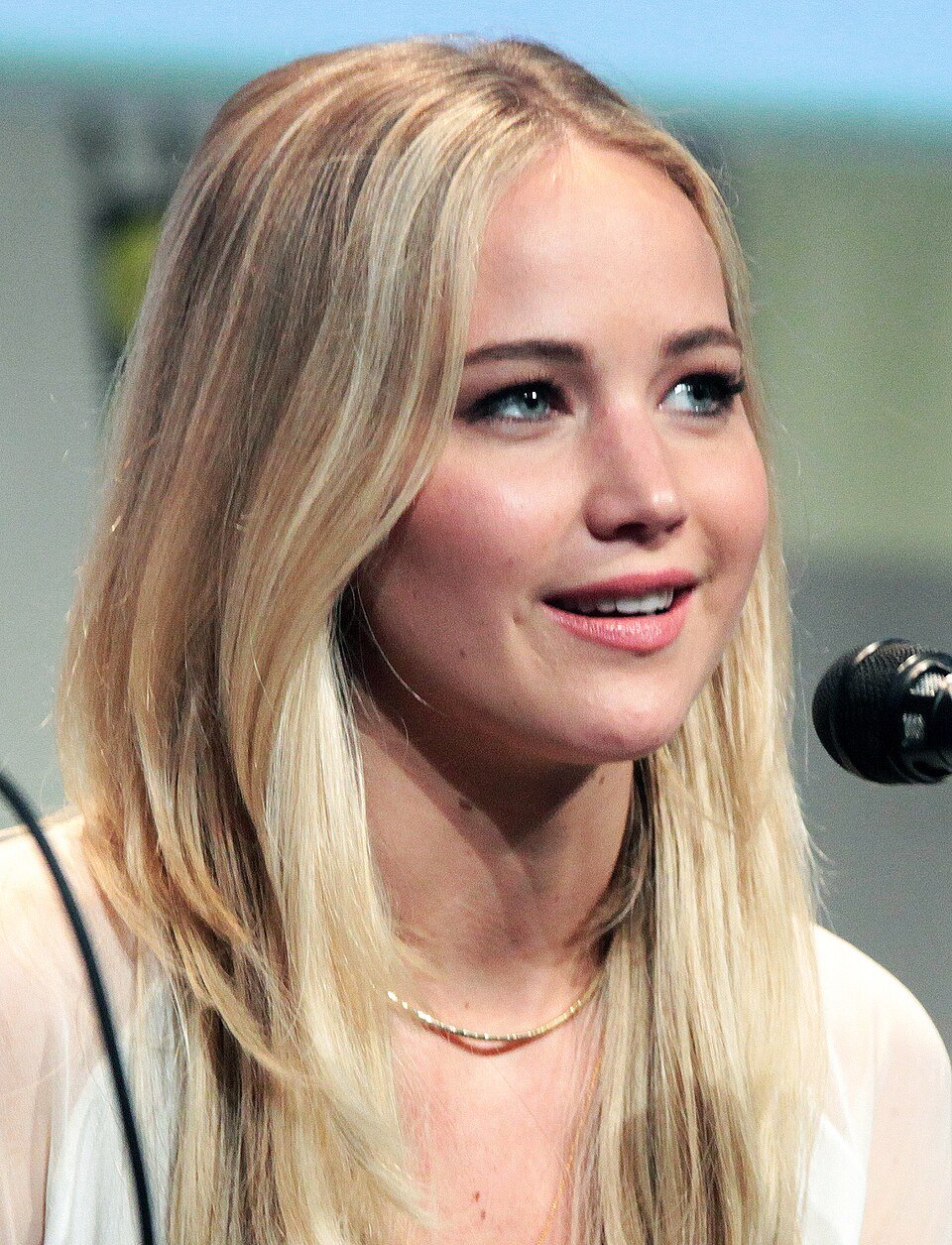
Jennifer Lawrence is an actor and producer who became, in the space of three years in her early twenties, the most commercially powerful performer of her generation: the face of two franchises at once and an Academy Award winner at twenty-two. Celebrity Net Worth puts her net worth at $180 million, raised from its earlier estimate of $160 million, a disagreement between the tracker’s own figures recorded in full below. At 36, she works now at a pace she sets herself, most recently in the psychological drama Die, My Love.
The Facts Behind the Name Jennifer
| The Facts Behind the Name Jennifer | Details |
|---|---|
| Born | 15 August 1990, Louisville, Kentucky |
| Age | 36 years old |
| Height | 5 ft 9 in (1.75 m) |
| Weight | No reliable published figure exists |
| Husband | Cooke Maroney (married 2019) |
| Children | Two sons: Cy and a second son whose name has not been made public |
| Parents | Gary Lawrence and Karen Lawrence, née Koch |
| Net Worth | Estimated $180 million (Celebrity Net Worth); earlier estimate $160 million |
| House | West Village, New York, bought 2020 for a reported $21.9 million; Beverly Hills home sold in 2025 |
| @jlaw (joined September 2026) |
The Louisville Years That Made Jennifer
Jennifer Shrader Lawrence was born on 15 August 1990 in Louisville, Kentucky, and grew up in the Indian Hills area of the city. Her father, Gary Lawrence, owned a construction company; her mother, Karen Lawrence, née Koch, managed a children’s summer camp, Camp Hi-Ho, which she had founded. The upbringing she describes was outdoor and uncosseted: she played on boys’ sports teams at school because no girls’ equivalent offered the same competition, rode horses on the family’s land, and was, by her own repeated account, an anxious and energetic child who found in performing the first activity that organised her attention. She was educated at Kammerer Middle School in Louisville, and left formal schooling early, without a diploma, once acting work made the choice necessary — a gap in her education she has mentioned without embarrassment and without recommending it.
The discovery was abrupt. At fourteen, on a family trip to New York, she was approached by a talent scout who photographed her and arranged meetings with agents; the family, after due caution, allowed her to spend a summer modelling and auditioning, and she began commuting to castings before the Lawrences relocated to Los Angeles so that she could work. She waitressed, assisted at her mother’s camp and took the small parts that came — commercials, guest appearances — while being turned down, she has said, for most of what she wanted. The biography is unusual chiefly for its speed: between the scout’s approach and her first Academy Award nomination there were six years, and no period of formal training at all.
Jennifer Takes Off with The Bill Engvall Show
2006–2011: The Bill Engvall Show and Winter’s Bone
Her first regular work was in the sitcom The Bill Engvall Show (2007–2009), in which she played the family’s teenage daughter for three seasons — an apprenticeship in timing conducted largely unnoticed. The notices came with Winter’s Bone (2010), Debra Granik’s austere drama of the Ozarks, in which, at nineteen, she played Ree Dolly, a girl holding a family together against methamphetamine and debt. The performance won her an Academy Award nomination for Best Actress and made her, at twenty, the second-youngest nominee in that category’s history to that date. The following year she joined the first of her franchises as the shapeshifter Mystique in X-Men: First Class (2011), and took the lead in a small thriller, The House at the End of the Street, filmed before her fame and released after it. The independent and franchise tracks that would define the decade were both, by the end of 2011, in place.
2012–2016: The Hunger Games, the Academy Award and the Forbes Years
In March 2012 she opened as Katniss Everdeen in The Hunger Games, adapted from Suzanne Collins’s novels, for a reported salary of $500,000. The film took nearly $700 million worldwide, and its three sequels — Catching Fire (2013), for which her salary was reported at $10 million, and the two-part Mockingjay (2014–2015) — took the series’ total beyond $2.9 billion. Between franchise instalments she worked with the director David O. Russell to even greater critical effect: in Silver Linings Playbook (2012) she played the young widow Tiffany Maxwell and won the Academy Award for Best Actress in February 2013, at twenty-two the second-youngest winner in the category’s history; in American Hustle (2013) she won the BAFTA and a further Oscar nomination; and in Joy (2015) she earned a fourth nomination, reaching four by the age of twenty-five. Forbes placed her at the top of its list of the world’s highest-paid actresses in both 2015 and 2016, estimating her earnings at $52 million and $46 million in the respective years — earnings figures, recorded here as such, and distinct from the net-worth estimate below. Passengers (2016), for which she was reported to have been paid $20 million, closed the period at its commercial height.
2017–2026: mother!, the Pause, Producing and Die, My Love
The next films were chosen against the grain: Darren Aronofsky’s mother! (2017), a feverish allegory that divided audiences completely, and the spy thriller Red Sparrow (2018). She then paused, by design, stepping away from acting for the better part of two years, and in 2018 founded her own production company, Excellent Cadaver, through which her subsequent work has largely been made. She returned in Adam McKay’s satire Don’t Look Up (2021), alongside Leonardo DiCaprio, and then in two smaller productions of her own company: Causeway (2022), a quiet drama in which she played a soldier recovering from a brain injury, and the comedy No Hard Feelings (2023), her first outright comic lead, which performed strongly. In May 2025 Die, My Love, Lynne Ramsay’s psychological drama in which she plays a mother in mental collapse opposite Robert Pattinson, premiered at Cannes to substantial acclaim, and the performance brought her a Golden Globe nomination at the January 2026 ceremony. Through the same company she has also produced documentary work, including Bread and Roses (2023), an account of women’s lives under renewed Taliban rule made with the director Sahra Mani, which extended her producing beyond her own performances. It is the clearest statement of the career’s second shape: fewer films, most of them hers, made at her own pace.
Cooke by Jennifer’s Side
Her parents’ influence is visible in the arrangements of the fame that followed. Her father’s construction business and her mother’s camp gave her a childhood conducted outdoors and at close quarters with work, and she has kept both parents inside the practical circle of her career — the trust through which her first large property purchase was made was tied to her father, a detail of the public record. The family’s Louisville base remains her reference point in interviews, and the privacy she now maintains for her own children is presented by her as a continuation of the unobserved childhood she was allowed herself.
She met Cooke Maroney, a New York art gallerist, through a mutual friend in the spring of 2018. They became engaged in February 2019 and married on 19 October 2019 at the Belcourt mansion in Newport, Rhode Island. The bank label of husband is therefore carried with its verified position attached: Cooke Maroney is her husband of seven years, and the couple were photographed together at the Golden Globes in January 2026 and on public evenings out in New York through that year. Their first son, Cy, was born in February 2022; Lawrence has explained that he is named for the painter Cy Twombly, one of Maroney’s favourite artists. Their second son was born in early 2025, with the birth confirmed in April of that year; his name has not been made public, and no name is printed here. She has spoken in interviews since about the postpartum depression that followed the second birth, with the same plainness she has applied to most subjects, and about her determination that neither child will grow up in public view.
For most of her career she held a position on social media almost unique among performers of her fame: she had none, publicly, describing herself as a watcher who did not post. In September 2026 she reversed it, opening a verified Instagram account as @jlaw — her preferred form of her full name being already taken, as the account’s biography notes — and gathering millions of followers within days, while announcing that she would leave the platform if the experience turned hostile. The account is recorded in the table in its current form.
What a Career in Film Pays: $180 million
Celebrity Net Worth currently puts her net worth at $180 million, in an estimate carrying a November 2026 snapshot and updated in October 2026. The same tracker put the figure at $160 million in 2023, and the disagreement is printed in full: $160 million as the earlier estimate, $180 million as the present one. Forbes publishes no net-worth total for her; its contributions to the record are the annual earnings estimates of $52 million (2015) and $46 million (2016) noted above, which are income in single years, not wealth, and must not be added to the tracker’s figure. With those cautions entered, the $180 million estimate is the one this profile carries.
The substance behind it is salary history of a kind no performer of her generation matched: a rise from $500,000 for her first franchise film to eight-figure fees within three years, a reported $20 million for Passengers, producing income through Excellent Cadaver, and a long association with the fashion house Dior, for which she has been a face since 2012. The property record is documented in unusual detail. With Maroney she bought a townhouse home in the West Village, New York, in July 2020 for a reported $21.9 million, which remains the couple’s principal base; readers furnishing a first home of their own, at whatever scale, may find a gentler starting point in this site’s guide to starting a vinyl record collection on a budget. Her earlier purchases trace the fame itself: a Beverly Hills home bought in October 2014 for a reported $8.225 million and sold, off market, in September 2025 for a reported $11 million, and an Upper East Side penthouse bought in 2016 for a reported $15.6 million and sold in 2020 for a reported $9.9 million — a substantial loss, recorded here because it is part of the true financial picture and a useful corrective to the assumption that celebrity property only appreciates.
At 36, Lawrence’s position is the product of an extraordinary five years in her twenties, banked and then deliberately slowed: a fortune the trackers put at $180 million, a production company of her own, two franchises behind her, and a working pace that now answers to her family rather than to a release schedule.