Anthony Hopkins Net Worth, Biography, Age, Family and Career
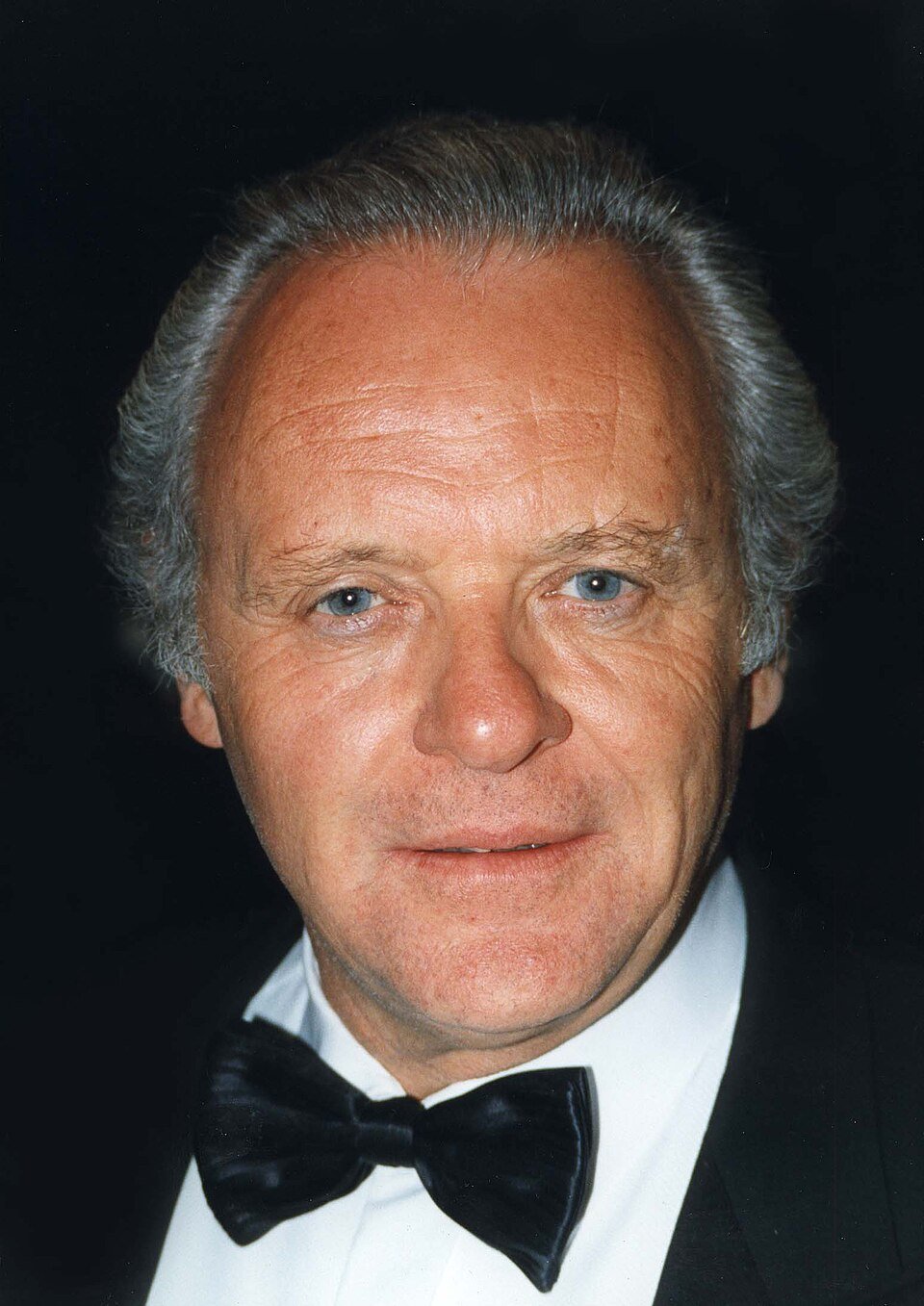
Sir Anthony Hopkins is a Welsh actor whose stage training in the 1960s led, by way of a decade of theatre and a slow accumulation of screen roles, to one of the most decorated acting careers of the past half-century, including two Academy Awards won thirty years apart. Celebrity Net Worth puts his net worth at $120 million on its own current page. He remains active at 88: his memoir, We Did OK, Kid, was published in November 2025, and he continues to work, to compose and to paint.
First Steps in Margam
Philip Anthony Hopkins was born on 31 December 1937 in the Margam district of Port Talbot, Wales, the son of Annie Muriel Hopkins (née Yeates) and Richard Arthur Hopkins, a baker. He was a solitary and, by his own account, an unsuccessful schoolboy: he has described himself as having been written off academically, poor at study and happier drawing, painting and playing the piano than in the classroom. He was educated at Jones’ West Monmouth School in Pontypool and at Cowbridge Grammar School, and left formal education with little to show for it beyond the conviction, formed in adolescence after seeing a performance by his fellow Welshman Richard Burton, that acting might be a route out for someone with his particular combination of intensity and detachment from ordinary school life.
After a period of national service with the Royal Artillery, he trained at the Royal Welsh College of Music and Drama in Cardiff, graduating in 1957, and then at the Royal Academy of Dramatic Art in London. The training was thorough and classical, and it gave him the technique — voice, verse, physical control — on which the whole later career was built, including the celebrated ability to alter his native Welsh accent precisely to whatever a part required. In 1965 he came to the attention of Laurence Olivier, who invited him to join the National Theatre, where Hopkins understudied Olivier and took over from him, to strong notices, in Strindberg’s The Dance of Death when Olivier fell ill.
The early biography explains a good deal about the performer. He arrived at acting not as a celebrated school success but as someone for whom it was the one available discipline, and he has spoken throughout his life about the loneliness of the Port Talbot childhood as the source of both the reserve and the observational sharpness that directors later prized. The painting and the piano, begun in that childhood, were never abandoned for acting; they ran alongside it for sixty years and became, in his eighties, a substantial part of his public life in their own right.
After the Breakthrough: The Lion in Winter and Beyond
1960–1979: The National Theatre and Early Screen Work
His professional stage work began in repertory in the early 1960s, and the National Theatre years that followed Olivier’s invitation established him as one of the leading stage actors of his generation in Britain. His screen breakthrough came as Richard the Lionheart in The Lion in Winter (1968), opposite Peter O’Toole and Katharine Hepburn, for which he received a BAFTA nomination. Through the 1970s he divided his work between the stage and increasingly substantial screen roles: Young Winston (1972), A Bridge Too Far (1977) and Magic (1978), in which he played a ventriloquist losing his grip on reality, a performance that anticipated the psychological territory of his most famous later role. He won a BAFTA for his portrayal of Pierre Bezukhov in the BBC’s War and Peace (1972). It was also the decade in which his drinking, which he has discussed openly for fifty years, reached the point at which he stopped, in December 1975 — a date he marks annually and credits with the survival of both his career and his life.
1980–1990: The Elephant Man, the BBC and a Return to the Stage
In The Elephant Man (1980), directed by David Lynch, he played the surgeon Frederick Treves with a restraint that set the performance against the sensationalism its subject invited. Television work of the period included an Emmy Award for playing Bruno Hauptmann in The Lindbergh Kidnapping Case (1976) and a second Emmy for The Bunker (1981), in which he played Adolf Hitler in the final days of the war — a casting that relied on the same capacity to make a monster legible without making him sympathetic. In 1987 he co-founded a production company and returned to the London stage in Pravda and King Lear, and played the title role in M. Butterfly in 1989. By the end of the decade he had, by his own account, grown frustrated with the British stage establishment and was considering retirement from acting altogether, a state of mind that makes the timing of what happened next the more remarkable.
1991–1999: Hannibal Lecter and the Merchant Ivory Films
In The Silence of the Lambs (1991) he played Dr Hannibal Lecter, a psychiatrist and murderer imprisoned in a maximum-security institution, in a performance that occupies roughly twenty-five minutes of screen time and won him the Academy Award for Best Actor. It remains one of the most studied screen performances of its period: still, courteous, precise, and frightening principally through economy. He returned to the character in Hannibal (2001) and Red Dragon (2002). The same decade contained the work many critics regard as his finest: Howards End (1992), The Remains of the Day (1993), in which his butler, Stevens, suppressing a lifetime of feeling in the name of duty, brought him a BAFTA Award and an Academy Award nomination, Shadowlands (1993), playing C. S. Lewis, Legends of the Fall (1994), Nixon (1995), Amistad (1997) and The Mask of Zorro (1998). Few actors have sustained, within a single decade, both a defining popular role and a sequence of performances of that literary weight; the combination is the core of his reputation. The stamina required by that schedule — stage discipline applied to screen work across two continents — is the kind of long professional formation examined in reference material on how much it costs to go to the Masters, where the visible event rests, as his did, on years of preparation that the audience never sees itemised.
2000–2016: American Citizenship, Thor and Westworld
He became a citizen of the United States on 12 April 2000, retaining his British citizenship, and was based principally in California thereafter. Screen work of the period ranged widely in scale and quality, as he has cheerfully acknowledged, from The Human Stain (2003) and Fracture (2007) to the role of Odin in Thor (2011) and its sequels in 2013 and 2017, which introduced him to the largest popular audience since Lecter. In 2016 he took a leading role in the television series Westworld, playing the park’s founder, Robert Ford, in a performance that brought him an Emmy nomination and demonstrated, as the Lecter role had a quarter-century earlier, how much he could do with stillness in a medium that rewards movement. He was knighted in 1993, having been appointed a CBE in 1987.
2017–2026: The Two Popes, The Father and the Memoir
The Two Popes (2019), in which he played Pope Benedict XVI opposite Jonathan Pryce, brought him a further Academy Award nomination. Then, in The Father (2020), he played an elderly man descending into dementia, in a performance constructed from inside the character’s confusion, and won his second Academy Award for Best Actor in April 2021 — at 83, the oldest winner of that award, thirty years after the first. He did not attend the ceremony, which took place during the pandemic, and recorded his acceptance from Wales. Later work has included The Son (2022), Freud’s Last Session (2023), in which he played Sigmund Freud, and Locked (2025). His memoir, We Did OK, Kid, was published in November 2025, covering the Port Talbot childhood, the drinking and recovery, and the marriages, with a frankness consistent with the way he has discussed those subjects in interviews for decades. His credited screen work now runs to well over a hundred productions, in addition to the stage career, the compositions he has published and recorded with orchestras, and a body of painting that has been exhibited and sold.
The through-line of the record is longevity under discipline. He stopped drinking in 1975 and has treated that decision, ever since, as the hinge of the life; the work after it — which is to say, almost all of the work for which he is known — was done sober, on the foundation of a classical training completed before he was twenty. Critics who have tried to summarise the method usually arrive at the same words: preparation, economy and an absence of visible effort, applied equally to a butler, a pope, a god and a murderer.
Anthony by the Numbers
| Anthony by the Numbers | Details |
|---|---|
| Born | 31 December 1937, Margam, Port Talbot, Wales |
| Age | 88 years old |
| Height | 5 ft 9 in (1.75 m) |
| Weight | No reliable published figure exists |
| Wife | Stella Arroyave, married 1 March 2003 |
| Children | One: Abigail Hopkins |
| Nationality | Welsh; British citizen by birth and a citizen of the United States since 12 April 2000 (dual citizenship) |
| Net Worth | Estimated $120 million (Celebrity Net Worth) |
| @anthonyhopkins |
The Stella Chapter
His parents are Richard Arthur Hopkins, a baker in Port Talbot, who died in 1981, and Annie Muriel Hopkins (née Yeates). His father’s death, from heart disease, came as Hopkins’s own drinking was in its aftermath and his career in transition, and he has written about the relationship — a working man sceptical of the theatre, proud of the son in a register the son only fully understood later — in the memoir. The family’s circumstances were modest, and the baker’s shop in Port Talbot is the fixed point to which his accounts of himself consistently return.
He has been married three times. His first marriage, from 1966 to 1972, was to the actor Petronella Barker. His second, from 1973 to 2002, was to Jennifer Lynton, who had worked as a production assistant. On 1 March 2003 he married Stella Arroyave, a Colombian-born former antiques dealer whom he had met in Los Angeles, and they remain married in 2026, a marriage of more than twenty-three years. The bank label of wife is therefore verified, with Stella Arroyave as his current wife. Arroyave has also worked as a producer and director, and the couple’s public appearances in recent years, including around the publication of the memoir, present the marriage as the settled centre of his life in California.
He has one child: a daughter, Abigail Hopkins, born on 20 August 1968, from his first marriage to Petronella Barker. Abigail is an actor and singer-songwriter. The relationship between father and daughter was distant for long periods, a fact both have acknowledged publicly; they reconciled in the 2010s after a separation of some two decades, and he has spoken about that estrangement, and his share of responsibility for it, with unusual directness. There are no other children.
His nationality, which is in his keyword set, should be recorded exactly. He is Welsh, born in Port Talbot to Welsh parents, and a British citizen by birth. On 12 April 2000 he became a naturalised citizen of the United States, retaining his British citizenship, and has said of the position: “I have dual citizenship; it just so happens I live in America.” He was knighted by Queen Elizabeth II in 1993 for services to drama, an honour he was able to retain as an American citizen, and he remains, in his own presentation and in the work he chooses, a Welsh actor who lives in California rather than an actor who has exchanged one identity for another.
He is active on Instagram as @anthonyhopkins, where, to the surprise of an industry that did not expect it of an actor of his generation, he built a following in his eighties with short, playful videos — dancing, playing the piano, marking the anniversary of his sobriety each December, and addressing followers directly. The account is run in his own unmistakable voice and has become a genuine part of his public life.
Anthony’s Fortune: The Celebrity Net Worth Figure
Celebrity Net Worth puts the figure at $120 million on its own page, last updated in January 2025 and still reading $120 million when checked in November 2026. The disagreement in circulation is the mirror image of the one found elsewhere in this batch: a large number of secondary round-ups put him at $160 million, and some go higher, but those figures do not appear on the tracker’s own current page, and the $120 million that the named source itself publishes is the figure carried here. Forbes and the Sunday Times Rich List publish no individual figure for him. Reported salaries for individual roles across the 1990s and 2000s, and the gross takings of the franchises he has appeared in, are earnings and production figures respectively; neither is a measure of accumulated wealth, and neither is treated as one here.
In line with the scope of this profile, his property is not detailed here. What can be said is that an estimate of $120 million is broadly consistent with the shape of the career described above: a leading actor’s fees sustained over five decades at the top of the profession, including a decade, the 1990s, in which he was among the most sought-after performers in the world, set against a working life that included long periods of stage work at stage rates and a well-documented indifference, in his own accounts, to the business side of the profession. No verified inventory of his present holdings, and no reliable breakdown of the estimate, has been published, and individual reported transactions across sixty years should not be added together as though they amounted to one.
Hopkins’s position at 88 completes the arc that the Port Talbot childhood began. The schoolboy who was written off became, in his fifties, the defining screen actor of a decade, and in his eighties the oldest winner of his profession’s highest acting honour, a published memoirist, a composer and a painter with an audience of his own. The nationality recorded in his summary — Welsh by birth, British and American by citizenship — describes the geography of that life exactly: formed in Wales, trained in London, and completed, over the last quarter-century, in California.