Russell Crowe Net Worth, Biography, Age, Family and Career
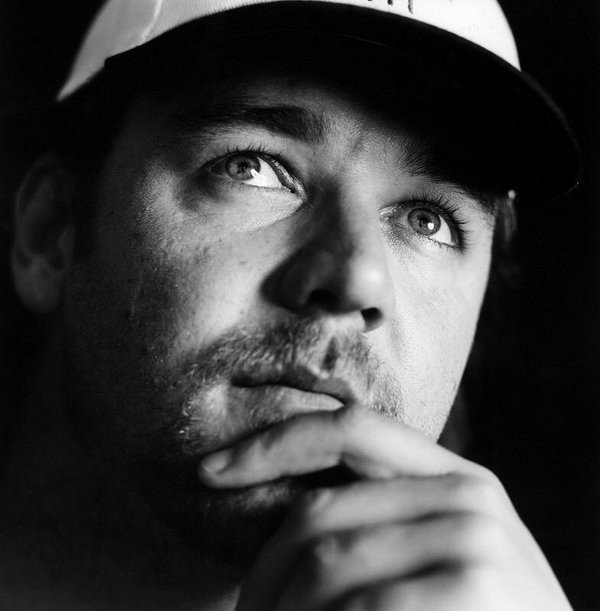
Russell Crowe is an actor and producer who built his reputation in Australian cinema at the start of the 1990s and then, within a single decade, won an Academy Award and headlined a run of large international productions. Celebrity Net Worth puts his net worth at $120 million. He remains active in 2026, with a leading role in the historical drama Nuremberg behind him and further productions under way, and with a long-standing second career as a sports club owner in Australia.
Life and Family With Wellington Roots
His parents are Jocelyn Yvonne Crowe and John Alexander Crowe, whose catering work on productions gave him his first sight of film sets as a workplace rather than a spectacle. His father died on 30 March 2021, a loss Crowe announced publicly at the time. The family’s pattern — New Zealand birth, Australian upbringing, returns in both directions — explains the dual attachment that runs through his life: he is a New Zealand citizen, born in Wellington, who has lived most of his life in Australia and whose public loyalties, in sport and in residence, are largely Australian. Secondary listings that describe his nationality simply as Australian, or as dual, compress that history; the accurate summary is the one given in the table.
He married the singer and actress Danielle Spencer on 7 April 2003, his thirty-ninth birthday, at his property at Nana Glen in New South Wales. The couple separated in October 2012, and their divorce was finalised in April 2018. Spencer said in an interview in April 2026 that the two had remained on amicable terms as parents. Since 2020 he has been in a relationship with Britney Theriot, a former actress who works in real estate, whom he had first met during the production of Broken City in 2013. Reports during 2025 described the couple as engaged. Crowe addressed those reports directly in a television interview in November 2025 and denied them, stating that he and Theriot were not engaged, that he did not intend to marry again, and that the relationship was, in his words, joyous and happy as it stood. No reliable later report has contradicted that denial, and this profile therefore records Theriot as his partner, not his fiancée or wife. The couple appeared together at Wimbledon in July 2025 and at the Taormina festival in June 2026.
His two sons with Spencer are Charles Spencer Crowe, born in December 2003, and Tennyson Spencer Crowe, born in July 2006, both now adults. He has spoken of arranging his working life around time in Australia with them as they grew up. On Instagram he posts as @russellcrowe, sharing production news, photographs from his farm and material connected with the South Sydney Rabbitohs, the rugby league club discussed later in this profile.
Romper Stomper and the Rise to Fame
1992–1996: Romper Stomper and the Move to Hollywood
His performance as a violent skinhead leader in Romper Stomper (1992) won the Australian Film Institute Award for Best Actor and brought him international attention of a kind that Australian productions rarely generated at the time. The Sum of Us (1994) showed a gentler register, and in 1995 he made his first Hollywood films, The Quick and the Dead, opposite Sharon Stone and Gene Hackman, and Virtuosity, opposite Denzel Washington. Neither was a large success, but the work established him in Los Angeles, and the part that confirmed his standing there arrived two years later.
1997–2002: L.A. Confidential, The Insider, Gladiator and A Beautiful Mind
In L.A. Confidential (1997) he played the violent, sentimental police officer Bud White as part of an ensemble that critics ranked among the finest of the decade. He then received Academy Award nominations in three consecutive years: as the tobacco whistleblower Jeffrey Wigand in The Insider (1999), for which he gained considerable weight for the role; as the Roman general Maximus in Gladiator (2000), for which he won the Academy Award for Best Actor; and as the mathematician John Nash in A Beautiful Mind (2001), which won the Academy Award for Best Picture. Few actors have compressed three performances of that standing into three years, and the run fixed his public image — forceful, unsentimental, drawn to men under pressure — for the remainder of his career. Mystery, Alaska (1999) and Proof of Life (2000) were also released in this period.
2003–2012: Master and Commander, Robin Hood and Les Misérables
He played Captain Jack Aubrey in Master and Commander: The Far Side of the World (2003), a performance admired by critics although the film’s cost limited its commercial return, and a boxer in the Depression in Cinderella Man (2005). A Good Year (2006), a lighter picture filmed in France, began a run of collaborations with the director Ridley Scott that continued with American Gangster (2007), opposite Washington again, Body of Lies (2008) and Robin Hood (2010), in which he played the title role. The western 3:10 to Yuma (2007) belonged to the same busy period. State of Play (2009) and The Next Three Days (2010) were contemporary thrillers, and in 2012 he played Inspector Javert in the film version of Les Misérables, performing live vocals for the part — a casting that drew mixed notices at the time and has been reassessed more kindly since.
2013–2019: Man of Steel, Noah and Character Work
In the following period he moved between large productions and smaller ones. He played Jor-El in Man of Steel (2013), the title role in Noah (2014), directed by Darren Aronofsky, and a private investigator in the comedy The Nice Guys (2016), opposite Ryan Gosling, a performance that reminded reviewers of a comic timing his dramatic reputation had obscured. The Mummy (2017), intended to launch a series, performed below expectations. His directorial debut, The Water Diviner (2014), in which he also starred, was a substantial success in Australia. He played the father of the central character in Boy Erased (2018) and the television executive Roger Ailes in the television miniseries The Loudest Voice (2019), for which he won a Golden Globe Award. His film and television credits across the decade show the pattern clearly: fewer leading roles in very large pictures, more varied supporting work, and regular returns to Australia.
2020–2026: Unhinged, Nuremberg and Bear Country
Unhinged (2020), in which he played an unstable man pursuing a stranger after a traffic confrontation, was among the first new releases in cinemas as they reopened during the pandemic period and performed respectably. The Pope’s Exorcist (2023) became an unexpected commercial success on a modest budget, and he also appeared in Land of Bad (2024) and directed and starred in Poker Face (2022). In Nuremberg (2025) he played Hermann Göring, held for trial after the Second World War, in a performance that critics singled out as his strongest in years. In June 2026 he appeared at the Taormina Film Festival in Sicily, where Bear Country was presented and he received an international achievement award; reporting from the festival noted that he had lost a substantial amount of weight over the preceding year, although no reliable current figure has been published and none is given in this profile. Historical production work, including The Last Druid, was in progress during 2026. His credited film and television work now spans more than four decades and well over fifty screen productions.
The Actor From Wellington in Brief
| The Actor From Wellington in Brief | Details |
|---|---|
| Born | 7 April 1964, Wellington, New Zealand |
| Age | 62 years old |
| Height | 5 ft 11½ in (1.82 m) |
| Weight | No reliable published figure exists |
| Partner | Britney Theriot (in a relationship since 2020; not engaged or married) |
| Children | Two sons: Charles Spencer Crowe (born 2003) and Tennyson Spencer Crowe (born 2006) |
| Net Worth | Estimated $120 million (Celebrity Net Worth) |
| Nationality | New Zealand (born in Wellington; raised and long based in Australia) |
| @russellcrowe |
Money, Homes and the $120 million Estimate
Celebrity Net Worth estimates his net worth at $120 million. Forbes publishes no competing current net-worth total for him. The same tracker reports that during the peak fifteen years of his career, from around 2000 to 2015, he earned well over $150 million in base film salaries alone, before profit participations. Since 2006 he has also been a co-owner of the South Sydney Rabbitohs, the National Rugby League club he bought into with the businessman Peter Holmes à Court; the club’s value, and the value of his stake in it, are matters of periodic reporting rather than published accounts, and neither figure is treated here as a statement of his personal wealth.
His best-known house is not a house in the ordinary sense but the large rural property at Nana Glen, near Coffs Harbour in New South Wales, where he married in 2003 and where he spends much of his time when in Australia; the property was extensively rebuilt after bushfire damage in 2019, work in which the practical order of jobs on an older rural building — weatherproofing and insulating a home cheaply and effectively before finishes — is a familiar consideration. In Sydney he bought a large apartment on the Finger Wharf at Woolloomooloo in 2003 in a purchase reported at the time at more than $14 million, and in 2019 he was reported to have bought a house at Rose Bay, in Sydney’s eastern suburbs, for a sum reported at $25 million, for the use of his family. No verified current inventory of his property, and no reliable total value for it, has been published.
At 62, Crowe’s career has settled into a pattern he appears to control: character leads in international productions, directing and producing work in Australia, and the public role that comes with part-owning a football club — a position built, unusually, on three performances at the turn of the century that have never left the centre of his reputation.
First Steps in Wellington
Russell Ira Crowe was born on 7 April 1964 in Wellington, New Zealand. His parents, Jocelyn Yvonne Crowe and John Alexander Crowe, both worked as caterers to film and television productions, and his maternal grandfather, Stan Wemyss, had been a cinematographer. The family moved to Sydney, Australia, when he was four, and he spent much of his childhood in Australia before the family returned to New Zealand when he was fourteen. He attended Mount Roskill Grammar School in Auckland and left education at sixteen, working in a series of jobs while performing and seeking acting work.
He returned to Australia at twenty-one to pursue acting in earnest. Early television work in Australia included a guest appearance in the serial Neighbours in 1987 and a part in the series Police Rescue. His first film roles came at the turn of the decade, in Blood Oath (1990), released in some markets as Prisoners of the Sun, and The Crossing (1990), in which he starred opposite Danielle Spencer, whom he later married. His performance in Proof (1991), as a blind man’s friend and carer, won an Australian Film Institute award and marked him out, well before Hollywood took notice, as an actor of unusual intensity.