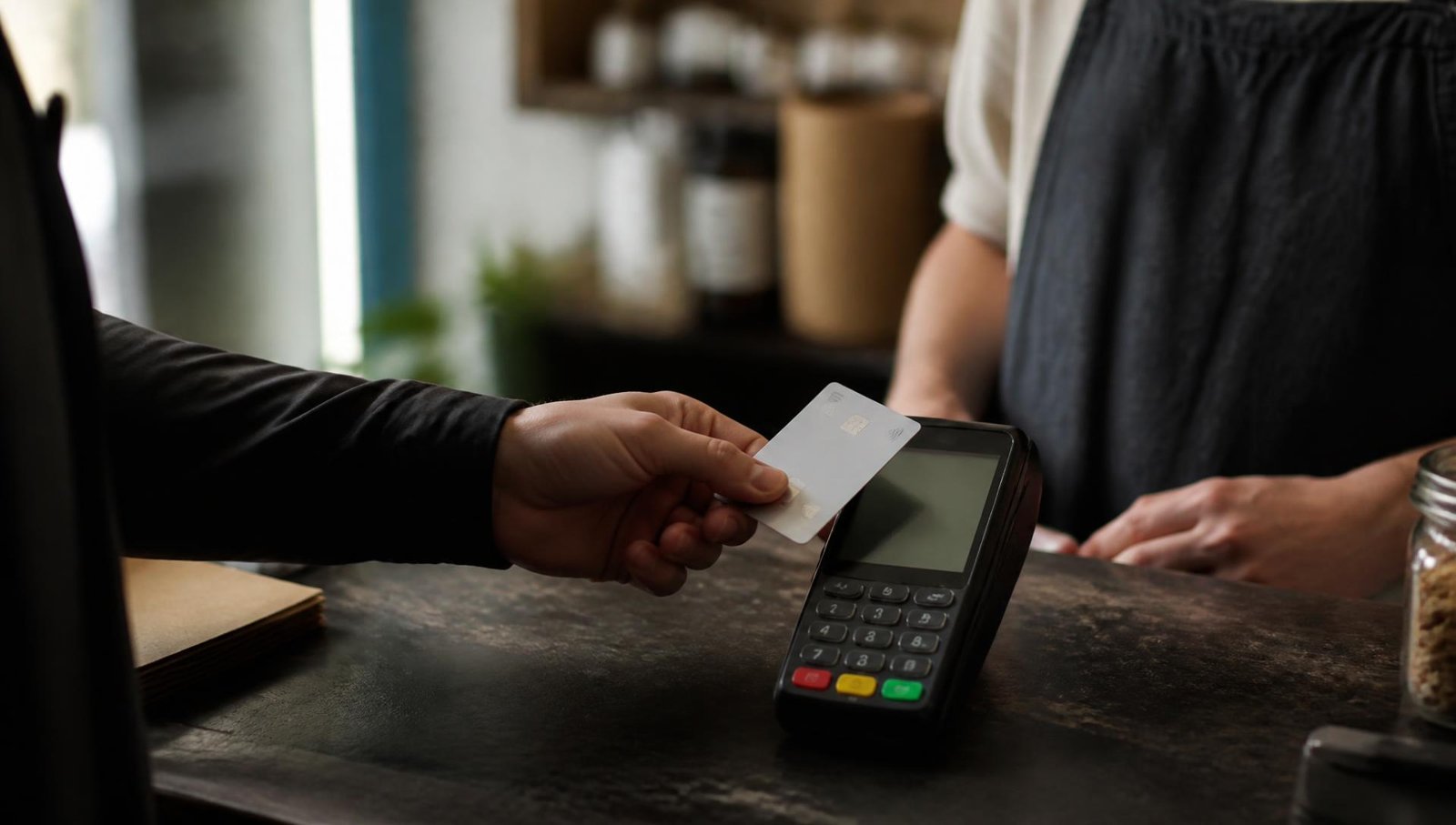
The till is the nerve centre of a retail shop — every sale, every refund, every stock movement flows through it. Get it right and it quietly runs the business: taking payments, tracking stock, feeding your accounts. Get it wrong and you’re fighting it daily while paying for the privilege. The best POS system for a small UK retail shop in 2026 isn’t the one with the most features — it’s the one with the right features at a fair price, that your staff can learn in an afternoon. Here’s the honest comparison.
Best POS system small UK retail: what actually matters
Strip away the sales pitches; a small shop needs:
- Card payments at fair rates: 1.5–1.75% per transaction is the competitive range in 2026. Anything above 1.9% needs justifying.
- Stock management: track inventory, get low-stock alerts, handle variants (sizes, colours). This is what separates a POS from a card reader.
- Speed at the till: barcode scanning, quick-sale buttons, offline mode (when the internet drops mid-Saturday-rush, the POS must keep working).
- Staff management: individual logins, permission levels, time tracking — basic, but essential.
- Accounting integration: clean feeds into Xero/QuickBooks (see our accounting software guide) — manual data entry is where errors breed.
- Honest pricing: watch for hardware lock-in, long contracts, and “free” systems with inflated transaction rates.
The contenders
Square — the best all-rounder (free software, 1.65% per transaction)
Square’s POS software is free — you pay only the 1.65% transaction fee (in-person) — and it’s genuinely excellent: intuitive enough for Saturday staff to learn in an hour, solid stock management, offline mode, free online store included, and no monthly fee or contract. The card reader is £19, the full terminal £149. For most small shops, this is the default answer: £0 fixed cost means it scales perfectly from quiet Tuesdays to Christmas madness. The ecosystem (appointments, loyalty, marketing) grows with you.
SumUp — the simplest (£0/month, 1.69% per transaction)
SumUp’s pitch is radical simplicity: a £39 card reader, 1.69% per transaction, no monthly fee, no contract. The POS app covers the basics well — perfect for market stalls, pop-ups, and very small shops (see our market stall card payments guide). Where it falls short of Square: stock management is more basic, and the ecosystem is thinner. Choose SumUp when simplicity and low commitment matter most; choose Square when you need the fuller toolkit.
Zettle by PayPal — the PayPal ecosystem play (1.75% per transaction)
Zettle (formerly iZettle) offers a polished POS with good stock features and the PayPal integration (handy if you also sell online via PayPal). The 1.75% rate is slightly above Square/SumUp, and the hardware range is good. Worth considering if you’re already embedded in PayPal’s world; otherwise Square’s lower rate and free software edge it.
Lightspeed — the grown-up system (£69+/month)
When you outgrow the free options: Lightspeed offers serious retail management — advanced stock (multi-location, purchase orders, supplier management), detailed analytics, and e-commerce integration. The monthly fee only makes sense above ~£15k/month turnover, but for established shops with complex stock, it’s the professional choice. Don’t start here; graduate here.
The till-company dinosaurs
Traditional EPOS companies still sell £2,000+ systems with 3-year contracts and 2.5% transaction rates to unsuspecting new shopkeepers. In 2026, there’s almost no reason to buy one — the modern options do more for less. If a salesperson is pushing hardware-heavy contracts, they’re selling their commission, not your interests.
The hidden costs to watch
- Transaction rate vs monthly fee: do the maths for your turnover. At £10k/month card sales: Square costs £165; a “£29/month + 1.4%” deal costs £169 — nearly identical. At £30k/month: Square £495 vs the alternative £449 — the monthly-fee model wins at volume. Know your numbers.
- Hardware lock-in: some systems only work with their proprietary terminals (£300+). Square and SumUp work with affordable generic hardware.
- Payout times: most settle next working day; some hold funds for new accounts. Check — cashflow matters (our cashflow guide).
- Contract terms: never sign a multi-year POS contract in 2026. Month-to-month is the standard; anything longer needs a serious discount to justify.
Getting paid properly (the invoicing side)
POS handles the shop floor; for B2B sales, wholesale, and services, you need proper invoicing discipline too — our invoicing guide covers getting paid on time, which is the other half of the money-in equation.
UK Finance publishes data on payment trends and card acceptance — useful context on where retail payments are heading (spoiler: ever more contactless and mobile).
The e-commerce connection
Most small shops now sell online too — or should — and the POS choice affects how painful that is. Square includes a free online store that syncs stock with the physical till automatically (sell the last blue jumper online and the shop till knows). Lightspeed offers deeper e-commerce integration for established operations. SumUp and Zettle have simpler online add-ons.
The key principle: one stock pool, not two. Separate online and in-store stock systems inevitably desync — overselling online what walked out of the shop is the classic failure. Whatever POS you choose, ensure the online channel shares the same live inventory. And if you’re building the online side properly, our delivery options for small online shops guide covers the fulfilment half of the equation.
The staff training nobody budgets for
Nobody budgets for staff training, and it’s where most till-system rollouts stumble. A POS is only as good as the Saturday temp who knows how to process a refund without calling you. Schedule proper training time — an hour per person, paid — before go-live, and write a one-page cheat sheet for the common tasks: sales, refunds, discounts, end-of-day.
Set up staff permissions from day one: cashiers shouldn’t be able to void sales or apply big discounts without a manager code. Every decent system supports role-based access; the shops that get stung are the ones that left everyone as an admin.
And keep one login for yourself with full access, plus a written record of who’s been trained on what. When something goes wrong at 4pm on a Saturday, you’ll be glad you did.
The practical takeaway
For most small UK retail shops: Square — free software, 1.65% transactions, no contract, proper stock management, offline mode. SumUp if you want maximum simplicity. Zettle if you’re in PayPal’s ecosystem. Graduate to Lightspeed when complexity demands it. Do the rate-vs-fee maths on your actual turnover, never sign multi-year contracts, and make sure it feeds your accounting software automatically. The till should disappear into the background of a well-run shop — if you’re thinking about it daily, it’s the wrong one.