To plan a multicultural wedding, start by having an honest conversation with your partner about which traditions matter most to each of you, then build the day around those non-negotiables — blending ceremonies, food and customs rather than forcing one culture to dominate. Give yourselves extra time: 12–18 months is realistic when two families, two sets of expectations and sometimes two ceremonies are involved.
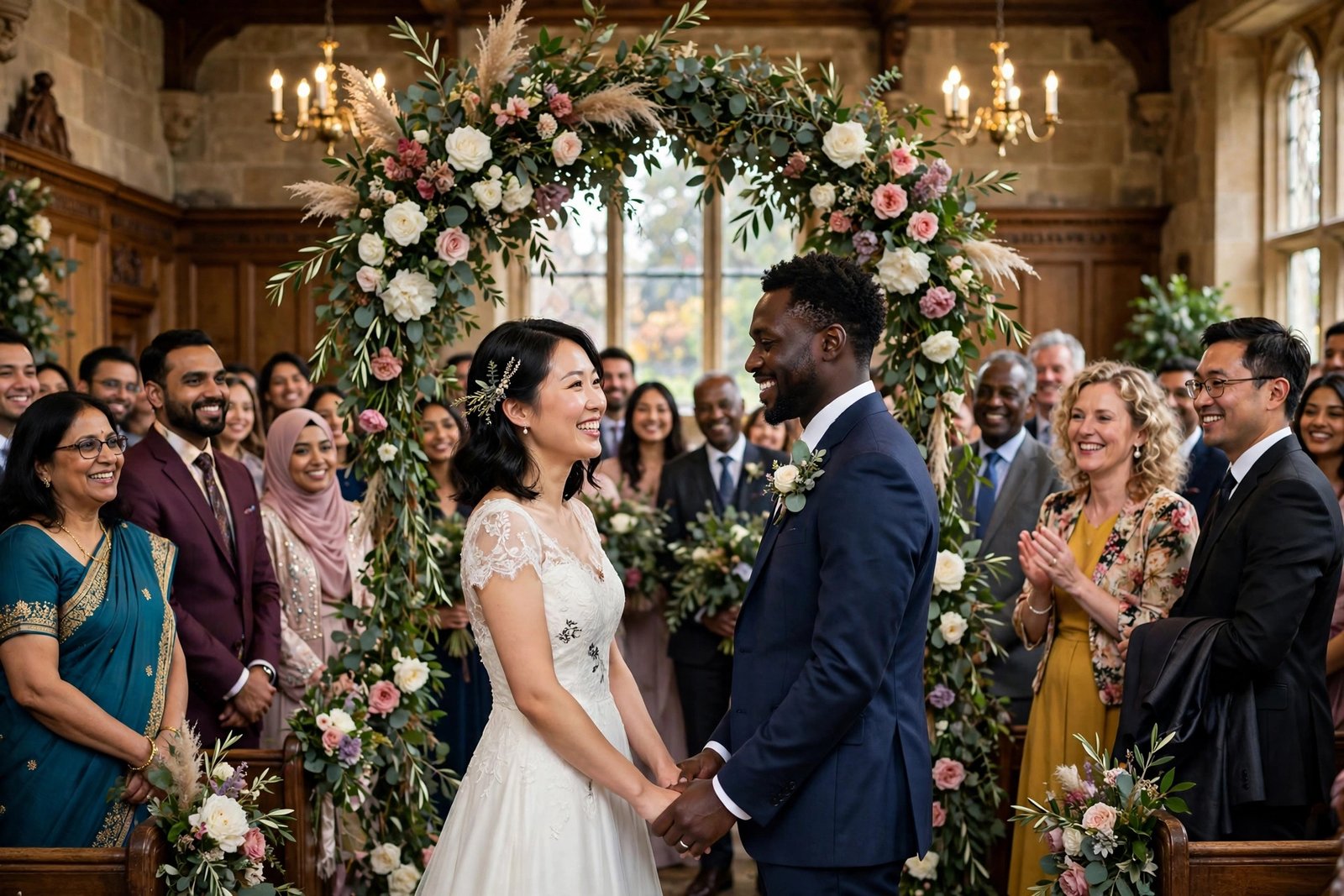
A multicultural wedding is one of the most joyful kinds of celebration — and one of the most logistically ambitious. You’re not just planning a party; you’re translating between families, honouring elders, and sometimes satisfying legal requirements in more than one tradition. Done well, it’s unforgettable. Here’s how to get there without losing your mind.
Start with the two of you, then the families
Before venues, before guest lists, sit down together and answer three questions:
- Which traditions are genuinely meaningful to us — not just expected?
- Are we having one blended ceremony or two separate ones?
- What are we willing to compromise on, and what is sacred?
Couples typically choose one of three formats: a single blended ceremony weaving elements from both cultures (a handfasting alongside a garland exchange, say); two ceremonies on the same day or weekend (common for Hindu-Christian or Muslim-Christian couples); or a legal ceremony plus cultural celebration — increasingly popular in the UK, where the legal marriage is kept short and simple and the cultural festivities take centre stage.
Only once you’re united should you bring in the families. Present decisions as a couple (“we’ve decided…”) rather than asking for permission on each detail — it prevents the wedding becoming a tug-of-war between two sets of parents.
Get the legalities right
This is the unglamorous bit that matters enormously. In England and Wales, a marriage is only legally recognised if it takes place in a registered venue (or place of worship) with an authorised officiant, and you must give notice at your local register office at least 28 days before the ceremony. Religious ceremonies alone — a nikah, for example — do not automatically create a legal marriage under English law, which has left some couples unexpectedly without legal protections.
Scotland and Northern Ireland have their own rules (Scotland is notably more flexible about where you can marry). Check the official guidance on gov.uk early in your planning — sorting the legal marriage separately from the cultural celebration removes a huge source of stress later. If either partner’s family is based abroad, also check whether your UK marriage will be recognised in their country, and vice versa.
Blending ceremonies without chaos
The ceremony is where cultures meet most visibly, so it deserves the most thought:
- Hire an experienced celebrant or coordinator. Someone who has run multicultural weddings before will know how to sequence rituals so the day flows rather than lurches.
- Explain as you go. A printed programme or a celebrant who briefly explains each ritual (“the couple will now exchange garlands, symbolising…”) turns confusion into delight for guests from the other side.
- Watch the clock. Two full traditional ceremonies back-to-back can exhaust everyone. Consider abbreviating, running them on separate days, or choosing the most meaningful elements of each.
- Music and language matter. Bilingual vows, readings in both languages, or a playlist that moves between cultures all signal that both families truly belong.
When it comes to booking the space itself, our guide to booking a wedding venue covers the questions to ask — and for multicultural weddings, add: can we have an open flame or outdoor fire ritual? Is there space for a separate prayer or preparation room? Are there noise restrictions affecting drummers or a dhol?
Food: the delicious diplomatic mission
Food is where multicultural weddings shine — and where caterers earn their fee. A few approaches that work:
- Dual menus or fusion stations: a South Asian starter station alongside a British carvery, for instance.
- Respect dietary law strictly: if one side keeps halal, kosher or vegetarian, make it genuinely compliant — not an afterthought. Label everything clearly at a buffet.
- Tastings for both families: invite key elders to the tasting. It heads off complaints and makes them feel honoured.
Brief your caterer early — fusion catering needs more planning than standard wedding fare. See our advice on picking a wedding caterer for vetting questions, and add “have you catered a multicultural wedding before?” to the top of the list.
Dress, décor and the details
Many couples wear two (or more) outfits: traditional dress for the cultural ceremony, Western formalwear for the reception — or a fusion look that honours both. There’s no rule; the only mistake is one partner feeling their heritage was sidelined.
For décor, pick a unifying colour palette and let each culture’s aesthetics play within it — mandap-style draping in your wedding colours, or table settings that mix both traditions. And don’t forget the invitations: bilingual or dual-language invites, with clear explanations of dress codes and ceremony timings, save guests a lot of anxiety. Our guide to addressing wedding invitations covers the etiquette basics.
Budget realities
Multicultural weddings often cost more — two ceremonies, extra outfits, specialist caterers and larger guest lists (both extended families!) add up. The average UK wedding already runs to around £20,000; multicultural celebrations frequently exceed that. Be upfront with both families about who’s contributing what, and put it in writing. Money misunderstandings across cultures are especially corrosive because expectations about who pays differ so much.
FAQs
Q: How do we handle parents who disapprove of the blending?
A: Listen to their concerns without surrendering your decisions. Often resistance softens when elders feel genuinely included — give them a meaningful role (a reading, a ritual, a speech) rather than just a seat.
Q: Can we legally marry in a religious ceremony in the UK?
A: Sometimes — Church of England, Church in Wales and registered places of worship can conduct legal marriages. But many religious-only ceremonies (such as a nikah without a civil registration) are not legally recognised, so check gov.uk and arrange a civil ceremony if needed.
Q: How long should we allow for planning?
A: 12–18 months is realistic. You’re coordinating more suppliers, possibly more outfits, and family input from two cultures — everything takes longer. Popular multicultural wedding specialists book up fast.
Q: What’s the best way to explain our traditions to guests?
A: A ceremony programme, a celebrant who narrates the rituals, and signage at the reception. Guests love learning — they just don’t like feeling lost.