To clean an infant’s ears, gently wipe around the outside of each ear with a soft, damp cotton-wool pad or flannel — and never put anything inside the ear canal. No cotton buds, no fingers, no ear candles. A baby’s ears are largely self-cleaning, and wax usually works its own way out.
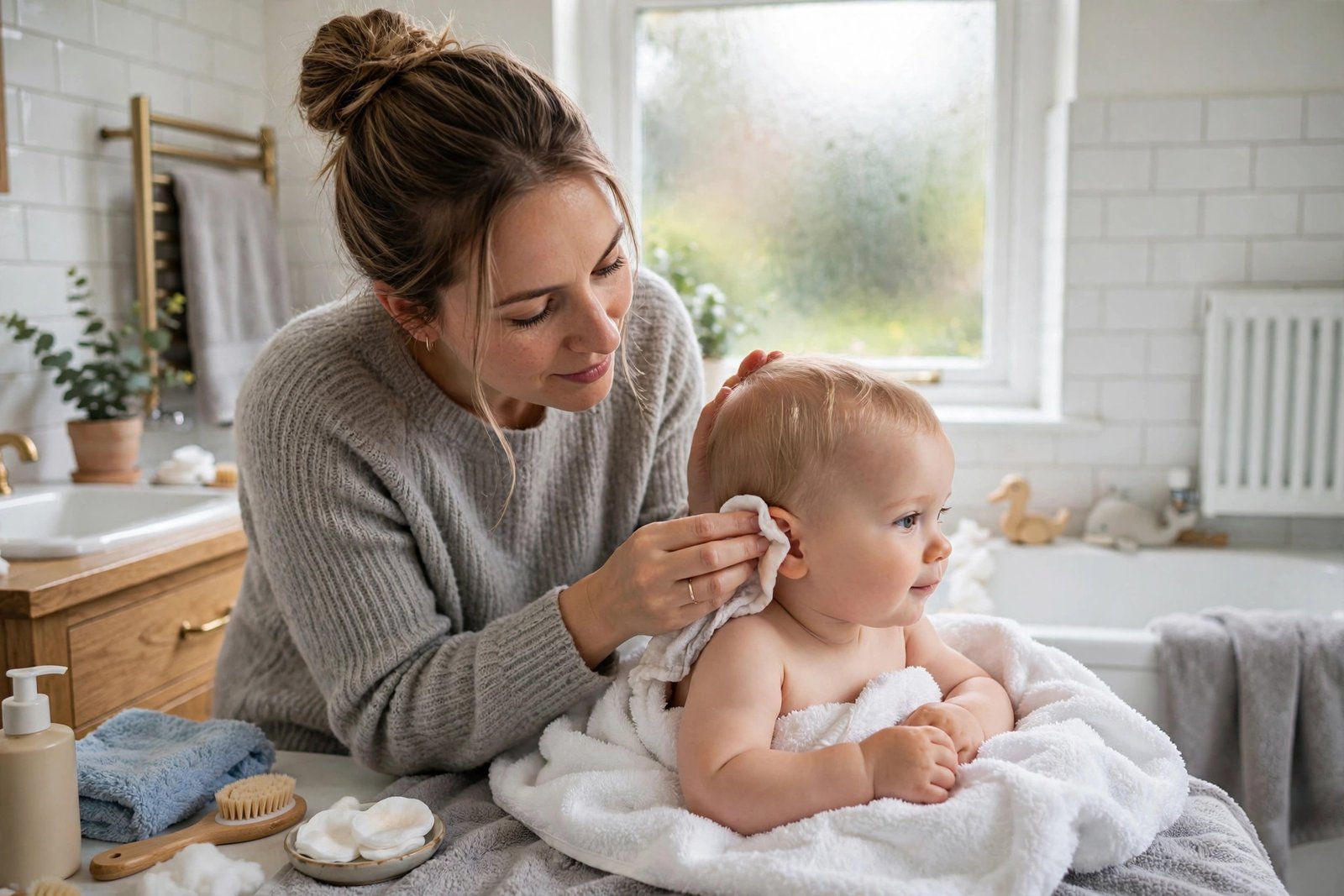
It’s one of those jobs that feels like it should need doing properly, with proper tools. In reality, the safest approach is the simplest: the outer ear gets a wipe during bathtime, and the inside is left strictly alone. Here’s why that restraint matters, how to handle the visible bits, and when to get a professional involved.
Why you should never clean inside the canal
Earwax (cerumen) isn’t dirt — it’s a protective substance that traps dust, repels water and guards against infection. In babies, as in adults, the skin of the ear canal acts like a slow conveyor belt, gradually moving wax and debris outward where it dries and falls away on its own.
Pushing anything into the canal disrupts this system. Cotton buds are the classic culprit: rather than removing wax, they tend to compact it against the eardrum, which can cause temporary hearing difficulty, irritation or even a perforated eardrum — a risk that’s greater in infants because their ear canals are so small and delicate. The NHS advice is blunt: never use cotton buds to clean inside your baby’s ears. The old saying goes that you shouldn’t put anything smaller than your elbow in your ear, and it applies double to babies.
The safe method: outer ear only
Make ear cleaning part of the regular bathtime or “top and tail” routine:
- Dip a cotton-wool pad in warm (not hot) water and squeeze out the excess — it should be damp, not dripping.
- Gently wipe around the outside of the ear: the folds, the crease behind the ear (where milk and sweat collect and can get sore), and the visible entrance.
- Use a fresh pad for the other ear.
- Pat dry gently with a soft towel, paying attention to the crease behind the ear to prevent soreness.
That’s it. No twisting motions, no going deeper than you can see, no special drops or oils unless a clinician has advised them. A soft flannel works just as well as cotton wool. This same gentle approach features in NHS guidance on washing and bathing your baby, which recommends cleaning around — but never inside — the ears.
What about visible wax at the entrance?
If you can see a flake of wax sitting right at the opening of the ear, you can wipe it away with the damp pad. If it’s deeper than that, leave it — it will migrate out on its own in time. Resist the urge to dig, however tempting.
True wax blockages are uncommon in babies. If your little one seems to have reduced hearing, is tugging at an ear, has discharge, a foul smell, or seems in pain, don’t attempt home removal — see your GP or health visitor. They can look inside properly with an otoscope and arrange treatment if needed. In older children, clinicians sometimes recommend a few drops of olive oil to soften stubborn wax, but don’t start this in an infant without professional advice.
Keeping ears healthy day to day
A few habits help more than any cleaning regime:
- Dry ears gently after baths. Tip your baby’s head to each side briefly and pat the outer ear dry — trapped moisture behind the ear causes most of the soreness parents notice.
- Clean the neck folds too. Milk dribbles down and collects under the chin and behind the ears; these damp creases are where irritation starts.
- Watch, don’t probe. Get to know what your baby’s ears normally look like so you’ll spot redness, swelling or discharge early.
- Protect from smoke. Secondhand smoke increases the risk of ear infections in babies and children — another reason to keep the home smokefree.
For more newborn care basics, our guides to controlling hiccups in newborns and how many newborn nappies you’ll need cover the other small mysteries of the early weeks.
What not to do
Well-meaning advice from relatives doesn’t always match the clinical guidance, so here’s a quick list of things to avoid:
- Don’t use cotton buds inside the ear. They’re the single most common cause of wax impaction and scratched ear canals.
- Don’t try ear candles. They’re ineffective and can burn the skin or drip wax into the ear.
- Don’t syringe or flush the ears at home. Ear irrigation should only be carried out by a trained clinician.
- Don’t pick at wax with tweezers, hair grips or fingernails. Anything rigid near a baby’s eardrum is a bad idea.
- Don’t ignore persistent symptoms. If something seems off for more than a day or two, call your GP rather than waiting it out.
When in doubt, the rule is simple: if it goes inside the ear and a clinician hasn’t prescribed it, don’t use it.
FAQs
Q: Can I use baby oil or olive oil in my infant’s ears?
A: Not routinely, and not without asking your GP or health visitor first. Oil drops are sometimes recommended for older children with wax build-up, but an infant’s ears should simply be left alone unless a clinician advises otherwise.
Q: My baby has a lot of visible earwax — is that normal?
A: Usually, yes. Some babies produce more wax than others, and it’s doing a protective job. Only seek advice if it’s accompanied by hearing concerns, pain, discharge or a bad smell.
Q: Are cotton buds ever safe for babies?
A: Not inside the ear — never. You can use one dampened to clean the outer folds if you prefer, but a cotton-wool pad or flannel does the same job with less risk of slipping.
Q: When should I see a doctor about my baby’s ears?
A: See your GP if you notice discharge, bleeding, swelling, a foul odour, persistent crying when the ear is touched, or signs your baby isn’t hearing normally. Don’t try to treat it at home first.