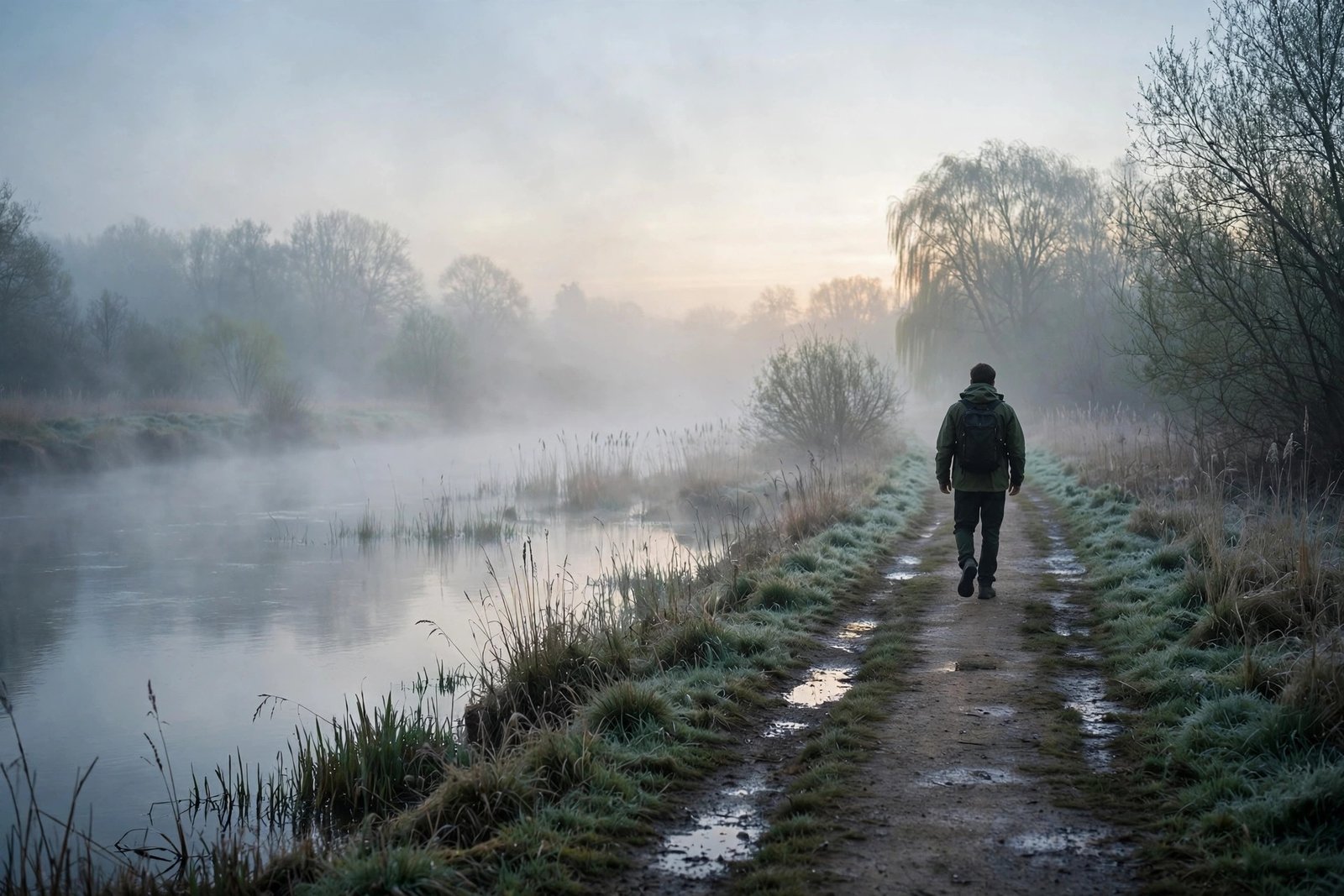
Bounce-back strength grows from ordinary relationships and rest, not expensive purchases alone.
Resilience is often sold as though it were a product, a personality or a secret held by unusually tough people. A steadier reading treats it as a process: the ordinary, learnable business of adapting when life applies pressure, and recovering a workable shape afterwards. That process runs on unglamorous fuel. Supportive relationships, decent rest, regular movement, daylight and flexible thinking do most of the heavy lifting, while the marketplace circles around foundations it did not build and cannot replace.
Free Community Connection Versus Paid Programmes Alone
Connection comes first because human beings steady each other. A trusted friend who listens without rushing to fix, a neighbour who notices absence, a residents group, a faith community, a sports club or a voluntary organisation all provide the same core gift: evidence that a person is not facing difficulty alone and unnoticed. Derry is well supplied with such fabric, from community centres and charities to informal circles built around schools, music and sport. Joining costs little beyond turning up repeatedly, and repetition is precisely what turns acquaintances into people who can be rung at a bad hour.
Paid programmes have their place, and a well run course can teach useful skills, offer structure and bring people together around a shared difficulty. The weakness appears when a programme is asked to substitute for connection rather than support it. A booked course ends, an app subscription lapses, and the attendee returns to the same isolated routine that made difficulty heavier in the first place. Surveying staking Ethereum as a beginner saver may suit an evening of financial curiosity, yet no solo screen habit, however absorbing, delivers what a room full of familiar faces delivers when a week goes badly wrong.
The comparison therefore favours community as the base layer and programmes as occasional additions. A programme that leads into ongoing connection, such as a local group that keeps meeting after formal sessions finish, earns its keep twice over. Before spending on any structured scheme, ask what free connection already exists within reach and what small step would strengthen it: returning to a group, accepting an invitation, or offering help before needing it.
Rest and Movement Versus Gadgets and Supplements
The body carries the mind through every crisis, and tired bodies cope badly. Regular sleep, ordinary movement and time outdoors in daylight form a base that quietly decides how much pressure a day can hold. A walk beside the river or through a local park, taken at whatever pace the day allows, combines movement, light and a change of scene in one unpatented package. None of this is dramatic, and that is the point. Foundations work through repetition, not spectacle, and they ask for consistency far more than they ask for equipment, clothing or memberships.
Against that base stands a crowded shelf of gadgets and supplements promising sharper recovery, deeper rest and calmer nerves. Some devices amuse, some track interesting patterns, and harmless enjoyment needs no apology. The trouble begins when tracking replaces resting, when scores on a screen become another source of pressure, or when supplements are swallowed in place of supper, sleep and fresh air. A measured walk and an earlier night will usually do more for next day coping than a drawer of powders, and they carry the further advantage of being understandable: the person using them can feel exactly how they work.
Honesty about limits belongs in this comparison too. Persistent exhaustion, low mood that will not lift, pain or snoring that wrecks the night are not failures of gadget ownership, and they are not character flaws either. They are reasons to seek proper assessment and support. Gadgets measure and supplements promise, but neither listens, examines or advises. Treat warning signs as a prompt to involve people qualified to help rather than a prompt to shop harder.
Books and Journalling Versus Costly Weekend Retreats
Written reflection is the cheapest serious tool in the whole field. A notebook and a pen allow the day to be examined at walking pace: what happened, what it felt like, what reading of events the mind chose first, and what other readings might also fit the facts. That last move, deliberately rehearsing alternative explanations for a setback, sits near the heart of flexible thinking. A rejection may signal worthlessness, or it may signal a mismatch, a crowded field or simple bad timing. Practising the wider set of readings weakens the tyranny of the harshest one.
Books extend the same work through borrowed minds. Library shelves in Derry hold memoirs of people who endured difficulty, practical volumes on thinking and habit, and fiction that rehearses other lives from inside. Reading slowly turns a borrowed book into a long conversation with someone who has been somewhere similar. Writers defining psychological resilience and adapting after adversity return repeatedly to this theme of ordinary resources: meaning made gradually, support gathered locally and skills practised in small doses across ordinary weeks.
Retreats promise the opposite shape: distance, intensity and transformation compressed into a weekend. A retreat can offer rest, beauty and a genuine pause, and those are real goods. Its weakness is re entry. The attendee returns to the same inbox, bills and family tensions, carrying insights gathered in unusual quiet that must now survive ordinary noise. A notebook habit travels in the opposite direction, building its strength exactly where life happens. If funds ever stretch to a retreat, let it crown an existing practice rather than substitute for one, and judge it afterwards by what survived the journey home.
Self Guided Practice Versus Professional Talking Support
Self guided work covers a wide and honourable territory. Journalling, reading, structured exercises, community courses and honest conversation with friends can carry a person a long way through ordinary difficulty. Its strengths are availability, privacy and pace: the work fits around shifts, caring duties and energy levels, and it can begin tonight with materials already in the house. Its weakness is blindness. From inside a painful pattern, the pattern can look like reality itself, and self guided effort may circle the same ground while calling the circling progress, growing more discouraged with each honest lap completed.
Professional talking support answers that weakness directly. A trained listener brings an outside view, a structured method and a room where the whole subject can be spoken aloud without protecting the listener. Approaches such as how cognitive behavioural therapy works in plain language focus on the links between thoughts, feelings and actions, and on testing harsh interpretations against evidence gathered in daily life. That kind of work suits difficulties that overwhelm self help: persistent anxiety or low mood, grief that stalls, trauma responses, or patterns that keep damaging work and relationships despite sincere effort to change them alone.
Choosing between the two is less a contest than a sequence. Begin with free and low effort routes, including a conversation with a doctor, workplace support schemes where they exist, and local charities that offer listening and counselling services. Those routes can also judge whether professional help is needed and what kind fits best, which protects both hope and household funds. Waiting until crisis before asking wastes the gentler options, while rushing to pay privately before checking free routes wastes money that foundations could have used better. Support is a ladder, and the skill lies in climbing to the rung the difficulty actually requires.
Local Green Spaces Versus Indoor Wellness Products
Derry offers resilience a landscape. Riverside paths, parks, bridges and green corners give residents somewhere to walk off a hard hour, meet a friend without spending, or sit quietly while weather and water do their slow work. Green space supports several foundations at once: movement for the body, daylight for sleep, distance from screens, and casual contact with neighbours that keeps community fabric warm. Its rhythm is seasonal rather than commercial, changing with light and weather, and regular walkers often find that the changing scene gives returning worries a slightly different background each time they are carried around the same familiar loop.
Indoor wellness products compete for the same territory from the other side of the window: lamps, scents, sound machines, weighted textiles and subscription soundscapes, each promising a calmer room. A pleasant room is a genuine good, and anyone who finds a particular product comforting need not surrender it. The comparison turns on dependence. A product works only while it is owned, charged, refilled or renewed, whereas a walking route, once learned, belongs to the walker in all weathers and at every income level. Products also tend to multiply, each purchase suggesting the next, while a path simply waits to be used again.
Winter tests both sides fairly. Dark evenings and Atlantic weather can make indoor comforts feel essential and outdoor routines feel heroic. The balanced answer keeps both in proportion: use the lamp or the music if they genuinely help the evening settle, but keep the outdoor habit alive in shortened, weatherproofed form rather than abandoning it until spring. Foundations survive by bending with the season, and a resident who walks in rain gear owns a form of wealth that no catalogue ships.
Our Recommendation: Build Foundations Before Spending Anything
The recommendation follows from every comparison above: build the free foundations first, in a deliberate order, and let any later spending serve them rather than replace them. Begin with connection, by renewing one regular point of human contact each week. Add rest and movement next, through a steady sleep routine and a daily walk fitted to real life. Then take up written reflection, using a notebook to rehearse kinder and wider readings of setbacks. Those three layers cost nothing but attention, and together they cover the ground where resilience is actually grown, season after season, in ordinary streets.
Spending, when it comes, should pass a simple test: does this purchase strengthen a foundation already working? A book that deepens reflection passes. A course that leads into lasting community passes. Professional support, when difficulty outweighs self guided effort, passes with honour and should be reached through free assessment routes first where possible. Gadgets, supplements and dramatic weekends usually fail the test, not because they are wicked, but because they decorate a structure they cannot hold up. Money spent after foundations exist buys refinement. Money spent instead of foundations mostly buys the feeling of having acted.
Expect the growth to be gradual and mostly invisible while it happens. Resilience rarely announces itself during calm weeks. It reveals itself afterwards, in the setback that hurt without hollowing, the bad month that bent plans without breaking them. Keep the foundations boring, local and repeated, ask for help at the right rung, and let Derry’s own paths, people and shelves carry their share of the load. Bounce back strength, in the end, is less a purchase than a neighbourhood: built slowly, maintained together and there when the weather turns.