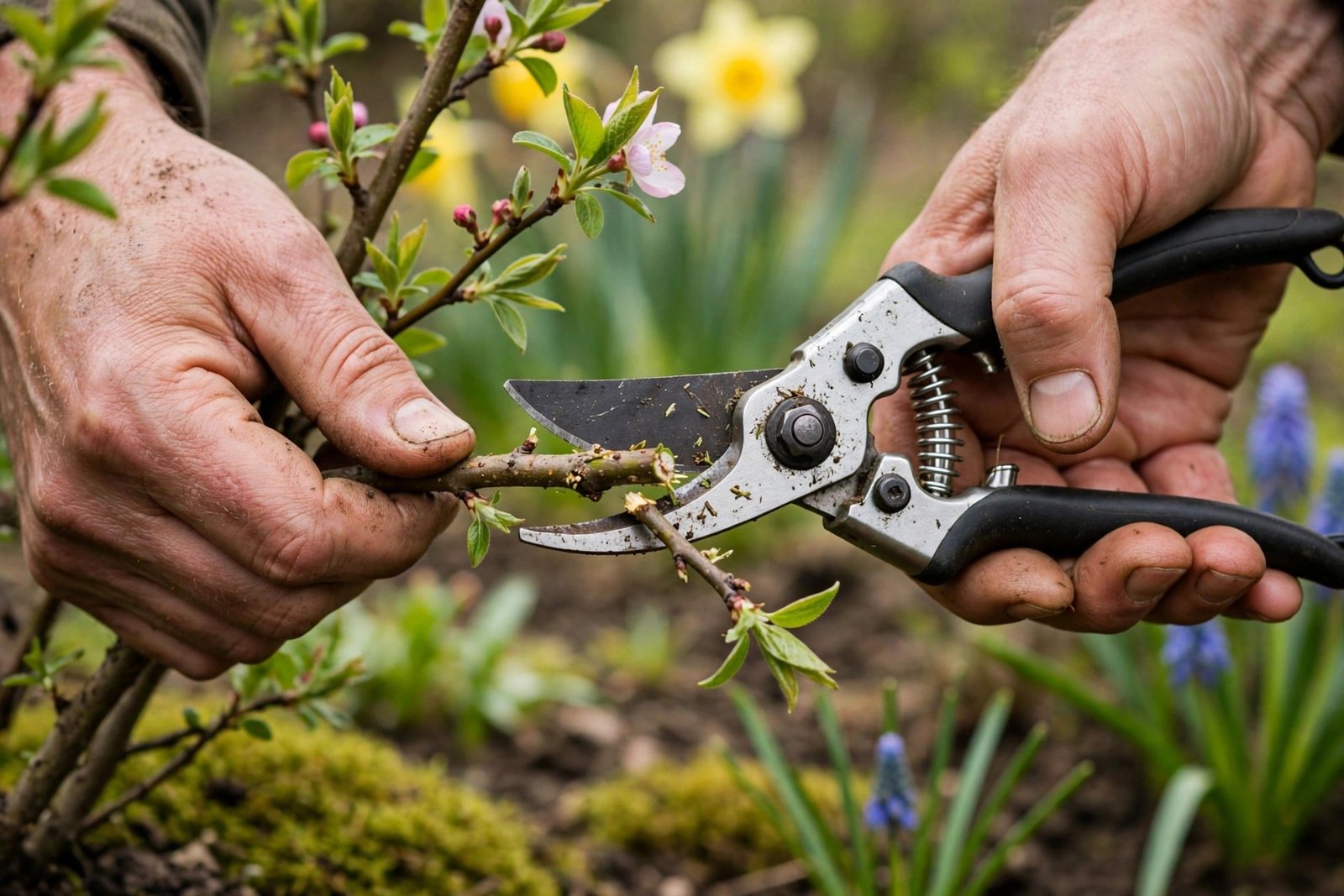
Pruning terrifies beginners more than any other garden task. The shears hover, the branch looks important, and the fear is vivid: what if I kill it? So the shrubs grow wild, the roses go leggy, and the fruit trees produce less each year — while the knowledge of how to fix it sits one afternoon’s learning away.
How much does understanding pruning basics really cost in Newcastle? The knowledge: £0. The tools: £20–£50. The cost of not learning: years of underperforming plants. Here is the complete beginner’s guide.
Why Pruning Matters (More Than You Think)
Pruning is not cosmetic tidying — it is plant health management. Proper pruning: removes dead, diseased, and crossing branches (disease prevention); opens the canopy to light and air (fungal disease drops dramatically); directs energy to productive growth (better flowers, bigger fruit); controls size (the plant fits its space); and rejuvenates old shrubs (many “dying” shrubs just need hard pruning). Unpruned plants do not just look messy — they underperform, sicken, and die younger.
The fear is also misplaced in an important way: most plants are far tougher than beginners believe. A bad pruning cut on a healthy shrub is a temporary setback, not a death sentence — plants evolved with browsing animals and storms. The real risk is not pruning badly but never pruning at all. The RHS pruning guides and Gardeners’ World pruning advice — organised by plant type — are the authoritative free reference.
The Knowledge: Free in an Afternoon
The basics fit in an hour because the principles are few. The three Ds: always remove dead, diseased, and damaged wood first — anytime, any plant, no expertise needed; this alone improves most gardens. The 3-cut rule for branches: cut just outside the branch collar (the swollen ring where branch meets trunk) — never flush, never leaving a stub; the collar contains the healing tissue. Cut to a bud or branch: always prune back to a healthy outward-facing bud or a side branch — never leave bare stubs, which die back and invite disease. Timing basics: most deciduous shrubs prune in late winter (dormant, structure visible); spring-flowering shrubs prune after flowering (they bloom on last year’s wood); evergreens lightly in spring; fruit trees in winter (apples, pears) or summer (stone fruit).
The plant-specific details — roses, hydrangeas, clematis (the famously confusing three pruning groups), fruit trees — each take 15 minutes to learn from the RHS guides when you need them. Learn the principles once; look up the specifics per plant. That is the entire knowledge investment.
The Tools: £20–£50 Does It
Secateurs (£15–£35): the essential tool — bypass type (scissor action) for live wood, not anvil (which crushes). Buy the best you can afford; good secateurs (£25+) last decades, cheap ones (£8) fail within a year and damage plants. Loppers (£15–£30): for branches too thick for secateurs (over ~2cm) — long handles give leverage. Pruning saw (£10–£20): for branches beyond lopper capacity. Gloves (£5–£10): roses and thorny shrubs demand them.
Total: £20–£50 for a complete beginner kit that handles 95% of home pruning. Buy second-hand quality over new cheapness — secateurs especially. Keep them sharp and clean (a £5 sharpening stone, wiped blades between diseased plants), and they outlive you. Newcastle gardeners: local tool libraries and garden centres often run pruning workshops in late winter — hands-on learning with expert supervision, usually £10–£20 or free.
Your First Pruning: A Walkthrough
Pick one overgrown deciduous shrub in late winter. Step back and look: identify the shape you want — open, airy, balanced. Remove the three Ds first — dead wood snaps, diseased wood discolours, damaged wood tears; cut back to healthy tissue. Remove crossing branches — where two rub, keep the better-placed one. Thin the centre — take out a few of the oldest stems at the base to let light in (never remove more than a third of the plant in one year — the golden rule). Step back repeatedly — pruning is sculpture; assess constantly. Stand back at the end: it will look sparse and alarming. In spring, it will explode with healthy growth, and you will understand.
The one-third rule deserves emphasis: never remove more than a third of a plant’s growth in one season (except specific rejuvenation pruning, which is deliberate and researched per plant). This single rule prevents nearly every pruning disaster. When in doubt, cut less — you can always take more next year.
Pruning Fruit Trees: The Beginner’s Primer
Fruit trees intimidate beginners most — and reward pruning most visibly. The simplified essentials: apples and pears prune in winter dormancy (November–March) — remove the three Ds, then thin crowded branches to create an open “goblet” shape letting light into the centre; shorten last year’s growth by about a third to encourage fruiting spurs. Stone fruit (plums, cherries, peaches) prune in summer (after fruiting) — winter pruning invites silver-leaf disease through the cuts; the same structural principles apply. The goal is always the same: an open centre, good light penetration, and a balance between fruiting wood and new growth.
Two concepts unlock fruit pruning: fruiting spurs (the knobbly short shoots that bear fruit year after year — learn to recognise and protect them) and the difference between thinning and heading (thinning removes whole branches to open the tree; heading shortens branches to stimulate bushy growth — beginners over-head and under-thin). One winter of guided practice — ideally alongside an experienced pruner at a community orchard Wassail or pruning workshop — and fruit trees lose their mystery permanently. The harvest difference between pruned and unpruned trees is dramatic enough to convert any sceptic.
Mistakes and Myths
Topping trees (cutting the main leader) — never appropriate; it destroys structure and creates hazards. Pruning spring-flowerers in winter — removes the year’s blooms; wait until after flowering. Shearing everything into balls — appropriate for formal hedging, ruinous for flowering shrubs. “Pruning paint” on cuts — outdated; trees seal wounds naturally, and paint traps moisture. Fear-based neglect — the most expensive mistake of all, costing years of plant performance. And the persistent myth that pruning is an art for experts: it is a craft with learnable rules, and beginners following the principles above outperform nervous neglecters immediately.
Pruning well connects to the broader garden: healthy pruned plants need less of everything else — fewer disease treatments, less corrective work — which is the essence of low-maintenance gardening, and well-shaped plants are the backbone of a garden that looks good on a budget.
The Bottom Line
Understanding pruning basics in Newcastle costs £0 for the knowledge (an afternoon with the principles) and £20–£50 for tools that last decades. Learn the three Ds, the branch-collar cut, cut-to-bud, basic timing, and the one-third rule — then practise on one shrub. The fear evaporates with the first successful cut, and your garden’s health transforms within a season. The shears are waiting.
Frequently Asked Questions
When should I prune my shrubs?
Most deciduous shrubs in late winter (dormant); spring-flowering shrubs after flowering; evergreens lightly in spring. Check the RHS guides for specific plants — timing errors are the most common beginner mistake.
How much can I prune without killing the plant?
The one-third rule: never remove more than a third of growth in one season. Dead, diseased, and damaged wood can always be removed regardless.
What basic pruning tools do I need?
Bypass secateurs (£15–£35), loppers (£15–£30), a pruning saw (£10–£20), and gloves. £20–£50 total covers 95% of home pruning.
I am afraid to prune — what if I get it wrong?
Healthy plants survive imperfect pruning easily; what kills performance is never pruning. Follow the principles, respect the one-third rule, and start with one shrub — confidence comes with the first cut.