Some celebrations exist purely to gather the people who will hold a family up in the months ahead. A shower, at its best, is that gathering dressed up with cake and good wishes.
American postwar parties shaped the format Britain later softened
A baby shower is a gathering held before a baby arrives, organised for the expectant parents rather than by them, and built around encouragement, practical presents and the advice of people who have done the newborn months before. The modern format grew up in the United States in the postwar years, as a generation of young families, new suburbs and commercially made baby goods came together and turned gift giving for a first baby into a small celebration of its own. For decades it remained a distinctly American occasion, the sort of thing British audiences mostly met in films.
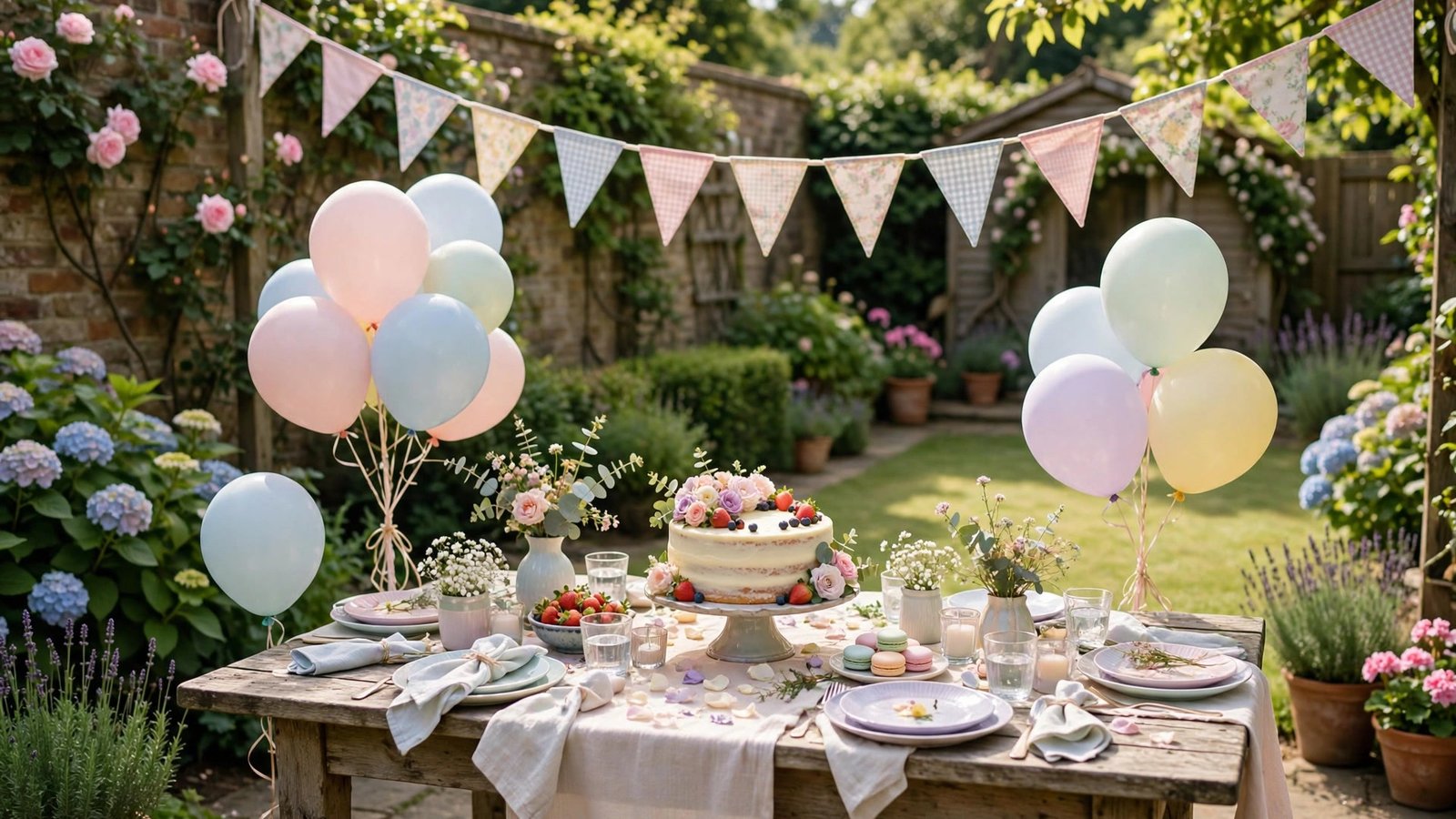
The format crossed the Atlantic properly during the two thousands, carried by television, social media and people who had lived in America and brought the habit home with them. Britain, characteristically, softened it. The British version is usually smaller and quieter, commonly around fifteen to twenty five guests rather than a hall full, and it leans towards afternoon tea, gardens and living rooms rather than grand venues. Anyone planning the food on a budget can borrow happily from budget friendly dinner party menus that look expensive, since the same thrifty tricks — one handsome centrepiece dish, plenty of bread, something sweet to finish — work beautifully at an afternoon gathering. Spending expectations sit lower, formality sits lower, and the tone is closer to a cheerful tea party than a production. Reference accounts of the tradition, including the history of the baby shower and how the custom spread, show the same pattern in other countries too: the American shape travels, and local manners quietly remodel it on arrival.
Nothing about a shower is ancient or compulsory. It is a borrowed, fairly recent celebration that each family is free to resize, restyle or skip entirely.
Late pregnancy offers the most comfortable window for celebrating
Timing is the first practical question, and comfort answers most of it. Showers are usually held in late pregnancy, often somewhere between twenty eight and thirty four weeks, and the reasoning is straightforward. Earlier, some parents prefer to keep celebrations low key until the pregnancy is well established. Later, tiredness, discomfort or sheer closeness to the birth may leave the guest of honour unable to enjoy a room full of people, and babies have a known habit of arriving ahead of schedule and turning their own shower into a post birth event.
A typical gathering lasts about two to three hours, which is long enough for food, a game or two, presents and proper conversation, and short enough that nobody wilts. Afternoons suit most people: guests with children can manage them, older relatives are not travelling home in the dark, and the pace can stay gentle. Sensitivity deserves a thought at this stage too. Some parents, after difficult pregnancies or losses, would rather celebrate after the baby is safely here, and some guests may find a baby centred afternoon painful for private reasons of their own. A thoughtful host checks the parents’ real preference privately, issues invitations without pressure, and treats a declined invitation as needing no explanation whatsoever.
Expectant parents are also wise to check the official position on leave and entitlements in good time, since the government pages on maternity pay and leave entitlements set out deadlines that matter for peace of mind.
A friend or relative hosting keeps the occasion free of awkwardness
Etiquette convention is settled on one point: the host is normally a friend or a relative, not one of the parents. The reasoning is social rather than stern. A party whose purpose is presents and good wishes looks grasping when thrown by the people receiving them, and feels generous when offered by someone who loves them. One host or two sharing the job works well; a committee tends to produce a group chat full of conflicting plans. The host’s real duties are modest: choose the date with the parents, invite the people the parents actually want there, organise food and a few activities, and keep the afternoon moving gently along.
Costs follow the hosting. The host usually covers the basics of venue, food and decorations, with close friends often contributing a dish or sharing expenses by quiet agreement rather than formal splitting. Budgets stay modest in the British version of the occasion: a living room, a garden or a church hall, sandwiches and cake, and paper decorations are a complete and perfectly respectable shower. Hired halls and catered venues suit larger guest lists or hosts whose homes are small, but nobody should spend money they do not have on an event whose entire point is warmth rather than display.
The guest list deserves the host’s care. Ask the parents who they want, and do not invite anyone out of obligation who makes the parents tense. A small room of genuinely glad people beats a large room of politely enduring ones every time.
Short playful games help strangers from different circles mingle
A shower gathers people who may never have met: work friends, school friends, cousins, neighbours and a proud grandmother or two. Short, playful games exist to dissolve that strangeness before it sets. The proven ones are simple, quick and slightly silly. Guessing the baby’s arrival date and weight on a card everyone signs. A quiz about the parents as babies themselves. Advice cards, on which each guest writes the one thing they wish they had known, gathered into a keepsake the parents will genuinely reread during night feeds. Guessing games built around tastes and smells are traditional but divide opinion sharply, and a single messy game is quite enough for any afternoon.
The firm rule is time. Two or three games, each kept short, will warm a room; a programme of six will exhaust it and squeeze out the conversation guests actually came for. Voluntary participation matters too. Some guests adore games and some quietly dread them, and a host who offers a graceful spectating role — judge, scorekeeper, photographer — keeps everyone inside the fun. Prizes, if any, should be tiny and funny rather than valuable.
Between the games, leave space. Tea refills, cake, birth stories both reassuring and ridiculous, and time for the parents to actually talk to their guests: that unstructured middle is where the gathering does its real work.
Practical presents in modest ranges suit British expectations comfortably
British gift norms are comfortable ones, and they deserve stating plainly so nobody overspends out of anxiety. Guests typically bring something practical or something heartfelt, in modest ranges that are a social convention rather than a rule: nappies and wipes that will vanish faster than anyone predicts, a board book, a blanket, clothes in a larger size for the months ahead rather than a fifth newborn outfit. These typical levels of spending should be described honestly as custom, never as an expected minimum. A thoughtful card with a genuine offer inside it is a complete and honourable present from a guest whose budget is tight.
Group gifts solve the larger problem elegantly. Prams, cots and car seats cost more than any single guest should be asked for, and a handful of friends or relatives clubbing together turns an impossible present into an easy one, especially when the parents have said which model they have researched. Where the parents have made a list, use it: it exists to save guests money and guesswork, not to issue demands. Where there is no list, the safest question in the whole subject is a private one to the host — what do they actually still need?
Duplicates happen and are nobody’s fault; keeping receipts and tags on larger items is a kindness. Presents should be opened during the gathering only if the parents enjoy it, since some find the audience daunting. A card opened and read aloud, though, is worth the moment: well chosen words get kept for decades.
Sprinkles and nesting parties adapt the idea for later babies
Later babies get their own gentler versions of the occasion, because a second or third child needs less equipment but the parents deserve just as much celebration. A smaller gathering for a later baby is commonly called a sprinkle, a light shower rather than a full one: fewer guests, smaller presents, perhaps just the nappies, wipes and fresh babygros a new baby genuinely needs, plus cake and the pleasure of marking the arrival. Families with a gap between children often find a sprinkle lands exactly right, acknowledging the baby without pretending the house lacks a cot.
Post birth gatherings, known as sip and see parties, suit families who prefer to celebrate once the baby is here to be admired. They solve the timing anxieties in one move and let elderly relatives meet the baby in a calm setting rather than a hospital corridor, though they depend on the parents feeling up to visitors, which no host should assume in the first weeks. Mixed gatherings have also become normal, with partners, fathers and friends of every kind invited rather than the women only pattern of the older American tradition, and video call versions connect grandparents abroad to the toasts and games surprisingly well.
The newest variation, the nesting party, replaces games and presents with labour. Guests come before the birth and help: batch cooking for the freezer, assembling furniture, washing and sorting baby clothes, tidying the room the baby will sleep in. It is the least photogenic version of the shower and, many parents say afterwards, the most valuable.
Practical help often outlasts another set of tiny clothes
That thought is the right place to finish, because it states what a shower is really for. The presents are opened in an afternoon; the help is what the following months run on. A guest who writes I will bring a meal in the third week, and then does, has given something worth more than anything wrapped. Offers of an hour’s holding while a parent showers and sleeps, a school run covered for an older sibling, a weekly message that asks how the adults are and means it: these are the gifts the celebration exists to organise, the network made visible and put on standby.
Hosts can encourage that wider generosity without any awkwardness. A simple card on the table inviting guests to write one offer of help alongside their good wishes gives kind intentions a shape and a date. None of this needs scale or spending. It needs the people who love a family in one room, agreeing cheerfully to be useful.
So plan the shower around that purpose and every other decision simplifies. The right size gathers those people. The right games help them mingle. The right presents are the useful kind, in ranges everyone can afford, and the right ending is a room of people who leave knowing how they will help when the baby comes home.